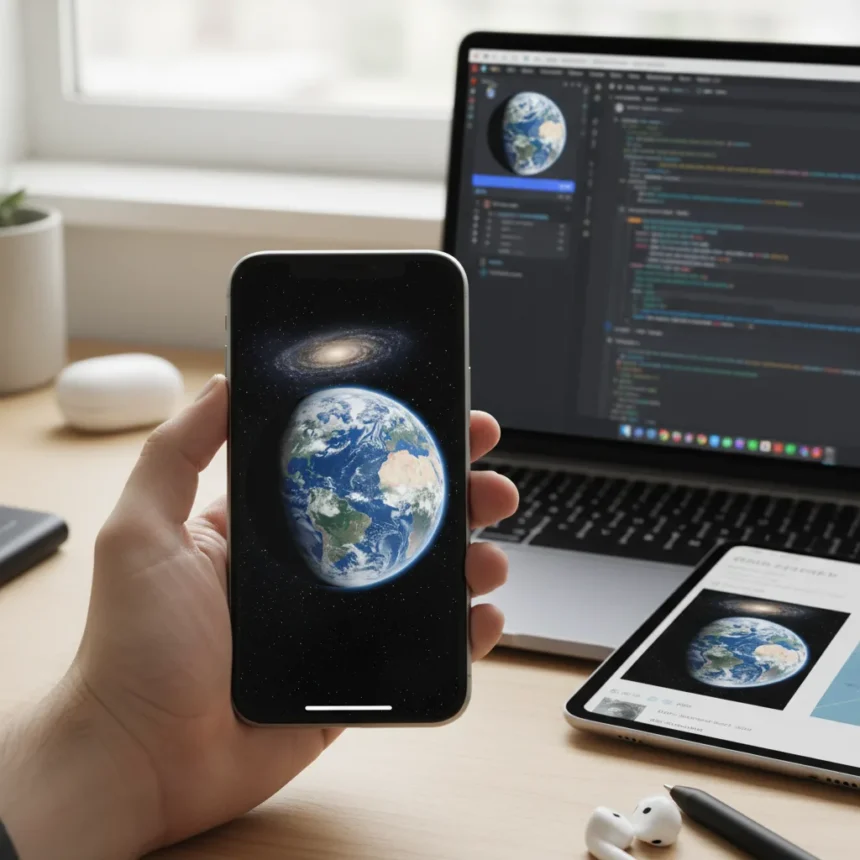
Converting NASA’s Artemis II Earth photo into an iPhone wallpaper sounds straightforward until you actually try it. The Artemis II Earth photo, captured during the mission, contains stunning detail that demands full-screen display—but smartphone screens have different aspect ratios and resolutions than the original source images. One TechRadar writer discovered that AI tools could bridge this gap, transforming a raw space photograph into a perfectly optimized mobile background.
Key Takeaways
- Artemis II Earth photo required AI assistance to adapt for iPhone screen dimensions
- NASA releases space imagery suitable for virtual backgrounds and wallpapers
- AI tools can upscale and reframe space photography without losing detail
- Custom wallpaper creation combines NASA’s public imagery with modern AI processing
- Space missions continue generating high-quality Earth imagery for consumer use
Why Artemis II Earth Photo Conversion Matters
The Artemis II Earth photo represents a rare opportunity to personalize your device with authentic space mission imagery. Unlike generic Earth wallpapers sourced from stock photo libraries, mission-captured photographs carry historical weight and scientific value. They remind users daily of active space exploration. However, the original Artemis II Earth photo dimensions don’t match iPhone aspect ratios, creating a practical problem: crop the image and lose detail, or stretch it and distort the composition.
NASA actively encourages public use of mission imagery. The space agency releases Artemis photos and virtual meeting backgrounds specifically designed for consumer devices. This democratization of space content means anyone with an internet connection can access authentic mission photographs—but optimization for personal use requires additional steps.
How AI Transformed the Artemis II Earth Photo
AI image processing tools solved the dimension problem by intelligently reframing and upscaling the Artemis II Earth photo without sacrificing quality. Rather than simple cropping, these tools analyze the image composition and intelligently expand the frame, filling new space with contextually appropriate detail. The process preserves the photograph’s core subject—Earth from space—while adapting it to iPhone’s taller, narrower screen format.


The conversion process highlighted a broader trend: AI tools are becoming essential bridges between professional-grade space imagery and consumer device specifications. Astronauts aboard Artemis missions continue capturing Earth from unique vantage points, generating a steady stream of raw material that benefits from AI optimization before reaching personal devices. What once required manual photo editing skills now happens automatically, making space photography more accessible to everyday users.
Artemis II Earth Photo vs. Traditional Wallpaper Sources
Stock wallpaper apps offer convenience but sacrifice authenticity. A generic Earth image looks polished but carries no connection to active space missions. The Artemis II Earth photo, by contrast, documents a real moment in NASA’s lunar exploration program. It connects the viewer to ongoing human spaceflight efforts rather than serving as decorative filler.



The trade-off between convenience and authenticity shifts when AI handles the technical work. Previously, converting mission photography to wallpaper required either accepting cropped versions or wrestling with manual photo editing. AI tools eliminate that friction, making authentic space imagery just as convenient as generic alternatives—but with genuine historical and scientific value attached.
Should You Use Artemis II Earth Photo as Your iPhone Wallpaper?
If you want a wallpaper that sparks conversation and connects you to active space exploration, the Artemis II Earth photo is a strong choice. It’s visually striking, scientifically legitimate, and freely available from NASA. The AI conversion process ensures it displays properly on your iPhone without awkward cropping or distortion. The main consideration: personal preference for space-themed imagery over abstract or landscape alternatives.
Can I use any NASA space photo as an iPhone wallpaper?
Yes. NASA releases imagery from all missions into the public domain, including Artemis photographs and virtual backgrounds designed for personal devices. Most mission photos can be downloaded and converted for iPhone use, though aspect ratio adjustment may be necessary for optimal display.
What AI tools work best for converting space photos to wallpapers?
The TechRadar article doesn’t specify which AI tools were used for the Artemis II Earth photo conversion. However, any AI image upscaling or reframing tool designed to adapt photos across different aspect ratios could handle the task. The key is selecting tools that preserve detail rather than simply stretching the original image.



The Artemis II Earth photo conversion demonstrates how AI is quietly solving practical problems at the intersection of space exploration and consumer technology. NASA’s commitment to sharing mission imagery, combined with AI’s ability to optimize that content for personal devices, creates a straightforward path from space mission to smartphone screen. If you want your daily lock screen to reflect genuine space exploration rather than generic imagery, the Artemis II Earth photo—enhanced by AI—delivers authenticity without requiring manual editing skills.
Edited by the All Things Geek team.
Source: TechRadar