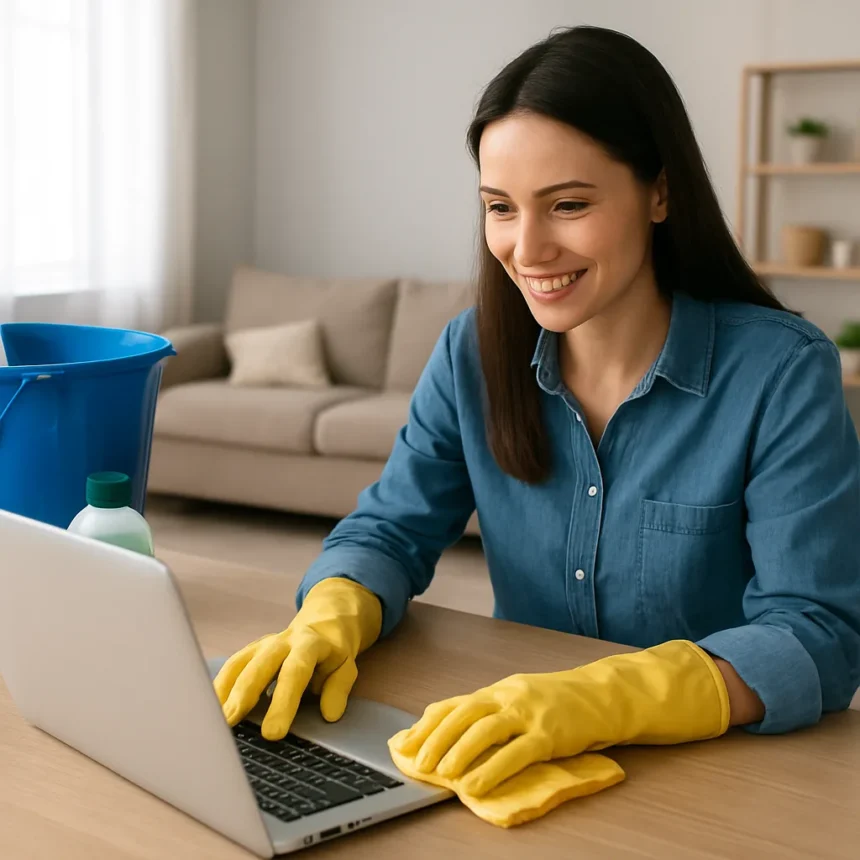
ChatGPT for spring cleaning is one of those ideas that sounds gimmicky until you actually try it. The concept is straightforward: instead of staring at a messy room wondering where to start, you describe your home to an AI assistant and let it help you build a structured plan, prioritise tasks, and even figure out what your unwanted stuff might be worth.
TL;DR: ChatGPT can help you build a personalised spring cleaning schedule, declutter smarter, and identify items worth reselling. It won’t scrub your floors, but as a planning and decision-making tool, it removes the paralysis that kills most cleaning attempts before they start.
How ChatGPT for spring cleaning actually works
ChatGPT works as a spring cleaning tool by acting as an on-demand planning assistant. You describe your space, your available time, and your goals, and it generates a structured schedule, suggests an order of operations, and helps you think through decisions you’d otherwise procrastinate on. The more specific your prompts, the more useful the output.
Most people underestimate how much of spring cleaning is a thinking problem rather than a physical one. Deciding what to keep, what to donate, what to throw away, and what order to tackle rooms in — that cognitive load is exhausting before you’ve moved a single box. ChatGPT absorbs that load. You ask, it answers, and you get moving.



The key is treating it like a conversation, not a search engine. Vague prompts get vague answers. Tell it you have a two-bedroom flat, four hours on Saturday, and a particular dread of the kitchen cupboards, and it’ll give you something genuinely actionable rather than a generic checklist you could have Googled.
Using ChatGPT Voice and Vision to declutter smarter
ChatGPT’s Voice and Vision features take the spring cleaning use case further than most people realise. You can point your phone camera at a cluttered shelf or a pile of items you’re unsure about, and ChatGPT can help you assess what’s there, suggest what to keep or discard, and even estimate resale value for items you might be sitting on unknowingly.



That last point is worth pausing on. A lot of spring cleaning stalls because people don’t want to throw away something that might be valuable. Using Vision to get a rough sense of what old electronics, collectibles, or furniture might fetch on resale platforms removes that hesitation. It’s not a professional appraisal, but it’s enough to make a decision.
Compare this to the traditional approach — spending an afternoon on eBay trying to research prices yourself, or just defaulting to binning everything because the research feels like too much work. ChatGPT compresses that process significantly, even if you still need to verify final prices before listing anything.
Building a spring cleaning schedule with ChatGPT Tasks
ChatGPT Tasks allows you to set up a structured cleaning schedule that gets delivered as reminders rather than a single overwhelming to-do list. Instead of confronting a 40-item plan on day one, you get tasks broken into manageable daily chunks across a week or two. That pacing matters more than most productivity advice acknowledges.
The psychological difference between a list and a schedule is significant. A list sits there judging you. A schedule tells you what to do today and lets you ignore everything else until tomorrow. ChatGPT can generate both, but the scheduled approach — especially when tied to reminders — is what makes the difference between planning to clean and actually cleaning.


Other AI assistants can generate cleaning lists too, but ChatGPT’s combination of conversational flexibility, Vision capabilities, and Tasks integration makes it more versatile than a standalone planner app or a simpler AI tool. Google Gemini and Microsoft Copilot can produce similar text-based plans, but the Vision-assisted decluttering angle is where ChatGPT currently has a practical edge for this specific use case.
Is ChatGPT for spring cleaning worth it?
ChatGPT is worth using for spring cleaning if your main obstacle is planning and decision fatigue rather than time or physical effort. It won’t replace elbow grease, but it’s a surprisingly effective tool for breaking through the inertia that stops most people from starting.
There are limits. ChatGPT doesn’t know your home, your habits, or your attachment to that box of cables you’ve been moving from flat to flat since 2015. You have to give it context, and the quality of what you get back is directly tied to how well you describe your situation. Treat it as a capable assistant, not an oracle.
Can ChatGPT really help with decluttering decisions?
Yes. ChatGPT can help you work through decluttering decisions by asking clarifying questions, applying frameworks like the one-in-one-out rule, and helping you articulate why you’re holding onto something. It’s particularly useful for the grey-area items — things that aren’t obviously rubbish but aren’t obviously worth keeping either.
Do I need a paid ChatGPT subscription to use it for cleaning?
The basic conversational features that generate cleaning plans and schedules are available on the free tier. ChatGPT Tasks and Vision features, which enable the scheduling reminders and camera-based decluttering, are part of the paid ChatGPT Plus subscription. Whether the subscription is worth it depends on how much you plan to use those features beyond spring cleaning.
Spring cleaning happens once a year for most people, but the planning and decision-support skills you develop using ChatGPT for it translate directly to everyday home maintenance, moving house, or any project where the thinking is the hardest part. Start with the free tier, see if the approach clicks for you, and upgrade if the Vision and Tasks features look useful for your life beyond April.
Edited by the All Things Geek team.
Source: Tom's Guide