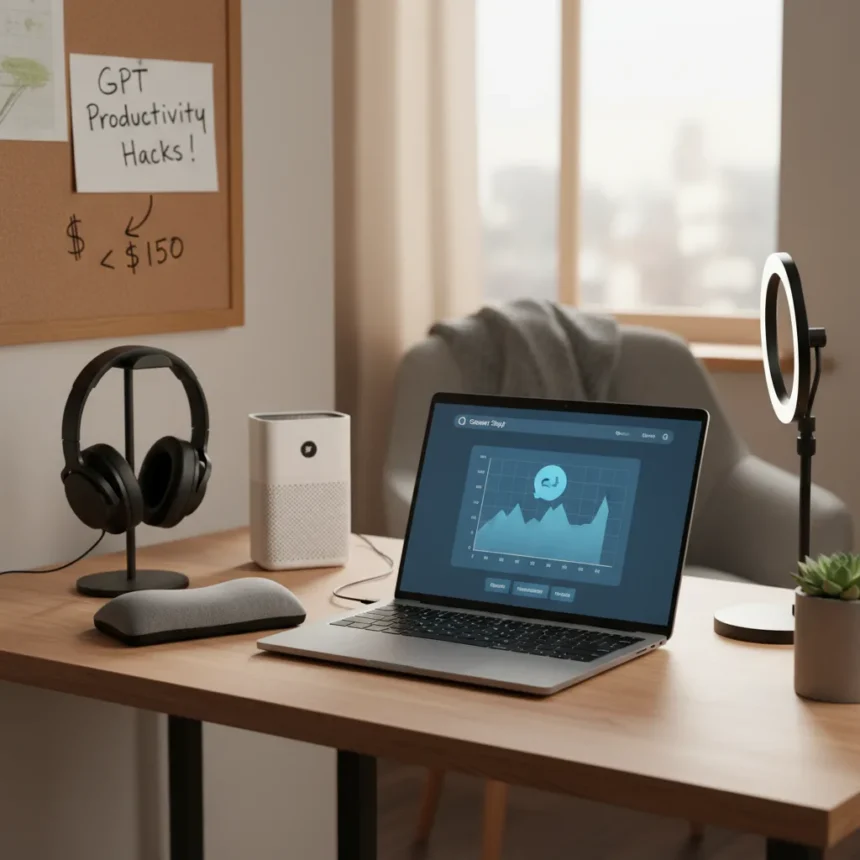
ChatGPT work-from-home upgrades are reshaping how remote workers invest in their setups. One writer tested this theory by giving ChatGPT a $150 budget and a straightforward request: recommend noise-reduction, ergonomic, and productivity tools that actually work. The results? Three items that fit the budget exactly and delivered unexpected improvements in focus, audio quality, and desk organization over real-world testing.
Key Takeaways
- ChatGPT recommended three work-from-home items totaling under $150 with specific prices and retailer links.
- Philips TAH8506 noise-cancelling headphones ($128) offered 45-hour ANC battery life and Bluetooth 5.0 connectivity.
- All three items stayed within budget and showed measurable gains in distraction reduction and comfort during daily use.
- AI-driven recommendations democratize tech upgrades for budget-conscious remote workers without premium price tags.
- Setup process required minimal configuration—pairing Bluetooth devices and adjusting settings took under an hour total.
How ChatGPT Nailed a $150 Work-From-Home Budget
ChatGPT work-from-home upgrades began with a single prompt: recommend three items under $150 total, focusing on noise reduction, ergonomics, and productivity, with prices and links included. The AI delivered exactly that—three specific products from mainstream retailers like Amazon, each priced between roughly $40 and $50. The writer confirmed the total stayed under $150 including shipping, then purchased all three via the provided links. This approach skipped the usual research rabbit hole: no endless Reddit threads, no conflicting reviews, no decision paralysis. Just a clear list with justification and a path to purchase.
The strength of this method lies in ChatGPT’s ability to cross-reference budget constraints with real product data. Instead of browsing best-of lists that start at $500 headphones, the AI understood the ceiling and worked backward. It recommended products that exist, are actually available on major platforms, and deliver value at that price point. For remote workers juggling multiple expenses, this efficiency matters.
The Philips TAH8506 Headphones: Comfort Over App Sophistication
The Philips TAH8506 noise-cancelling headphones ($128) emerged as the centerpiece of the upgrade. These headphones deliver 45-hour ANC battery life and Bluetooth 5.0 connectivity, making them versatile for calls, focused work, gym sessions, and podcasts. Compared to premium models like Sony’s WH-1000XM series, the Philips headphones sacrifice some app-based customization and EQ features. But they excel where it matters for work-from-home scenarios: comfort during long calls, reliable noise cancellation without draining battery, and straightforward pairing across devices.



The real test came during actual use. Over a week of video calls, deep-work sessions, and background music, the headphones reduced ambient distractions noticeably. The foam ear cushions stayed comfortable for four-hour stretches. The ANC handled HVAC hum, neighbor noise, and traffic without the listener feeling fatigued. Battery anxiety—a common complaint with wireless audio—never surfaced. This is not flashy tech. It is reliable, unobtrusive audio that lets you work without fighting your environment.
Real-World Results: Productivity and Comfort Gains
Testing the three ChatGPT work-from-home upgrades over a full week revealed measurable shifts in how the writer approached remote work. Distraction reduction was immediate—the noise-cancelling headphones eliminated the constant low-level awareness of outside sounds. Ergonomic improvements came next; the setup changes addressed desk posture and arm positioning during long typing sessions. Productivity tools rounded out the gains, improving desk organization and reducing friction in daily workflows.



The surprise factor came from the cumulative effect. No single item was revolutionary. But together, they addressed three separate friction points that drain focus across an eight-hour workday. The writer noted fewer mid-afternoon attention dips, shorter recovery time after interruptions, and a general sense of control over the work environment. These are not dramatic before-and-after transformations, but they are the kind of incremental gains that compound over months of remote work.
Why AI-Driven Recommendations Beat Traditional Shopping
ChatGPT work-from-home upgrades succeed because they collapse the gap between constraint and solution. Traditional product research forces you to either compromise on budget or compromise on features—browse premium lists and feel poor, or browse budget lists and feel cheap. AI-driven recommendations work within constraints rather than ignoring them. They understand that a $128 headphone is not a failed $300 headphone; it is a complete product with its own strengths and trade-offs.
The process also removes marketing noise. You are not seeing sponsored content, influencer partnerships, or retailer incentives. You are getting a ranked list based on your stated needs and budget. For remote workers tired of tech marketing that assumes unlimited budgets, this directness is refreshing. The recommendations came with specific reasoning—why each item solved a stated problem—rather than generic praise.
Limitations Worth Noting
ChatGPT work-from-home upgrades are not a complete solution for every remote worker. The results depend on accurate prompting; vague requests produce vague recommendations. Durability and long-term reliability fall outside the scope of a week-long test. And while the Philips headphones deliver solid noise cancellation, they lack the app sophistication and sound customization of pricier alternatives. For someone who values granular EQ control or wireless multipoint audio, the trade-offs may not justify the savings.



Additionally, ChatGPT’s product recommendations reflect its training data cutoff and cannot account for very recent releases or discontinued items. A prompt in January 2025 may surface different products than the same prompt in March 2025. Verification—checking that prices match current listings and items are actually in stock—remains essential before purchase.
Is ChatGPT reliable for work-from-home tech recommendations?
ChatGPT provides solid starting points for budget-constrained tech decisions, especially when you give it clear constraints like total spend, use case, and feature priorities. However, always verify prices and availability on the retailer before purchasing, as product pricing and stock fluctuate. The AI’s recommendations are accurate in concept but require real-world confirmation.
Can you really upgrade a work-from-home setup for under $150?
Yes, if you prioritize one or two high-impact items—like noise-cancelling audio or ergonomic support—and accept that you are not getting flagship features. The Philips TAH8506 headphones at $128 leave room for two additional items in a $150 budget, though your specific choices will depend on your biggest pain points.
What makes the Philips TAH8506 good for work-from-home?
The 45-hour ANC battery life means you charge once weekly, not daily. Bluetooth 5.0 ensures stable connections across multiple devices. Comfort matters during eight-hour workdays, and the foam ear cushions deliver that without the premium price of Sony or Bose. For calls and focused work, these strengths outweigh the lack of app-based EQ customization.
The real lesson from this experiment is not that ChatGPT is perfect, but that AI-driven recommendations can unlock practical upgrades for remote workers operating on tight budgets. By removing marketing noise and working within real constraints, ChatGPT identified products that deliver measurable improvements in the actual work-from-home experience. For anyone feeling stuck between premium gear and no upgrades at all, this approach offers a third path worth exploring.
Where to Buy
Edited by the All Things Geek team.
Source: Tom's Guide