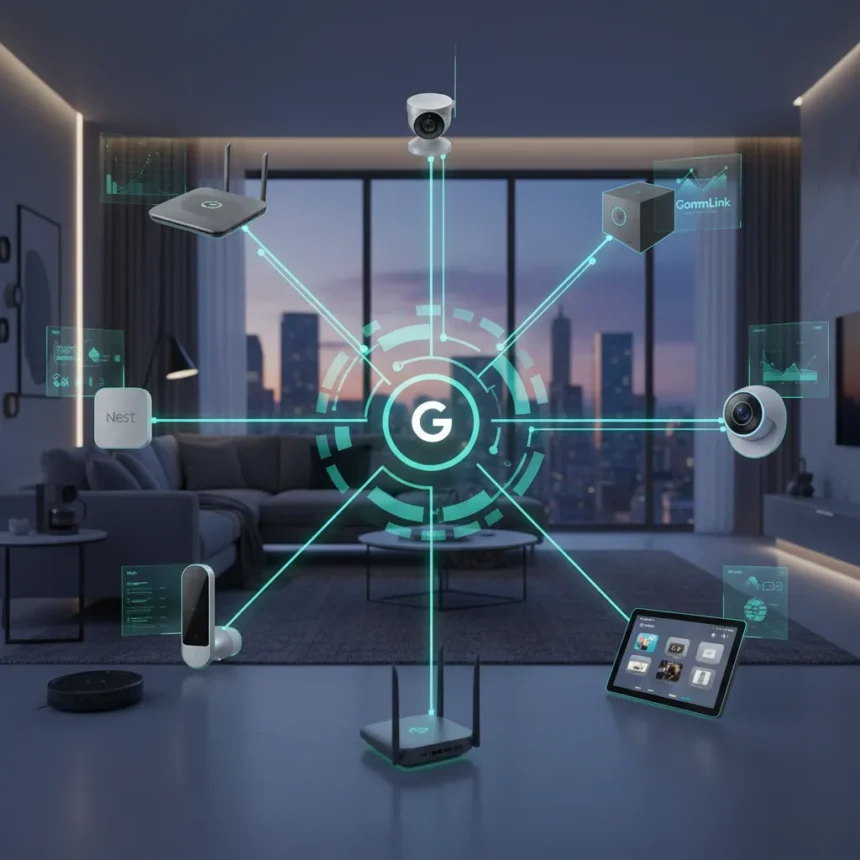
Gemini for Home expansion marks a fundamental shift in how Google approaches its smart home ecosystem. Rather than limiting Gemini to its own speakers and displays, Google is now opening the platform to carriers, ISPs, security companies, and hardware manufacturers, letting them build and monetize AI-powered services directly into homes.
Key Takeaways
- Google is positioning Gemini for Home as a full-stack AI offering that partners can build on without lengthy R&D cycles.
- The expansion includes validated reference hardware designs covering SOCs, sensors, and microphones built with partners like Amlogic and SEI Robotics.
- Service providers can bundle Google Home Premium features—like Home Brief and advanced deterrents—into branded subscriptions.
- Google says this is the most open the Home ecosystem has ever been, giving partners access from the app layer to hardware itself.
- Basic Gemini for Home features remain free, while premium features like Gemini Live require a Google Home Premium subscription.
Why Google is opening the Home ecosystem
For years, Google’s smart home strategy relied on controlling both the software and hardware. That model worked for Google’s own devices but left third-party manufacturers with limited options. The Gemini for Home expansion flips that approach. By combining access to Google Home APIs—which reach hundreds of millions of devices—with Gemini’s latest capabilities, Google is creating a platform that partners can build on without starting from scratch. This matters because developing an AI-powered smart home device traditionally requires a multi-year research and development phase. Google is now offering partners a shortcut.
The move signals confidence that Gemini can become the smart home layer across an ecosystem, not just a Google product. Instead of competing with every hardware maker individually, Google is positioning itself as the AI foundation that powers everyone’s devices. This is a calculated bet that openness drives faster adoption than exclusivity.
What the reference design program actually offers
Google’s Google Home Gemini built-in program includes fully validated reference designs covering system-on-chips, sensors, and microphones. These designs were created in collaboration with hardware partners including Amlogic, SEI Robotics, and Apical. The reference designs are not templates—they are working blueprints that eliminate the guesswork of integrating Gemini into new hardware. A hardware maker can use these designs to accelerate development, reducing time to market significantly compared with building from first principles.



For carriers and ISPs, the appeal is different. They can bundle Google Home Premium features—including Home Brief, advanced deterrents that simulate presence when homes are unoccupied, and other AI-driven services—into branded subscriptions. This transforms the home from a collection of disconnected devices into a unified service offering that service providers can sell and support. The subscription model gives these companies a recurring revenue stream tied to home services, not just connectivity.
How this compares to Google’s previous approach
Under the old model, Google Assistant handled smart home control on Google’s own devices. Third-party manufacturers could integrate Assistant, but they had limited flexibility to customize or monetize the experience. Gemini for Home changes this calculus. Partners now get access to the full stack—from the app layer to the hardware itself—and the ability to create proactive, personalized services tailored to their customers. Nest Aware, Google’s former camera subscription, is being replaced by Google Home Premium, which ties AI features directly to the broader home ecosystem rather than just camera surveillance.



The shift from a closed device model to an open platform approach reflects broader industry trends toward AI as infrastructure. Amazon’s Alexa operates across thousands of third-party devices, but it remains primarily a voice assistant. Google’s positioning Gemini for Home as something more fundamental—a proactive system that understands the home and its occupants. The difference is subtle but important: Alexa waits for commands; Gemini for Home, as Google describes it, is designed to proactively care for people inside the home.
What’s available now and what requires payment
Google offers basic Gemini for Home features at no cost, including smart home controls, media search and playback, alarms and timers, calendars, notes, lists, and reminders. These free features cover the essentials most users expect from a smart home assistant. Premium features, like Gemini Live—which provides expert advice and personalized help for cooking, troubleshooting, and other tasks—require a Google Home Premium subscription.
Early access to Gemini for Home has rolled out to select languages and countries, with broader availability planned over time. Existing speakers and displays will transition to Gemini over time, replacing Google Assistant as the default voice assistant. New devices built using Google’s reference designs will ship with Gemini for Home from launch.
Why this matters for the smart home industry
The smart home market has fragmented across competing platforms and proprietary ecosystems. Gemini for Home expansion attempts to consolidate that fragmentation by offering a common AI layer that any hardware maker or service provider can build on. This could accelerate innovation by lowering the barrier to entry for new devices. A smaller manufacturer no longer needs to invest years in AI development—they can use Google’s reference designs and focus on their hardware’s unique value proposition.


For consumers, the impact depends on execution. If partners actually ship Gemini-powered devices and services, homes could become more intelligent and responsive. If the program remains largely aspirational, it changes little. The test will be how many carriers, ISPs, and hardware makers actually adopt the program and ship products in the next 12 to 24 months.
Is Gemini for Home free?
Basic Gemini for Home features are free, including smart home controls, alarms, timers, and media playback. Premium features like Gemini Live require a Google Home Premium subscription, though Google has not disclosed the specific pricing in this announcement.
Can I use Gemini for Home on existing Google devices?
Yes. Gemini for Home will eventually replace Google Assistant on existing speakers and displays over time. Once enabled, compatible devices will use Gemini for Home as their default voice assistant instead of Google Assistant.
Who can build Gemini for Home devices?
Google is opening Gemini for Home to carriers, ISPs, security companies, and hardware manufacturers. The Google Home Gemini built-in program provides reference designs and validated components to help these partners build new devices without lengthy development cycles.
Google’s Gemini for Home expansion represents a calculated pivot from a device-centric strategy to a platform-centric one. By opening access to carriers, ISPs, and hardware makers, Google is betting that Gemini adoption will accelerate faster through partnerships than through direct competition. The reference designs lower the barrier to entry, and the subscription model gives service providers a business case to invest. Whether this openness actually drives the smart home innovation Google expects depends on partner adoption and execution—but the architectural shift is significant.
Edited by the All Things Geek team.
Source: Android Central