





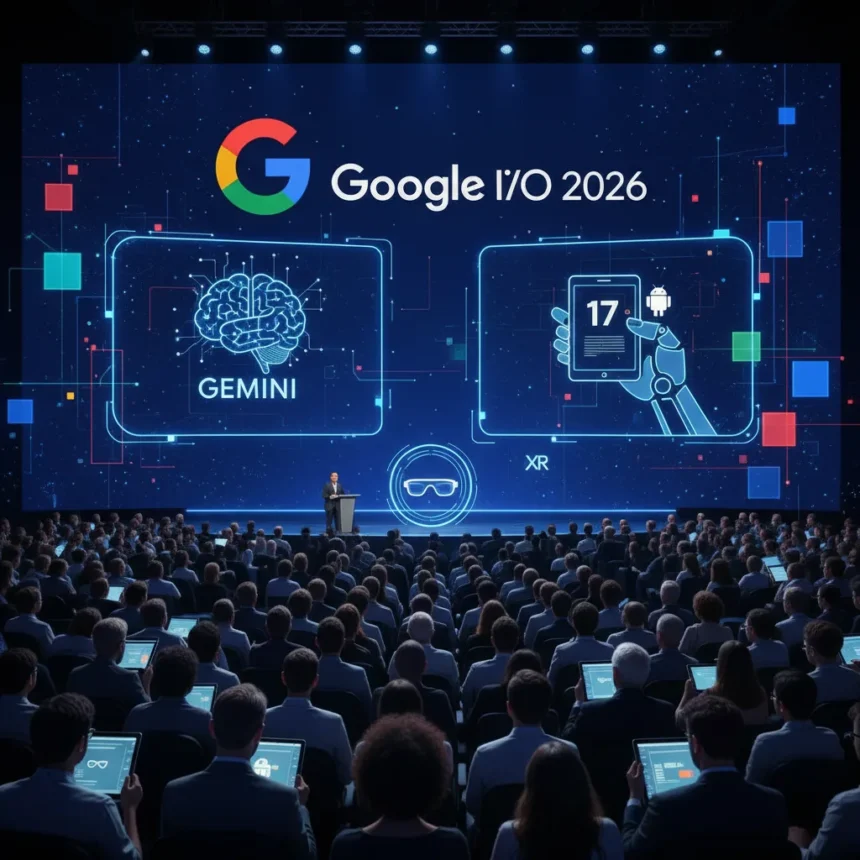
Google I/O 2026 is underway, and the company is doubling down on its AI-first strategy across Android, wearables, and its broader ecosystem. The annual developer conference centers on Gemini, Google’s AI assistant, alongside major software and hardware announcements that will shape the next generation of Android devices and smart glasses.
Key Takeaways
- Google I/O 2026 keynote focuses heavily on AI integration across Android and Google products
- Android 17 brings new features and capabilities to the Android ecosystem
- Android XR smart glasses represent Google’s push into wearable computing
- Gemini AI updates emphasize deeper integration with Android and developer tools
- The conference is streamed live on io.google and Google’s YouTube channel with instant replay available
Google I/O 2026: The AI-Centric Developer Conference
Google I/O 2026 marks a pivotal moment for the company’s AI ambitions. The keynote is heavily centered on Gemini, with the company weaving AI deeper into every layer of its product strategy. This year’s conference reflects Google’s broader commitment to making Gemini not just a standalone chatbot, but a foundational technology across Android, smart glasses, and developer tools.
The timing matters. As competitors push their own AI initiatives, Google is using I/O to demonstrate how comprehensively it has embedded Gemini into its ecosystem. Unlike previous years where AI felt bolted onto existing products, this year’s announcements suggest a more integrated approach.
Android 17 and the Evolution of Mobile Software
Android 17 represents the next major evolution of Google’s mobile operating system. While specific features are being unveiled at the conference, the update continues Google’s pattern of annual refinements that balance performance, privacy, and AI capabilities. Android 17 is expected to introduce tools that developers can leverage to build AI-powered applications more easily.



The Android platform has historically competed on flexibility and customization. Android 17 appears to maintain that philosophy while prioritizing AI integration in ways that feel native rather than forced. The update signals that Google sees AI as a fundamental part of the mobile experience, not an optional feature.
Android XR Smart Glasses: Google’s Wearable Bet
Android XR smart glasses represent Google’s entry into a crowded wearables market. The company is collaborating with partners including Samsung, Xreal, Gentle Monster, and Warby Parker to develop these devices, with launches expected later in 2026. This partnership approach differs from competitors who often develop hardware entirely in-house.



Android XR is built on a foundation designed specifically for wearable computing, not adapted from mobile or desktop platforms. The glasses are expected to run Gemini as a core component, giving users AI assistance directly in their field of vision. This represents a significant hardware and software commitment from Google, signaling that wearables are no longer a secondary focus.
How Google I/O 2026 Compares to Previous Years
Google I/O 2026 escalates the company’s AI focus compared to last year’s conference, where Gemini was heavily integrated but still felt like an emerging technology. This year, Gemini is positioned as the backbone of Google’s entire product ecosystem. The addition of hardware announcements through Android XR also expands the conference beyond software and cloud services into physical devices.
Previous I/O conferences focused on individual product announcements. Google I/O 2026 emphasizes how all these products work together—Android 17 running Gemini, smart glasses powered by Android XR, and developer tools enabling AI-first applications. This ecosystem-wide approach is more ambitious than Google’s traditional conference strategy.
What Developers Need to Know
For developers, Google I/O 2026 introduces new tools and APIs for building Gemini-powered applications. The conference traditionally serves as the place where Google outlines its developer roadmap, and this year that roadmap is inseparable from AI. Developers attending or watching the livestream will learn how to integrate Gemini into their apps and how to target Android 17 and Android XR devices.


The developer focus suggests Google is betting that AI adoption will accelerate if the tools are straightforward and well-documented. By making Gemini accessible through clear APIs and frameworks, Google aims to avoid the pattern where powerful technologies remain confined to large tech companies with specialized AI teams.
Where to Watch Google I/O 2026
Google I/O 2026 is being streamed live on io.google and on Google’s YouTube channel, making it accessible to anyone globally. The livestream includes captions and an instant replay option for those unable to watch in real time. This accessibility approach ensures that developers and tech enthusiasts worldwide can follow the announcements as they happen.
Is Google I/O 2026 free to attend online?
Yes, Google I/O 2026 is streamed live and free to watch on io.google and YouTube. While in-person attendance requires a ticket, the livestream is available globally at no cost, allowing anyone to follow the keynote and announcements in real time.
What are the main topics at Google I/O 2026?
Google I/O 2026 focuses on Gemini AI integration, Android 17 features, and Android XR smart glasses. The conference emphasizes how AI is being woven throughout Google’s product ecosystem, from mobile operating systems to wearable hardware and developer tools.
When does the Google I/O 2026 keynote start?
The Google I/O 2026 keynote begins at 10 am Pacific time, 1 pm Eastern time, and 6 pm BST. The keynote typically runs between 90 and 120 minutes, covering major announcements from Google’s leadership team.
Google I/O 2026 is a watershed moment for AI in consumer tech. By centralizing Gemini across Android, smart glasses, and developer platforms, Google is signaling that AI is no longer a novelty feature but a core part of how people interact with technology. For developers, consumers, and competitors alike, the announcements from this conference will shape the tech landscape for years to come.
Edited by the All Things Geek team.
Source: Tom's Guide




