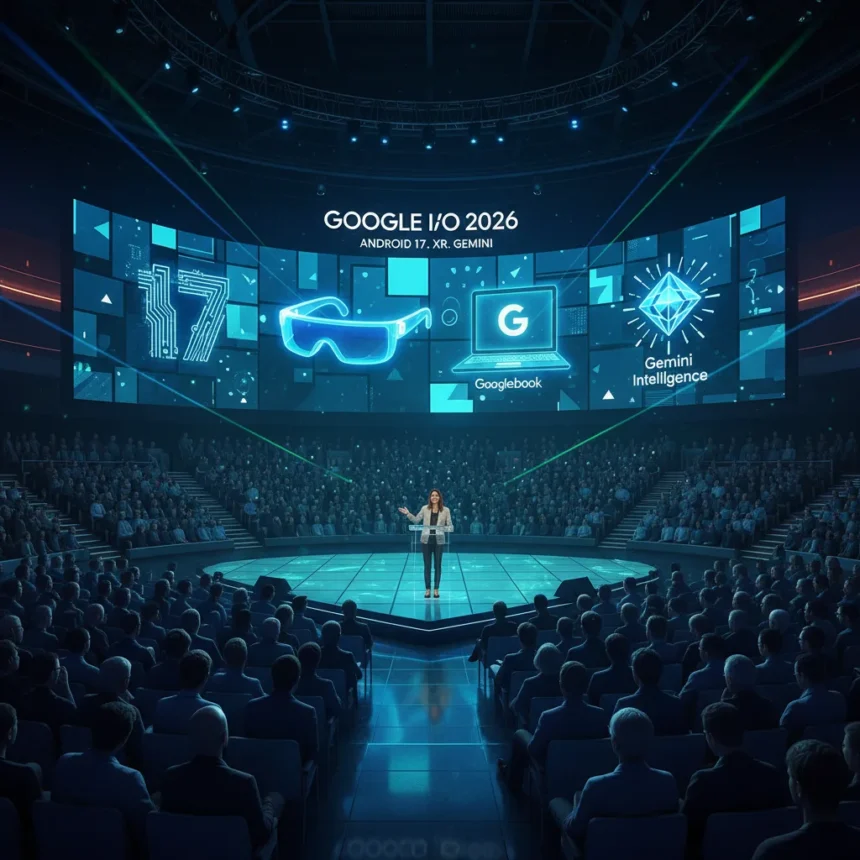
Google I/O 2026 announcements are reshaping Android, artificial intelligence, and spatial computing as Google’s annual developer conference unfolds in May. The event marks Google’s biggest push yet into next-generation mobile and extended reality platforms, with Android 17, Android XR Glasses, Googlebook, and Gemini Intelligence taking center stage.
Key Takeaways
- Android 17 reaches platform stability before Google I/O 2026, signaling readiness for developer deployment
- Android XR Glasses represent Google’s entry into spatial computing, competing with existing AR/VR ecosystems
- Googlebook is a new product announcement emerging from the May 2026 event week
- Gemini Intelligence receives major updates focused on agentic coding and AI breakthroughs
- Google I/O 2026 covers AI, Android, Chrome, Cloud, and developer tools across multiple days
Android 17 and Platform Stability
Android 17 has already entered platform stability, meaning the core OS architecture is locked and ready for final testing before its public launch. This milestone typically occurs weeks before a major Android release, allowing device makers and app developers to finalize their implementations. The timing suggests Android 17 will debut alongside other flagship announcements at Google I/O 2026.
Platform stability is critical for the Android ecosystem. Once locked, developers can confidently optimize apps without worrying that fundamental OS behavior will shift. This phase allows Google to focus on refinement rather than architectural changes, giving manufacturers like Samsung, OnePlus, and others confidence to plan their device roadmaps around the new OS version.
Google I/O 2026 announcements about Android 17 will likely emphasize performance improvements, privacy enhancements, and AI-driven features that differentiate the latest version from Android 16. The company has positioned this as the biggest year for Android yet, with the mobile OS serving as the foundation for both smartphones and emerging XR devices.



Android XR Glasses and Spatial Computing
Android XR Glasses represent Google’s formal entry into the spatial computing market, moving beyond software into hardware-based extended reality. These glasses run a specialized version of Android designed for AR and VR experiences, positioning Google as a direct competitor to Meta’s Quest line and Apple’s Vision Pro.
The significance of Android XR lies in its ecosystem approach. Rather than building a closed platform like Apple, Google is opening Android XR to manufacturers, allowing multiple companies to create their own XR devices running the same underlying OS. This mirrors Google’s mobile strategy and could accelerate XR adoption by lowering barriers to entry for device makers.



Android XR Glasses will likely feature hand tracking, spatial audio, and integration with Google services like Maps, Search, and YouTube. The glasses could serve both consumer and enterprise use cases, from gaming and entertainment to productivity and remote collaboration. Google I/O 2026 announcements will clarify pricing, availability, and the developer tools available for building XR apps.
Googlebook and New Product Categories
Googlebook emerges as a new product announcement from Google I/O 2026, though its exact positioning and capabilities remain to be detailed during the event. The name suggests a computing device in the laptop or tablet category, potentially combining Google’s hardware design with AI and cloud-first functionality.
If Googlebook is indeed a laptop or portable device, it would compete in a crowded market dominated by Chromebooks, MacBooks, and Windows laptops. Google’s advantage would be tight integration with Gemini Intelligence, cloud services, and Android ecosystem compatibility. The device could serve students, developers, and creative professionals who benefit from Google’s AI tools and seamless cloud synchronization.
The announcement matters because it signals Google’s ambition to compete across multiple device categories simultaneously. Rather than focusing solely on phones and tablets, Google is now pushing into XR, laptops, and AI-powered hardware. This diversification reflects the broader tech industry trend toward multi-device ecosystems where data and AI services flow across phones, tablets, glasses, and computers.


Gemini Intelligence and AI Breakthroughs
Gemini Intelligence receives major updates at Google I/O 2026, with a particular focus on agentic coding and AI breakthroughs that could reshape how developers build software. Agentic coding refers to AI systems that can autonomously write, test, and debug code with minimal human oversight, potentially accelerating development cycles and reducing manual work.
Google’s emphasis on Gemini Intelligence at I/O reflects the company’s belief that AI is now the core differentiator across all products. Rather than treating AI as a feature bolted onto existing services, Google is rebuilding its entire platform around AI capabilities. This includes Android 17, Android XR, Chrome, Cloud services, and developer tools—all enhanced with Gemini.
For developers, Gemini Intelligence updates mean new APIs, SDKs, and tools for integrating advanced AI into their apps. For consumers, it means smarter assistants, better search results, and more intuitive interfaces. The competitive landscape matters here: Apple is pushing on-device AI with Apple Intelligence, while Microsoft and Meta are betting on cloud-based AI. Google I/O 2026 announcements will show how Google’s approach differs and where it leads.
Why Google I/O 2026 Matters Now
Google I/O 2026 occurs at a pivotal moment for the tech industry. Spatial computing is moving from niche to mainstream, AI is becoming table stakes for every major platform, and mobile operating systems are evolving into multi-device ecosystems. Google’s announcements at I/O will set the direction for Android’s next chapter and signal how aggressively the company is pursuing XR and AI leadership.
The event also matters for developers and manufacturers who depend on Google’s roadmap. Android 17 platform stability means device makers can finalize their 2026 and 2027 hardware plans. Android XR Glasses open a new category for manufacturers to explore. Gemini Intelligence updates provide new building blocks for app developers. Each announcement ripples through the entire ecosystem.
What to Expect from Google I/O 2026 Coverage
Live coverage of Google I/O 2026 will track announcements as they happen, breaking down technical details, competitive implications, and developer-facing tools. The event spans multiple days and covers Android, Chrome, Cloud, AI, and more. Major announcements typically occur during keynote sessions, followed by technical deep-dives in concurrent sessions.
Following the event, analysis will focus on how Google I/O 2026 announcements compare to competitor strategies. Does Android 17 leapfrog iOS in key areas? Can Android XR Glasses compete with existing AR/VR platforms? Does Gemini Intelligence represent a genuine breakthrough or incremental progress? These questions will shape coverage and reader interest in the months ahead.
Is Google I/O 2026 only for developers?
No. While Google I/O is a developer conference with technical sessions, keynotes are consumer-facing and reveal products that affect everyday users. Announcements like new Pixel phones, Android updates, and AI features appeal to consumers. Developer-focused sessions provide deeper technical context but are not required to understand the major news.
When is Google I/O 2026 happening?
Google I/O 2026 takes place in May, aligning with Google’s traditional annual event schedule. The exact dates and specific announcement times will be confirmed closer to the event. Live coverage from Tom’s Guide will track all major reveals as they unfold.
What’s the difference between Android 17 and Android XR?
Android 17 is the next version of Google’s mobile operating system for smartphones and tablets. Android XR is a specialized version of Android designed specifically for extended reality glasses and headsets. Both share the same core architecture but are optimized for different form factors and interaction models. Android 17 uses touchscreens and voice; Android XR uses hand tracking and spatial gestures.
Google I/O 2026 announcements will define the next era of Android and spatial computing. Whether you’re a developer, manufacturer, or consumer, the products and features revealed at this event will influence the devices you use and the apps you run for years to come. The convergence of Android 17, Android XR, Googlebook, and Gemini Intelligence suggests Google is betting big on AI-first, multi-device ecosystems as the future of computing.
Edited by the All Things Geek team.
Source: Tom's Guide