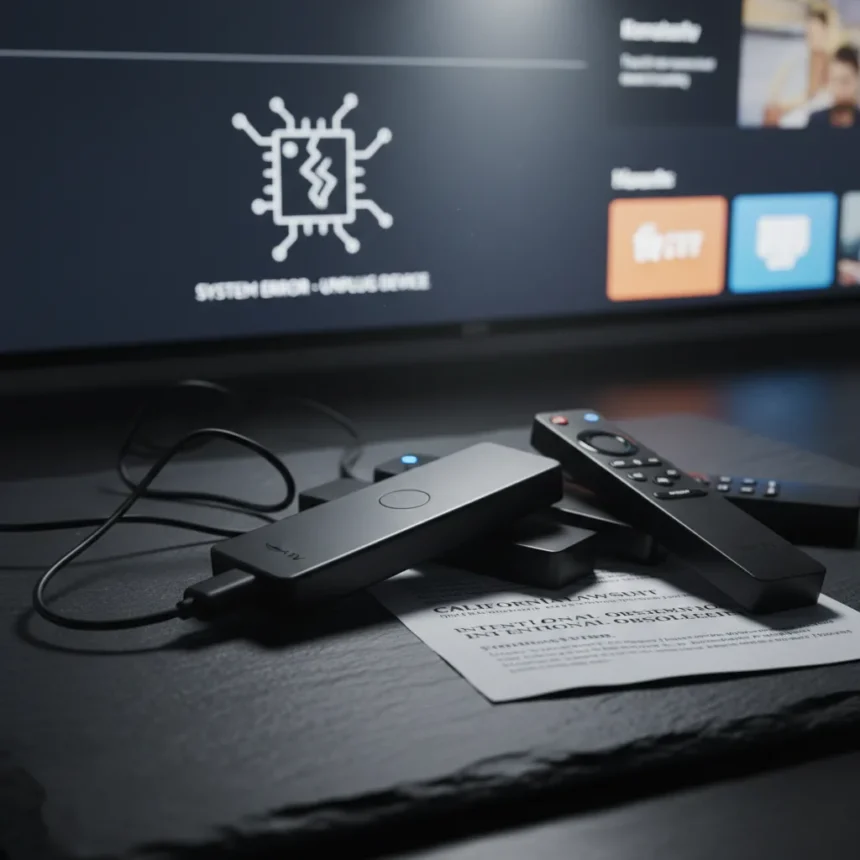
A proposed class action lawsuit filed in California state court alleges that Amazon deliberately rendered first- and second-generation Fire TV Stick devices unusable after discontinuing software support, a practice that would constitute Fire TV Stick obsolescence through intentional neglect. The suit names Amazon.com Inc. and Amazon.com Services LLC as defendants and seeks certification for nationwide classes of affected owners.
Key Takeaways
- Plaintiff Bill Merewhuader purchased two second-generation Fire TV Sticks in 2018 and experienced performance degradation forcing replacement in 2024.
- Lawsuit alleges Amazon marketed devices with promises of instant streaming without buffering, then made them slow and difficult to use by ending software updates.
- First- and second-generation Fire TV Stick models introduced in 2014 are at the center of the Fire TV Stick obsolescence allegations.
- Class action seeks damages, restitution of Amazon’s profits, refunds, and an injunction against future practices.
- Amazon has not publicly responded to the allegations.
What the Lawsuit Claims About Fire TV Stick Obsolescence
The lawsuit alleges that Amazon engaged in deceptive marketing and breach of contract by promoting Fire TV Sticks as devices capable of delivering instant access to hundreds of thousands of movies and television shows without buffering, only to later discontinue software updates that left the hardware functioning but the user experience severely degraded. According to the complaint, Amazon knowingly allowed older devices to become slow, difficult to navigate, and in some cases completely inoperable—what consumers call being “bricked”—despite the underlying hardware remaining intact. The core accusation centers on Fire TV Stick obsolescence as a deliberate strategy rather than natural product aging.
The plaintiff’s experience illustrates the alleged pattern. After purchasing two second-generation Fire TV Stick devices in 2018, Merewhuader reported experiencing significant performance issues that made the devices increasingly unusable. By 2024, the degradation forced him to replace the devices entirely, despite the hardware never physically failing. This timeline suggests that Fire TV Stick obsolescence accelerated after Amazon ended active software support for these older models.
Why This Lawsuit Matters Beyond One Customer
The allegations go beyond a single frustrated user. The lawsuit claims Amazon deliberately withheld information about the risks of software abandonment and that the company’s true intent was to push customers toward purchasing newer Fire TV Stick models or other Amazon streaming devices. This strategy, if proven, would violate California consumer protection laws and constitute a breach of the implicit warranty that a product marketed as a long-term streaming solution would remain functional for a reasonable period.



Federal regulators have raised concerns about manufacturers using software updates to restrict the functionality of devices consumers own, a practice that feeds directly into the Fire TV Stick obsolescence allegations. The lawsuit seeks to establish that Amazon’s approach was not accidental degradation but a calculated business tactic. If certified as a class action, the suit could affect millions of first- and second-generation Fire TV Stick owners across the United States and California specifically.
What Amazon Faces If the Lawsuit Succeeds
The proposed class action seeks multiple remedies: monetary damages for affected consumers, restitution of any profits Amazon earned from forcing upgrades, full refunds for those who purchased affected Fire TV Sticks, an injunction preventing Amazon from engaging in similar practices in the future, and a jury trial to determine liability. The breadth of the requested relief underscores how seriously the plaintiff’s legal team views the Fire TV Stick obsolescence allegations.



Amazon has not publicly responded to the lawsuit allegations, and the case remains in early stages. The company’s silence leaves room for multiple possible defenses: that software updates are necessary for security, that older hardware has inherent limitations, or that device degradation reflects the natural lifecycle of technology rather than intentional design. However, the specific claim that Amazon discontinued support to push upgrades presents a different legal question than typical product obsolescence arguments.
How Fire TV Stick Obsolescence Compares to Broader Tech Practices
Fire TV Stick obsolescence allegations fit into a larger pattern of consumer complaints about planned obsolescence in consumer electronics. Unlike smartphones or laptops, which face genuine hardware limitations as components age, streaming devices like the Fire TV Stick rely primarily on software performance. When a manufacturer stops updating software for a device that consumers bought expecting years of use, the distinction between natural obsolescence and intentional abandonment becomes legally and ethically significant.
Older Fire TV Stick models were never positioned as temporary devices. Amazon marketed them as long-term streaming solutions, implying they would receive ongoing support and improvements. If the lawsuit can prove that Amazon deliberately degraded performance through the absence of updates rather than through security necessities, Fire TV Stick obsolescence becomes a case study in how software control over hardware can harm consumer interests.
What Consumers Should Know About Older Fire TV Sticks
If you own a first- or second-generation Fire TV Stick, the lawsuit raises valid questions about your device’s future. While the case proceeds through the courts, Amazon has not announced any commitment to extend software support for older models or to compensate affected users. The practical implication is clear: older Fire TV Sticks may continue to experience performance issues as they fall further behind in software support cycles.


The lawsuit seeks to establish that this outcome was not inevitable but engineered. Whether a court agrees will determine whether Fire TV Stick obsolescence becomes a cautionary tale about device ownership in the streaming era or simply another example of how technology ages.
Is the lawsuit claiming Amazon intentionally broke Fire TV Sticks?
Yes. The lawsuit alleges that Amazon deliberately discontinued software updates for first- and second-generation Fire TV Sticks to make them slow and difficult to use, pushing customers toward purchasing newer devices. The plaintiff claims this constitutes intentional obsolescence rather than natural product aging.
Which Fire TV Stick models are affected by the lawsuit?
The lawsuit targets first-generation Fire TV Sticks (introduced in 2014) and second-generation models, which are the oldest versions still in consumer hands. Newer Fire TV Stick generations are not part of the current class action allegations.
What is Amazon’s response to the Fire TV Stick obsolescence lawsuit?
Amazon has not publicly responded to the allegations as of the latest available information. The company has not confirmed or denied the claims, and the case remains in its early stages in California state court.
The Fire TV Stick obsolescence lawsuit represents a critical moment for consumer rights in the streaming device market. If the court certifies the class action and rules in favor of consumers, it could establish important legal precedent about manufacturer obligations to support devices beyond their initial sales window. For Amazon, the case tests whether software control over hardware constitutes a form of consumer deception when used to force upgrades. For Fire TV Stick owners, it offers a potential path to compensation and accountability.
Edited by the All Things Geek team.
Source: Android Central