




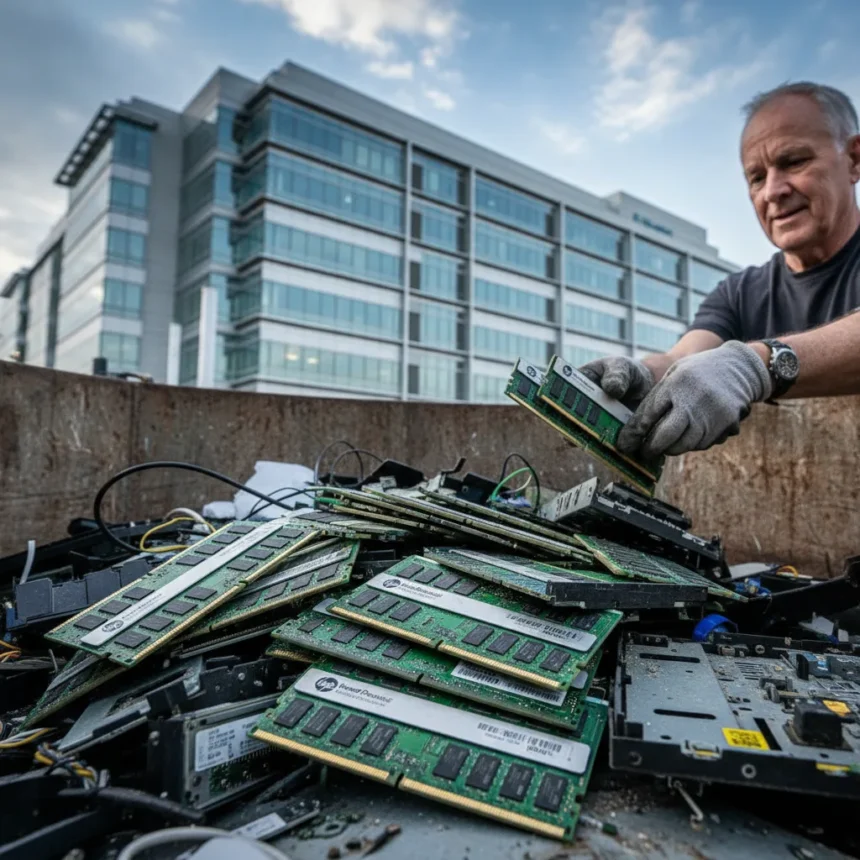
DDR4 ECC RAM e-waste represents a genuine financial opportunity as corporations discard perfectly functional enterprise memory during server refreshes. A Redditor’s father recently recovered 72 HPE 32GB DDR4-2666 ECC RDIMMs from the dumpster after his company upgraded to newer servers, salvaging hardware worth approximately $20,000 that would otherwise have become electronic waste.
Key Takeaways
- 72 HPE 32GB DDR4-2666 ECC RDIMMs rescued from e-waste disposal, valued at roughly $20,000 total.
- Each stick carries approximately $278 secondary market value based on current DDR4 ECC pricing.
- Corporate server upgrades drive premature disposal of functional enterprise-grade memory components.
- DDR4 ECC memory remains in demand for homelabs, server upgrades, and workstation builds despite DDR5 transition.
- E-waste recovery represents untapped value for IT professionals with access to corporate hardware disposal streams.
Why DDR4 ECC RAM Still Commands Premium Prices
Enterprise-grade DDR4 ECC memory occupies a unique market position. Unlike consumer DDR4 sticks, ECC (error-correcting code) variants include built-in error detection and correction, making them essential for server environments where data integrity outweighs speed. The DDR4-2666 standard, released around 2017, remains widely deployed across data centers and enterprise infrastructure despite the ongoing transition to DDR5. This creates sustained demand from organizations unable or unwilling to upgrade entire server fleets simultaneously.
The rescued HPE modules represent genuine enterprise hardware, not consumer surplus. HPE (Hewlett Packard Enterprise) manufactures registered DIMMs (RDIMMs) specifically for server applications, commanding higher prices than standard DDR4 on secondary markets. Used examples typically sell for $100–300 per 32GB stick depending on condition, speed grade, and current market demand. The $20,000 valuation suggests these sticks remain in excellent working condition, making them immediately resalable or deployable in homelabs and smaller server environments.
The E-Waste Problem in Corporate Hardware Refresh Cycles
This dumpster rescue highlights a systemic inefficiency in enterprise IT procurement. When companies upgrade servers, they often discard functional components rather than resell or donate them. The DDR4 ECC modules in question were headed for e-waste despite retaining full utility and market value. IT professionals working at such companies occupy a privileged position—they can identify salvageable hardware before it reaches disposal facilities and, in this case, rescue thousands of dollars in equipment.


The broader pattern reflects how corporate budget cycles prioritize new deployments over asset recovery. A company purchasing DDR5-capable servers has little incentive to extract and resell older DDR4 memory; the administrative overhead often exceeds perceived value. This creates opportunities for alert employees to recover hardware through proper channels, turning corporate waste into personal or community resources. The Reddit post’s popularity suggests this experience resonates with others who’ve witnessed similar discards.
DDR4 ECC RAM Demand in Homelabs and Alternative Markets
Beyond enterprise data centers, DDR4 ECC memory fuels a thriving secondary market among homelab enthusiasts, small business server operators, and workstation builders. These users prioritize memory stability and error correction over raw speed, making ECC variants attractive even as consumer DDR5 proliferates. A 32GB DDR4-2666 ECC RDIMM represents a substantial upgrade for older server hardware or a cost-effective way to populate a multi-socket workstation without premium pricing.

The salvaged batch’s value depends partly on resale channels. eBay, Newegg, and Amazon regularly list used enterprise DDR4 ECC memory, establishing price floors that validate the $20,000 estimate. Buyers actively search for bulk quantities at discount rates, meaning a Redditor with 72 matching sticks could liquidate the entire haul efficiently. Alternatively, these modules could power a substantial homelab setup—enough to outfit multiple servers with generous memory allocations.
Is Corporate E-Waste Recovery Realistic for IT Workers?
The Redditor’s father benefited from proximity and opportunity—he worked at a company performing the upgrade and recognized value in discarded components. Not every IT professional will encounter similar windfalls, but the incident illustrates how organizational hierarchies and disposal procedures create recovery possibilities. Companies with formal asset disposal processes may offer employees first right of refusal on surplus hardware, while others simply dump equipment destined for recycling.
The key variable is access. IT staff, facilities managers, and procurement specialists see hardware before it vanishes into e-waste streams. Building relationships with these teams, understanding disposal schedules, and offering to take surplus equipment off their hands can yield substantial rewards. The $20,000 rescue required no special skills—just awareness and willingness to intercept hardware that would otherwise disappear.
Will DDR4 ECC Memory Remain Valuable?
The DDR5 transition proceeds unevenly. Enterprise adoption lags consumer markets because server manufacturers and customers prioritize stability over latest performance. Organizations with functional DDR4 infrastructure face no immediate pressure to upgrade, sustaining demand for compatible memory upgrades. Even as DDR5 becomes standard, legacy systems will require DDR4 ECC replacements for years, potentially decades in some environments.


The salvaged HPE modules face no obsolescence risk in the near term. Whether resold individually, bundled for bulk sales, or deployed in a homelab, these sticks retain utility and market value. The real risk lies in storage and logistics—shipping 72 memory modules requires careful packaging and carrier selection, but the economics justify the effort given current pricing.
Could This Happen at Your Company?
The answer depends on your organization’s scale and IT maturity. Large enterprises with regular hardware refresh cycles almost certainly discard valuable components. Medium-sized firms may have less frequent turnover but larger per-device values when upgrades do occur. The critical factor is awareness—knowing when server refreshes happen and understanding what gets discarded. A casual conversation with IT leadership or facilities staff could reveal similar opportunities lurking in your company’s disposal pipeline.
How much is used DDR4 ECC RAM worth on the secondary market?
Individual 32GB DDR4-2666 ECC RDIMMs typically sell for $100–300 on secondary markets like eBay, depending on condition, speed grade, and current demand. The $20,000 valuation for 72 sticks implies approximately $278 per module, reflecting strong market demand for enterprise-grade memory.
Can you use server DDR4 ECC RAM in a regular PC?
Server-grade DDR4 ECC RDIMMs require compatible motherboards with RDIMM slots and ECC support. Consumer motherboards do not support registered DIMMs, but workstation and server platforms do. Homelabs and small business servers represent the primary reuse market for salvaged enterprise memory.
Why do companies throw away perfectly good server memory?
Corporate IT budgets prioritize new deployments over asset recovery. When servers upgrade to DDR5 or newer architectures, companies often lack incentive to extract, test, and resell older memory. Administrative overhead and perceived liability can exceed the recovery value, leading disposal teams to treat functional hardware as waste rather than inventory.
The $20,000 dumpster rescue underscores a simple truth: corporate e-waste streams contain genuine value, accessible to those positioned to intercept it. For IT professionals, facilities staff, and procurement specialists, awareness of hardware disposal cycles transforms routine upgrades into potential windfalls. DDR4 ECC memory will remain in demand as long as organizations operate legacy infrastructure, making today’s discards tomorrow’s critical upgrades for cost-conscious buyers and homelab builders.
Where to Buy
Edited by the All Things Geek team.
Source: Tom's Hardware