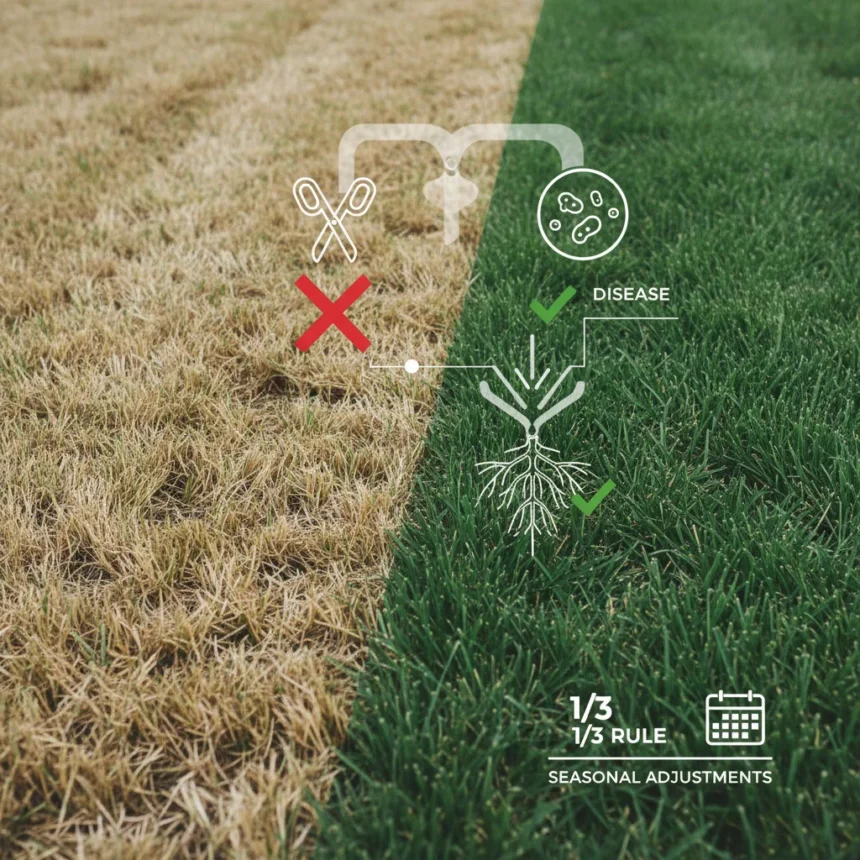
Lawn mowing mistakes killing grass are more common than most homeowners realize. The habit of cutting grass short for a neat appearance actually starves the root system, reduces drought resistance, and creates openings for disease—all while weakening the lawn’s ability to survive seasonal stress.
Key Takeaways
- Never remove more than one-third of grass height per mow to maintain healthy root systems.
- Cutting too short (scalping) reduces drought resistance and invites weeds and disease.
- Mow when grass reaches 4 inches tall and soil temperatures hit 45-55°F for cool-season grasses.
- Before winter, cut to 2.5-3 inches when daytime temperatures drop below 40-50°F.
- Sharpen mower blades at least once per season for clean cuts that heal faster.
The One-Third Rule: Why Cutting Too Short Damages Lawn Health
The foundation of healthy lawn mowing is simple: never remove more than one-third of the grass blade height in a single mow. This rule protects the root system from shock. When you cut too aggressively, roots cannot absorb enough nutrients, the grass weakens, and the lawn becomes vulnerable to heat stress and disease. Scalping—cutting grass so short it looks bare—diverts the plant’s energy toward regrowing blades instead of developing deeper roots that can access water and nutrients during dry periods.
As a general guideline, maintain your cutting height consistently and adjust it seasonally. Higher cuts in summer provide shade to soil and protect against heat damage, while different seasonal settings support your grass type’s natural growth cycle. The visual reward of a manicured lawn is not worth the root damage that short cutting causes.
Timing Your First Spring Mow: Temperature and Blade Height Matter
Many homeowners rush the first spring mow, but premature cutting stresses grass that is still emerging from dormancy. Wait until grass blades reach 4 inches tall and soil temperatures stabilize at 45-55°F for cool-season grasses or 60-65°F for warm-season grasses. At these temperatures, the root system has stabilized enough to handle cutting without shock. Early mowing scalps delicate blades and puts stress on roots that are just beginning to push growth.


This timing varies by region and grass type, so monitor both blade height and soil temperature rather than following a calendar date. Cutting too early in spring can set your lawn back for months, creating thin patches that weeds exploit.
Fall and Winter Mowing: Grass Keeps Growing When You Stop
A widespread misconception stops homeowners from mowing in fall: the belief that cooler weather means grass stops growing. This is false. Grass continues to grow during fall, just more slowly. Stopping mowing based on temperature alone leaves long blades heading into winter, which can trap moisture and invite fungal disease. Instead, continue mowing until daytime temperatures consistently stay below 40-50°F, then cut your final mow to 2.5-3 inches in height.



Fall growth may be slower, but it is still active. Skipping mows in September and early October leaves your lawn vulnerable to disease and winter stress. The final pre-winter cut should be shorter than summer heights to prevent matting under snow and to reduce fungal infection risk during dormancy.
Clumping Cuttings and Blade Sharpness: Hidden Damage
Leaving grass too long before cutting creates another problem: clumping. When cuttings pile up instead of dispersing, they smother the grass underneath, inhibit growth, and take far longer to decompose. Regular mowing prevents this buildup. If clumping happens, use a mulching mower or sharpen your blades—dull blades tear grass instead of cutting cleanly, and torn edges heal slowly and invite disease.
Sharpen your mower blades at least once per season, ideally before spring and again mid-summer. Clean cuts heal in hours; torn edges can take days and remain vulnerable to fungal infection. This single maintenance step pays dividends across the entire growing season.
Does the one-third rule apply to all grass types?
Yes. The one-third rule protects root systems for both cool-season and warm-season grasses. What changes is the ideal cutting height and the seasonal timing—cool-season grasses thrive at taller heights in summer, while warm-season grasses tolerate lower cuts. Always follow the one-third rule regardless of your grass type.



Can I mow my lawn in May if I want to participate in No Mow May?
No Mow May campaigns encourage skipping or reducing mowing in May to support wildflower growth and pollinators. This contrasts with regular mowing schedules but works for homeowners prioritizing ecological benefit over lawn appearance. If you choose to mow, follow the one-third rule; if you skip the month, resume regular mowing in June with the one-third rule in mind.
What happens if I scalp my lawn by accident?
Accidental scalping stresses the grass and weakens roots temporarily, but recovery is possible. Avoid mowing again until new growth reaches at least 2.5 inches, then follow the one-third rule going forward. Water deeply and regularly to support root recovery, and expect slower growth for 2-3 weeks.
The difference between a thriving lawn and a struggling one often comes down to mowing discipline. Cutting too short feels productive and looks neat, but it trades long-term health for short-term appearance. Follow the one-third rule, adjust your cutting height seasonally, keep your blades sharp, and mow on a regular schedule—even in fall. Your grass will reward you with deeper roots, better drought tolerance, and resistance to weeds and disease.
Where to Buy
29% OFFAmazonScotts Ez Seed Patch & Repair for Sun and Shade$16.99$23.99shop now | AmazonGarden Guru Handheld Seed Spreader Shaker$18.95shop now | AmazonFiskars Stand-Up Weed Puller Tool$48.98shop now | 39% OFFAmazonGreenworks 48v (24v X 2) 17" Cordless (push) Lawn Mower$229.99$379.99shop now
Edited by the All Things Geek team.
Source: Tom's Guide