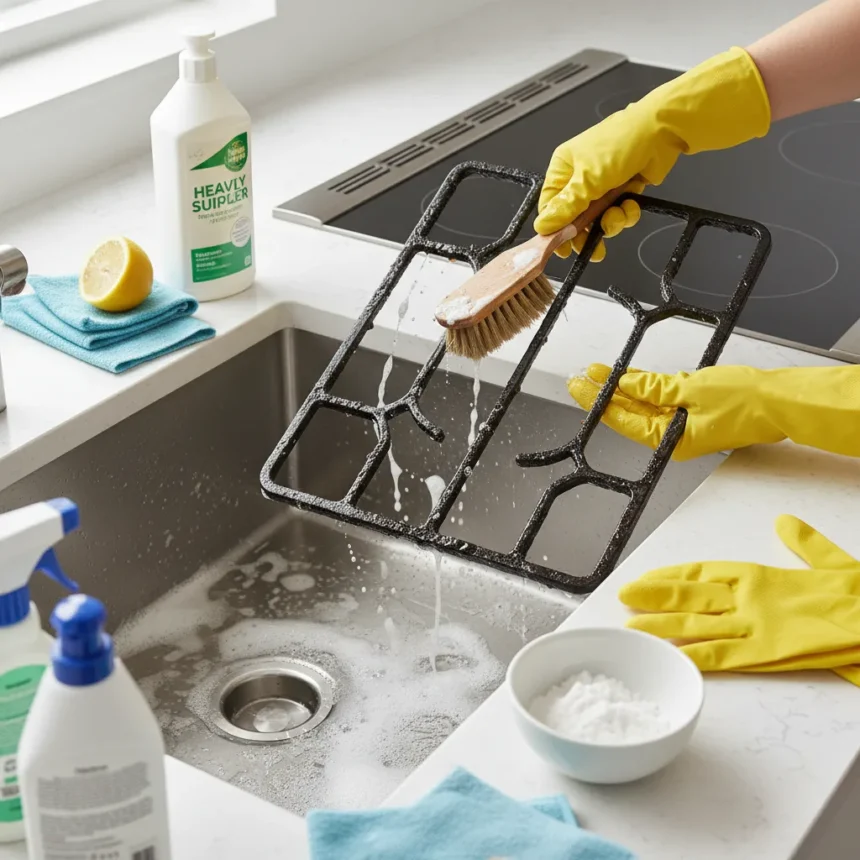
Spring cleaning stove grates is one of those seasonal tasks that separates a genuinely clean kitchen from one that just looks clean on the surface. Most people wipe down their stovetop regularly, but the grates themselves accumulate baked-on food and grime that standard wiping never touches. When you actually commit to deep cleaning them, you discover layers of residue that have been building up for months.
Key Takeaways
- Baked-on grime on stove grates requires targeted cleaning methods beyond daily wiping.
- Baking soda paste (3 parts soda to 1 part water) left for 20 minutes tackles very dirty grates effectively.
- Many gas stove grates are dishwasher-safe on the lower rack with aggressive cycles.
- Uncoated cast iron grates should not be soaked; seasoned versions need oil and oven baking after cleaning.
- Non-abrasive pads and soft bristle brushes prevent damage while removing stuck-on food.
Why Spring Cleaning Stove Grates Actually Matters
Your stove grates endure constant heat, splattering oil, and food particles that harden into stubborn deposits. Unlike your stovetop surface, grates trap debris in their grooves and crevices where regular cleaning tools cannot reach. Spring is the ideal moment to address this buildup because deep cleaning requires time and proper ventilation—conditions that align with seasonal home refreshes. Ignoring grate maintenance means you are cooking on increasingly dirty surfaces, which affects both hygiene and heat distribution.
The difference between surface cleaning and deep cleaning is dramatic. A quick wipe removes loose crumbs and fresh spills, but baked-on residue requires soaking, scrubbing, and in many cases, chemical assistance. This is why spring cleaning stove grates deserves a dedicated block of time rather than being squeezed into your regular routine.
The Best Methods for Spring Cleaning Stove Grates
Your approach depends on what type of grates you own and how heavily soiled they are. The most common methods fall into three categories: soaking and scrubbing, dishwasher cleaning, and seasoning for cast iron.


For standard soaking, remove your grates and submerge them in hot soapy water for at least 20 minutes. If they are very dirty, create a baking soda paste by mixing three parts baking soda with one part water, coat the grates generously, and let the paste sit for 20 minutes before scrubbing. Use a soft bristled brush or non-abrasive scrubbing pad to avoid damaging the finish. This method works because the paste penetrates baked-on food without requiring aggressive scrubbing that could scratch the surface.
Many modern gas stove grates are dishwasher-safe, which offers a hands-off alternative. Place them on the lower rack and run an aggressive cycle, though pre-scrubbing improves results significantly. Check your appliance manual first, as some grates are not suitable for dishwasher cleaning.



If you have seasoned cast iron grates, avoid soaking them entirely unless they are coated, as uncoated cast iron risks rust. Instead, heat your stovetop first to loosen stuck-on crud, then scrub gently with a hot, soapy cloth. For stubborn grime, Bar Keepers Friend offers a gentle abrasive option. After cleaning, dry the grates thoroughly, rub them with an oil-dampened paper towel using a high smoke point oil like avocado or vegetable oil, and bake them on a sheet at 350°F for 45 minutes to reseason. This process restores the protective coating that prevents rust and maintains the grates’ non-stick properties.
Common Mistakes That Make Spring Cleaning Stove Grates Harder
The biggest mistake is soaking uncoated cast iron grates without a plan for immediate drying. Water sitting on raw cast iron accelerates rust formation, turning a cleaning session into a replacement necessity. If your grates are cast iron, confirm whether they are seasoned or uncoated before soaking.
Another frequent error is using abrasive cleaners or steel wool on finished surfaces. This scratches the protective coating and creates rough spots where food and grime accumulate faster. Stick to non-abrasive pads and soft brushes unless your grates are specifically designed to withstand harsher treatment.
Many people also skip the pre-scrubbing step before running grates through the dishwasher, expecting the machine to handle all the work. Dishwashers excel at surface dirt but struggle with baked-on residue, so a quick hand scrub beforehand makes the difference between mediocre and genuinely clean results.



What Tools You Actually Need
You do not need specialized equipment to clean stove grates effectively. A soft bristled brush, non-abrasive scrubbing pads, a damp cloth, and basic dish soap handle most situations. For very stubborn grime, straight pins, small-gauge wire, or a cooktop scraper help dislodge debris from tight spaces without damaging the grate itself. A screwdriver can also assist in removing grates if they are stuck.
If you choose the baking soda method, you already have the ingredient at home. For seasoned cast iron, keep a high smoke point oil on hand—avocado, olive, or vegetable oil all work. Bar Keepers Friend is an optional addition for particularly stubborn buildup on cast iron, offering gentle abrasive cleaning without the harshness of steel wool.
How Often Should You Deep Clean Stove Grates?
Spring cleaning provides the ideal opportunity for a thorough annual deep clean, but the frequency depends on how much you cook. Heavy daily cooking may warrant twice-yearly deep cleaning, while light use might only need an annual refresh. Daily maintenance—removing grates and rinsing them with hot soapy water—prevents buildup and makes seasonal deep cleaning faster.
The payoff is immediate and visible. Clean grates look brighter, conduct heat more evenly, and make your entire cooktop feel more hygienic. Once you have experienced truly clean grates, you will understand why this overlooked task deserves a place in your spring cleaning checklist.
Can you use vinegar and baking soda on all stove grates?
Vinegar and baking soda work safely on most grates, creating a fizzing paste that helps break down grime. However, avoid this method on uncoated cast iron, which can rust if not dried immediately. For coated or stainless steel grates, the vinegar-baking soda approach is effective but requires significant scrubbing.
Is it safe to put stove grates in the dishwasher?
Many modern gas stove grates are dishwasher-safe, but check your appliance manual first. Place them on the lower rack with an aggressive cycle, and pre-scrub for best results. If your grates are cast iron or have a protective coating, hand washing is safer.
How do you prevent rust on cast iron stove grates?
After cleaning and drying cast iron grates thoroughly, rub them with an oil-dampened cloth and bake them at 350°F for 45 minutes to reseason the surface. This protective layer prevents rust and maintains the grates’ heat distribution properties. Never leave cast iron wet or soaking without an immediate drying plan.
Spring cleaning stove grates transforms an overlooked kitchen component into something genuinely clean and functional. The effort is modest, the tools are simple, and the results are immediately visible. If you have been putting this task off, now is the time to commit—your cooktop will thank you.
Edited by the All Things Geek team.
Source: Tom's Guide