





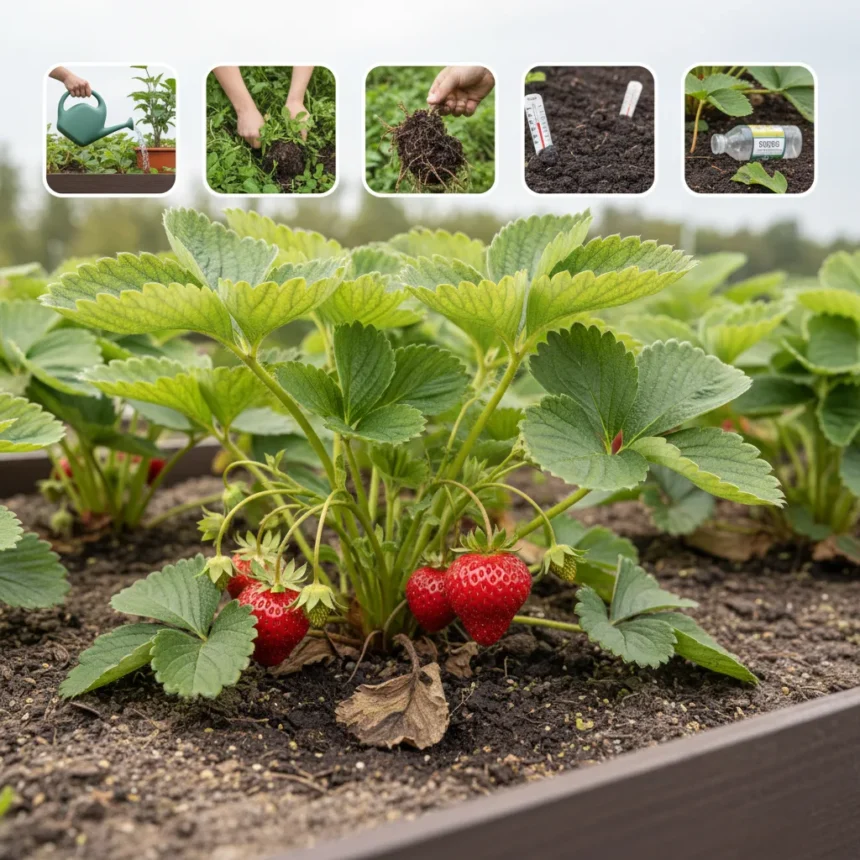
Drooping strawberry plants are a frustration every home gardener encounters, but the problem is almost always fixable once you identify the cause. Your strawberries wilt for specific reasons—poor drainage, wrong sunlight, incorrect watering, improper planting depth, or spacing issues—and each has a straightforward solution.
Key Takeaways
- Drooping strawberry plants signal one of five common gardening mistakes, each with a direct fix.
- Strawberries need 6 to 10 hours of sunlight daily and approximately 1 inch of water per week.
- Container-grown strawberries require pots 16 to 18 inches in diameter with proper drainage holes.
- The plant crown must remain above soil level to prevent rot and drooping.
- Poor drainage is a leading cause of wilting and fungal problems in strawberry plants.
Drainage Problems Are the Silent Killer of Strawberry Plants
Inadequate drainage is the most common culprit behind drooping strawberry plants. When soil holds too much moisture, roots suffocate and begin to rot, causing the entire plant to wilt even if you water it correctly. For container-grown strawberries, use a pot approximately 16 to 18 inches in diameter with drainage holes, then fill one-third of the bottom with broken pottery or small rocks to create a drainage layer. This step alone prevents water from pooling around the roots. For in-ground planting, never choose a location where tomatoes, potatoes, peppers, or eggplants grew in the previous four years, as soil-borne fungus from those crops will attack strawberry roots and cause drooping.
If your strawberries are already drooping from poor drainage, repot immediately. Gently remove the plant, inspect the roots for dark, mushy sections, trim away any soft tissue with clean scissors, and replant in fresh soil with proper drainage. This rescue operation works best if caught early.
Incorrect Sunlight Exposure Weakens Strawberry Growth
Strawberry plants drooping from insufficient light is less obvious than drainage problems, but equally damaging. Strawberries require 6 to 10 hours of sunlight daily to produce strong stems and healthy fruit. Plants receiving fewer than 6 hours become spindly, weak, and prone to drooping under their own weight or light wind. If your strawberries sit in partial shade, relocate them to a sunnier spot—a south-facing position works best in most climates. Container-grown strawberries have an advantage here: you can move them throughout the day to chase the sun if needed.


Conversely, intense afternoon heat in very hot regions can stress plants, but this is rare compared to insufficient light. Most home gardeners err on the side of too little sun, not too much.
Watering Mistakes Lead to Wilting and Disease
How and how much you water determines whether your strawberry plants thrive or droop. Overwatering causes root rot; underwatering causes drought stress. The target is approximately 1 inch of water per week, delivered at the base of the plant only. Water the soil directly, never the leaves or fruit, because wet foliage invites fungal diseases that weaken the plant and cause drooping. A drip irrigation line or soaker hose is ideal for this precision watering.



Check soil moisture before watering by pressing your finger 1 inch into the soil. If it feels moist, wait another day. If it feels dry, water thoroughly until moisture drains from the pot’s base. This simple test prevents both overwatering and underwatering, the two watering mistakes that most commonly cause drooping.
Planting Depth and Crown Position Are Critical
Many gardeners plant strawberries too deeply, burying the crown—the point where leaves emerge from the roots—beneath the soil surface. This is a fatal mistake. The crown must remain above the soil level to prevent rot and disease. When the crown sits in soil, moisture accumulates around it, encouraging fungal infection that causes drooping and eventual plant death.
For in-ground planting, dig a hole deep enough to accommodate the root ball without bending roots, then position the crown so it sits just above the soil surface. For container planting, loosen the root ball gently, place the plant in the hole, cover only the roots with soil, and ensure the crown stays exposed. This single correction saves countless drooping plants.
Spacing Affects Air Circulation and Health
Poor spacing reduces air circulation around plants, trapping moisture and promoting fungal disease. For in-ground beds, space strawberries 20 inches apart with 4 feet between rows. For container planting, space multiple plants 10 to 12 inches apart in a large planter. Crowded plants compete for nutrients, light, and air, and drooping often follows within weeks. If your strawberries are too close together, thin them out by removing the weakest plants. This improves air flow and redirects nutrients to healthier specimens.



How often should I water drooping strawberry plants?
Water drooping strawberry plants at the base only, aiming for approximately 1 inch of water per week. Check soil moisture before each watering—if the top inch feels dry, water; if it feels moist, wait. Once you address the underlying cause (drainage, sunlight, planting depth, or spacing), the plant should recover within 7 to 10 days if the damage is not severe.
Can drooping strawberry plants recover?
Yes, drooping strawberry plants recover quickly if you identify and fix the problem early. Root rot from poor drainage is the hardest to reverse, but even this responds to immediate repotting and root pruning. Wilting from underwatering or insufficient light improves within days. If the crown is rotted or the entire plant is blackened, it is too far gone—remove it and start fresh.
What size pot do strawberries need?
Container-grown strawberries need a pot approximately 16 to 18 inches in diameter with drainage holes. This size accommodates the root system without excessive soil volume, which would retain too much moisture. Smaller pots dry out too quickly; larger pots encourage overwatering and root rot.
Drooping strawberry plants are a sign that something in your care routine needs adjustment, not that your gardening skills are failing. Diagnose which of these five mistakes applies to your situation, make the correction, and your strawberries will bounce back. The key is acting fast—the longer a plant droops, the harder it is to recover.
Edited by the All Things Geek team.
Source: Tom's Guide




