





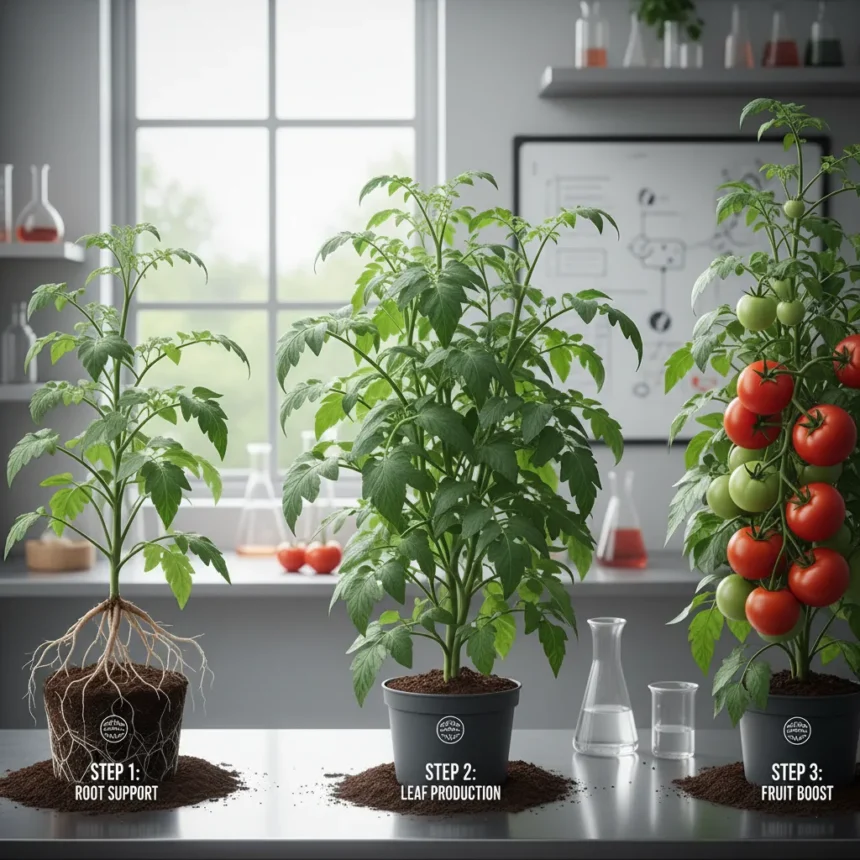
A tomato fertilizing schedule based on plant growth stages beats the guesswork of random feeding. Instead of dumping fertilizer on a calendar date, the smarter approach feeds tomatoes at three critical moments: planting, establishment, and flowering. Tomatoes are heavy feeders and demand nutrient support across their entire lifecycle, but timing matters more than frequency.
Key Takeaways
- Feed tomatoes at three growth stages: planting, early establishment, and flowering/fruiting.
- Tomatoes are heavy feeders requiring consistent nutrient support throughout their lifecycle.
- Stage-based feeding delivers nutrients when plants need them most for root, leaf, and fruit development.
- Using tomato-specific or balanced vegetable fertilizer ensures proper nutrient ratios.
- Proper fertilizing combined with support and care maximizes harvest size and quality.
Why tomato fertilizing schedule matters for harvest quality
Most gardeners either under-feed tomatoes and watch yields shrink, or over-feed them and create leafy plants with sparse fruit. A tomato fertilizing schedule eliminates both mistakes by aligning nutrient delivery to what the plant actually needs at each stage. Heavy feeders like tomatoes cannot survive on soil nutrients alone—they require supplemental feeding to produce the abundant harvest gardeners expect. The difference between a mediocre crop and a bountiful one often comes down to feeding at the right moments, not feeding more often.
The three-step approach works because it matches plant physiology. Early feeding supports root establishment and early growth. Mid-stage feeding fuels leafy development. Late-stage feeding directs energy into flower and fruit production instead of wasting it on excess foliage. Skipping any stage risks weak plants or reduced fruit set.
Step 1: Feed at planting and transplanting
The first feeding happens when you plant tomato seedlings into the garden or larger containers. This is the foundation of the tomato fertilizing schedule. At this stage, roots are establishing and the plant is vulnerable to stress. A nutrient boost at planting helps roots expand quickly and supports early growth. Work tomato-specific fertilizer or a balanced vegetable fertilizer into the soil around the transplant, or apply it as a diluted solution at the base. The goal is not to overwhelm the young plant but to give it the resources it needs to anchor itself and begin growing confidently.


Timing this first feeding matters. Apply it as soon as seedlings go into the ground, not weeks later. Early establishment is fragile—missing this window means the plant starts behind and struggles to catch up even if you feed it later.
Step 2: Feed during early growth and establishment
Once the tomato plant is visibly growing and has put out several sets of true leaves, it enters the second feeding stage. This is when the plant transitions from survival mode to active growth. At this point, it is developing its framework—stems, branches, and foliage—before it starts flowering. Feed the plant again during this phase to support vigorous leafy growth. A well-fed plant at this stage builds the structure needed to hold a heavy fruit load later.



This feeding typically occurs 3 to 4 weeks after planting, though the exact timing depends on your plant’s growth rate and local conditions. Watch the plant itself rather than a calendar. Once it is clearly established and growing, it is time for the second feeding. Skip this step and the plant may flower prematurely on a weak frame, producing fewer and smaller fruits.
Step 3: Feed during flowering and fruit development
The third feeding arrives when flower buds appear and the plant starts setting fruit. This is the critical stage where your tomato fertilizing schedule pays off. At this point, the plant has already built its structure and now needs nutrients directed toward reproduction—flowers and fruit. Feeding during flowering and early fruit development supports larger, healthier tomatoes and extends the productive season. Use a fertilizer balanced for fruiting (often slightly lower in nitrogen, higher in phosphorus and potassium) to encourage fruit over foliage.
This final feeding is not a one-time event. Continue light feeding every 2 to 3 weeks as long as the plant is flowering and producing fruit. The tomato fertilizing schedule does not end once fruiting starts; it sustains the harvest through the season. Neglecting this stage results in smaller fruits, earlier crop failure, and wasted potential from an otherwise healthy plant.
Choosing the right fertilizer for tomatoes
The tomato fertilizing schedule works only if you use appropriate fertilizer. Tomato-specific formulas are designed for this purpose, but a balanced vegetable fertilizer also works well. Look for products labeled for vegetables or fruiting plants rather than general-purpose lawn fertilizers. The nutrient ratio matters—early feedings can use a balanced formula, while later feedings benefit from slightly higher phosphorus and potassium to support flowering and fruiting.



Application method varies by product. Some fertilizers dissolve in water for liquid feeding, others are granules worked into soil, and some are slow-release pellets. Follow the product instructions for dilution rates and frequency. Over-fertilizing is as problematic as under-feeding; it can burn roots, promote disease, or create excessive foliage at the expense of fruit.
Beyond fertilizing: support and care matter too
A tomato fertilizing schedule alone does not guarantee success. The article’s guidance emphasizes that feeding, support, and care work together. Sturdy stakes or cages keep plants upright as they grow heavy with fruit. Consistent watering prevents stress and allows the plant to use fertilizer effectively. Removing lower leaves improves air circulation and reduces disease. These practices combined with proper feeding create the conditions for a truly bountiful harvest.
Is the tomato fertilizing schedule the same for all varieties?
The three-step approach works for most tomato varieties, but some adjustments may apply. Determinate varieties (bush types) that produce all fruit at once may need heavier feeding during the flowering stage. Indeterminate varieties (vining types) that produce continuously benefit from sustained feeding throughout the season. Cherry tomatoes and heirloom types have different nutrient demands than beefsteak varieties. Observe your plants and adjust feeding frequency if growth appears slow or fruit production lags.
Can you over-fertilize tomatoes with this schedule?
Yes. Following the three-step tomato fertilizing schedule does not mean using maximum strength fertilizer at each stage. Over-feeding causes excessive leafy growth, weak stems, and reduced fruiting. It can also burn roots and create nutrient imbalances in the soil. Use the recommended dosage on your fertilizer package and err on the side of lighter feeding rather than heavier. A slightly under-fed tomato plant typically produces better fruit than an over-fed one.
What if you missed a feeding in the tomato fertilizing schedule?
Missing one feeding is not catastrophic, but it will affect yield. If you missed the planting stage, feed the plant as soon as you notice it is established. If you missed the early growth stage, start feeding when you see flower buds. The later you begin feeding, the smaller and fewer your tomatoes will be. The key is to catch up before flowering begins—feeding during fruit development cannot fully compensate for missed early nutrition.
The tomato fertilizing schedule is simple because it aligns with how plants actually grow. Three strategic feedings at the right moments deliver better results than daily guessing or calendar-based routines. Feed at planting, feed during establishment, feed during flowering, and let the plant do the rest. That discipline transforms an average tomato crop into the bountiful harvest worth the effort.
Edited by the All Things Geek team.
Source: Tom's Guide




