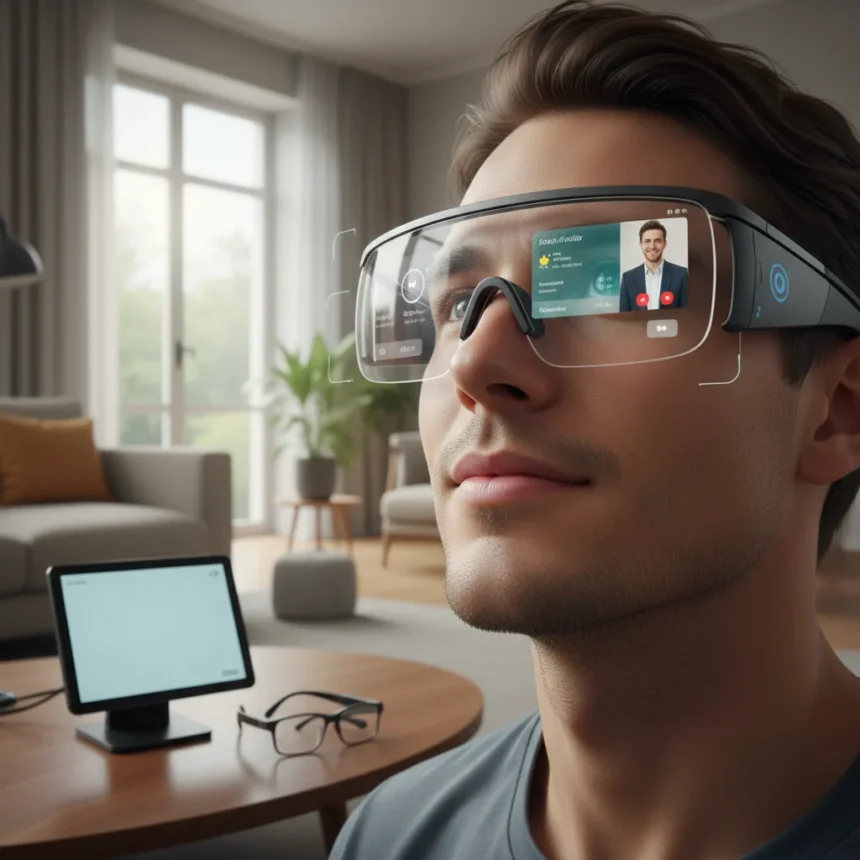
Android XR glasses just convinced me that smart display glasses deserve serious attention. Google demonstrated the device at its annual I/O developer event, offering hands-on demos that moved beyond the usual vague promises about future wearables. The glasses are coming later this year, and after trying them on, I understand why this particular form factor finally feels different from every smart glasses experiment that came before.
Key Takeaways
- Android XR glasses received hands-on demonstrations at Google I/O, confirming real hardware rather than conceptual mockups.
- The glasses are expected to launch later this year, placing them in the near-term consumer wearable category.
- The demo experience shifted the author’s perspective on smart display glasses from skeptical to genuinely excited.
- Android XR glasses represent a focused approach to wearable displays, distinct from broader smart glasses categories.
- Google’s ecosystem integration suggests the glasses will leverage Android’s existing developer base and services.
Why Android XR Glasses Matter Right Now
Smart display glasses have been a technology industry obsession for years, yet none have cracked mainstream adoption. Meta’s Ray-Ban collaboration brought video recording and audio features to stylish frames. Apple’s Vision Pro pushed spatial computing into premium territory. Yet both approaches missed something crucial: a wearable display experience that actually feels natural to use in daily life. Android XR glasses appear to address that gap with a deliberate, focused design philosophy. The hands-on demo at Google I/O wasn’t a speculative prototype or a marketing mockup—it was functional hardware that responded intuitively to user input and displayed content clearly enough to make interaction feel effortless rather than frustrating.
What separates this moment from previous smart glasses announcements is the timing and maturity level. Google isn’t asking developers and consumers to imagine what smart display glasses could become someday. The company brought actual devices to I/O, let journalists and developers wear them, and demonstrated how Android XR glasses integrate with Google’s existing services and ecosystem. That shift from concept to tangible demo is why excitement around smart display glasses has suddenly intensified. The glasses aren’t vaporware—they’re arriving within months, not years.
What Makes Android XR Glasses Different From Other Smart Glasses
The smart glasses market has fragmented into competing visions, each with different priorities. Some focus on recording video and capturing moments hands-free. Others emphasize spatial computing and immersive experiences. Android XR glasses stake out their own territory by centering on display-focused interaction—treating the glasses as a wearable screen for information, navigation, and tasks rather than primarily as a camera or entertainment device. That distinction matters because it changes what users expect from the hardware and software.


The demo experience revealed a device designed around practical use cases: quick information lookup, navigation assistance, and seamless Android integration. Unlike devices that force users to learn entirely new interaction paradigms, Android XR glasses leverage Android’s existing design language and app ecosystem. A developer who has built for Android phones and tablets doesn’t need to completely retrain their intuition to create for Android XR glasses. That compatibility creates a network effect—more developers building experiences, more reasons for users to adopt the hardware, stronger ecosystem momentum.
The form factor itself signals a commitment to wearability. The glasses in the demo didn’t require a bulky external processor or battery pack tethered to a belt. They functioned as self-contained devices, which removes one of the major friction points that has plagued previous AR and XR glasses experiments. Users won’t have to choose between wearing the glasses or carrying additional hardware—the glasses themselves handle the computational load.


The Demo Experience Changed the Conversation
Hands-on demos matter because they expose what marketing copy cannot hide. A video presentation can make anything look seamless. A person actually wearing the glasses and interacting with content reveals lag, display brightness limitations, field of view constraints, and interaction awkwardness. The fact that the Android XR glasses demo left attendees excited rather than disappointed is significant. The display clarity was sufficient to read text and navigate interfaces without squinting. The responsiveness felt snappy enough that interactions didn’t feel laggy or frustrating. The controls—whether gesture-based, voice-activated, or physical—responded predictably to user input.
That functional competence is the foundation that smart display glasses have been missing. Previous experiments often stumbled at this basic level: displays too dim to see outdoors, interfaces too sluggish to feel responsive, or controls so finicky that simple tasks became tedious. When a wearable fails at basic usability, no amount of ecosystem integration or software features can rescue it. Android XR glasses apparently cleared that threshold, which is why the demo generated genuine enthusiasm rather than polite skepticism.
What Comes Next for Smart Display Glasses
The launch later this year will determine whether the demo experience translates to a product that consumers actually want to wear and use. Early adopters—developers, tech enthusiasts, and professionals in fields like logistics, healthcare, and manufacturing—will drive initial adoption. Their feedback will shape how Android XR glasses evolve in subsequent generations. The success of the first-generation device matters less than whether Google commits to the category long-term and whether developers build experiences that justify wearing the glasses daily.
The competitive landscape will intensify once Android XR glasses launch. Meta will likely iterate on its Ray-Ban partnership. Apple may eventually bring Vision Pro capabilities to a more compact form factor. Chinese manufacturers will certainly explore their own smart glasses designs. But the Android XR glasses have a significant advantage: Google’s services ecosystem, developer tools, and ability to deeply integrate the glasses with Android phones and tablets. That integration potential is what separates a cool gadget from a genuinely useful wearable.

Are Android XR glasses worth the wait?
Based on the hands-on demo experience, yes. The glasses prove that smart display glasses can be genuinely useful rather than novelty devices. The real question is whether the consumer version maintains the demo’s quality and whether Google builds an ecosystem compelling enough to justify daily wear. The demo proved the hardware works. The software and services will determine whether users actually adopt it.
When will Android XR glasses launch?
Google announced the glasses are coming later this year, but no specific launch date or pricing has been confirmed. The company typically reveals final availability and pricing closer to the actual release window, so expect more details in the coming months.
How do Android XR glasses compare to Meta Ray-Ban smart glasses?
Android XR glasses prioritize display-based interaction and information display, while Meta Ray-Ban glasses focus on video recording and audio features. Android XR glasses are designed around wearable computing tasks, whereas Ray-Ban glasses emphasize capturing and sharing moments. Both approaches are valid—they’re just solving different problems.
The Android XR glasses demo at Google I/O proved that smart display glasses don’t have to be a gimmick. When hardware is responsive, displays are clear, and software is thoughtfully designed, wearable displays become genuinely useful tools. That’s why the demo mattered so much—it showed the path forward for an entire category that skeptics had written off as hype. Later this year, we’ll find out whether Google can turn that demo momentum into a product that sticks.
Edited by the All Things Geek team.
Source: Android Central