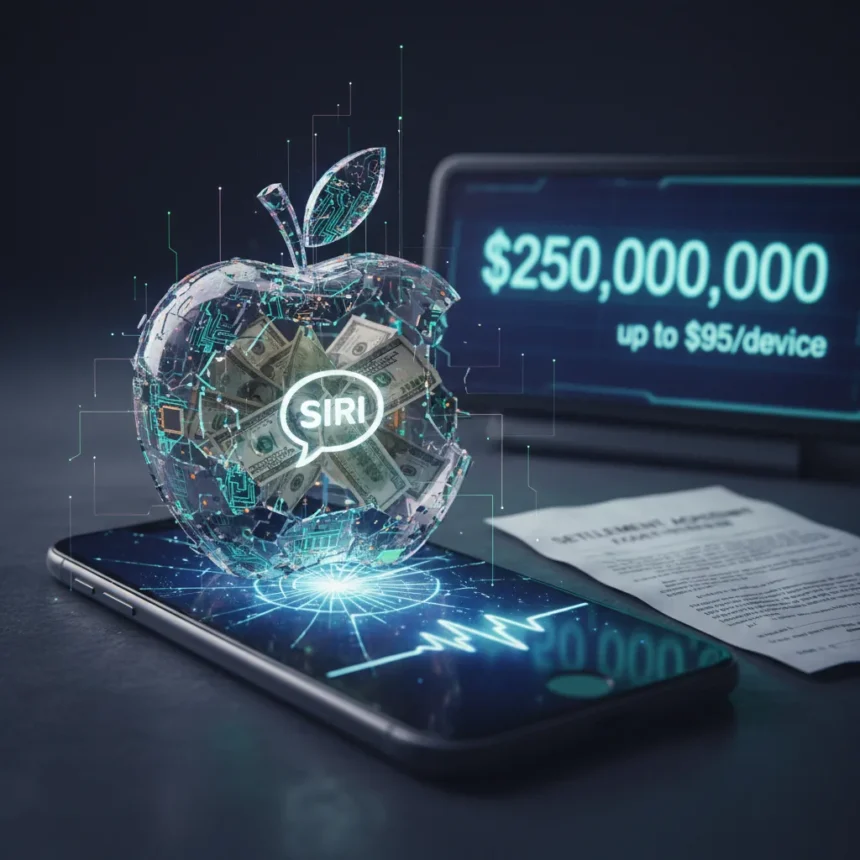
Apple’s Siri settlement represents a watershed moment for how tech companies market unreleased AI features. The company agreed to pay $250 million to settle a class action lawsuit accusing it of promoting artificial intelligence capabilities that did not exist at launch and may not exist for years. Eligible U.S. iPhone users could receive between $25 and $95 per device, depending on claim volume.
Key Takeaways
- Apple pays $250 million to settle Siri AI feature lawsuit without admitting wrongdoing
- iPhone 15 and 16 owners who purchased between June 10, 2024 and March 29, 2025 are eligible for compensation
- Per-device payouts range from $25 to $95 depending on total claims filed
- Promised Siri improvements are expected in iOS 27 at WWDC 2026, over two years after initial promises
- Settlement signals growing legal risk for tech companies overpromising AI timelines
What the Apple Siri settlement actually means
The lawsuit alleged that Apple’s marketing of Apple Intelligence “permeated the internet, television, and various media channels, fostering a clear and reasonable expectation among consumers that these groundbreaking features would be accessible upon the iPhone’s launch”. Instead, the features either did not exist or remained unavailable months after the iPhone 16 debuted. The complaint specifically stated that Apple promoted “AI capabilities that did not exist at the time, do not exist now, and will not [exist for two years or more]”. By settling for a quarter-billion dollars, Apple avoided a trial while explicitly refusing to admit any wrongdoing in court.
This settlement carries weight beyond the financial penalty. It signals that consumers and courts are willing to scrutinize the gap between AI marketing promises and actual product delivery. Other tech companies watching this case will note the cost of overpromising. When a company tells customers that groundbreaking features will arrive with a new device and then delays them indefinitely, legal exposure becomes real.
Who gets paid and how much
Compensation eligibility is narrowly defined: U.S. customers who purchased an iPhone 15 or iPhone 16 between June 10, 2024 and March 29, 2025 qualify for the class action settlement. The payout structure depends on how many eligible customers file claims. If few people claim compensation, each device owner receives up to $95. If claims are high, payouts shrink to a minimum of $25 per device. A portion of the $250 million settlement will cover administrative costs and attorney fees, further reducing the pool available for direct consumer compensation.


The eligibility window is crucial: it captures iPhone 16 buyers who faced the most misleading marketing, since the iPhone 16 launched with promises of Apple Intelligence features that were not yet available. iPhone 15 owners who purchased earlier are included because Apple’s marketing campaign for these delayed features extended backward to earlier models.
When will Siri actually get the promised features
Apple’s long-delayed Siri improvements are anticipated to arrive in iOS 27, scheduled for release at WWDC 2026 in June. This means customers who bought iPhone 16 in September 2024 will wait nearly two years for the features Apple promised at launch. The delay is so severe that it became the basis for a successful class action lawsuit. iOS 27 represents Apple’s next major opportunity to deliver on its Apple Intelligence promises, but the company has not confirmed that all promised features will arrive in that update.



The gap between marketing and delivery has created legal jeopardy that other tech companies should study carefully. When you tell customers that AI features are coming with their device purchase and then miss that deadline by months or years, you invite litigation. Apple’s settlement suggests that courts view such delays as actionable consumer deception, not merely optimistic product roadmaps.
What this means for tech marketing going forward
The Apple Siri settlement establishes a precedent: overpromising AI features carries financial and reputational risk. Tech companies now have a concrete example of how courts value the cost of misleading consumers about AI timelines. The case underscores the tension between generating launch excitement and delivering on promises. Marketing departments want to tout unreleased capabilities; legal departments now have evidence that this strategy can backfire spectacularly.
Competitors like Google, Microsoft, and Samsung are watching. Their own AI assistant rollouts will face scrutiny if marketing claims outpace actual availability. The settlement does not prevent companies from discussing future features, but it does suggest that claims must be accurate about timing and readiness. Saying “coming later this year” when you mean “possibly in 2026” is now demonstrably risky.
Has Apple admitted fault
No. Apple explicitly did not admit to wrongdoing in settling the lawsuit. The company chose to pay $250 million rather than continue litigation, a decision that reflects risk management rather than guilt. In legal terms, settling without admitting liability is a common strategy: it ends the case, avoids a potentially larger judgment, and prevents discovery from revealing internal communications about the features’ actual status.



However, the settlement amount itself sends a message. Apple would not have agreed to a quarter-billion-dollar payout if the company believed the lawsuit had no merit. The financial impact suggests Apple’s legal team assessed the risk of losing at trial as substantial enough to justify settlement.
FAQ
Who qualifies for the Apple Siri settlement payout
U.S. customers who purchased an iPhone 15 or iPhone 16 between June 10, 2024 and March 29, 2025 are eligible. You will need to file a claim with proof of purchase. The exact claims process and deadline will be announced as part of the settlement administration.
How much will each iPhone owner actually receive
Payouts range from $25 to $95 per device, depending on total claim volume. If few people claim, you receive more; if many claim, the pool divides more ways and each person gets less. The final per-device amount will be determined after the claims deadline passes.
When will Siri features actually arrive
Apple’s promised Siri improvements are anticipated for iOS 27 at WWDC 2026 in June. This is nearly two years after the iPhone 16 launched with marketing that suggested the features were imminent.
The Apple Siri settlement is a rare moment of accountability in tech marketing. A company worth trillions paid a quarter-billion dollars because it promised AI features it could not deliver on schedule. For iPhone owners who felt misled, the compensation is modest. For the broader industry, the settlement is a warning: overpromising AI timelines now carries measurable legal cost.
Edited by the All Things Geek team.
Source: TechRadar