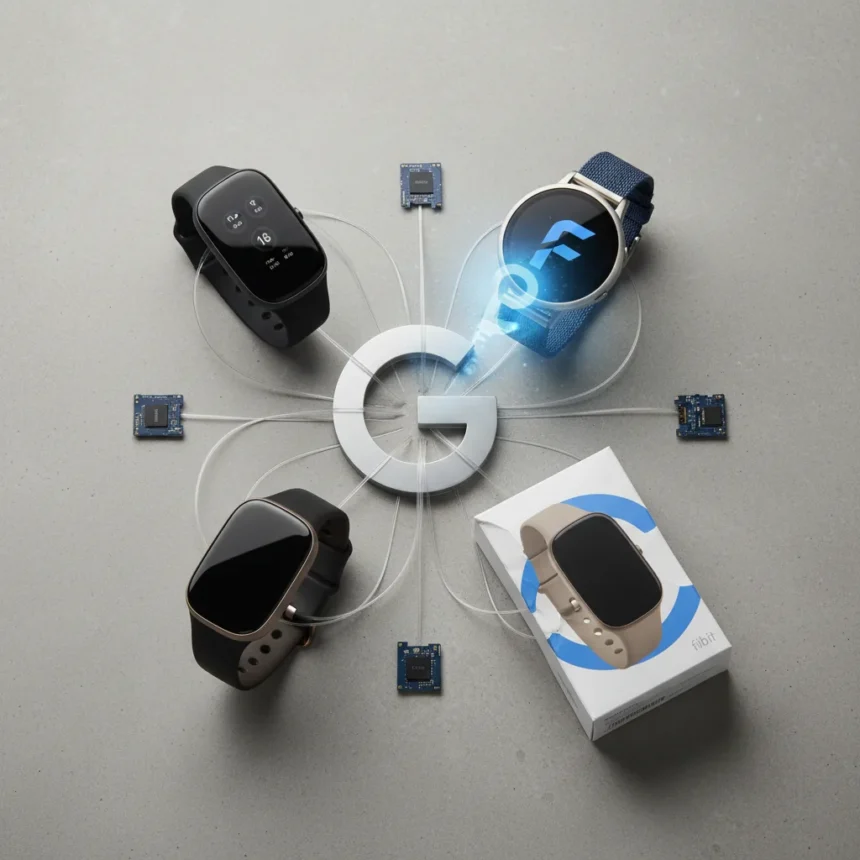
Fitbit Google acquisition has fundamentally altered what the fitness tracker brand is and how it works. Google bought Fitbit years ago, but 2025 marks the year the integration became impossible to ignore: legacy Fitbit accounts no longer function on any device, forcing millions of users to migrate to Google accounts or abandon their hardware entirely. The brand still exists on retail shelves, but it no longer exists as an independent entity.
Key Takeaways
- Legacy Fitbit accounts stopped working on all devices starting in 2025
- New Fitbit devices require a Google account to function
- Google replaced third-party Fitbit integrations with its own Health Connect API
- The promised premium Fitbit Wear OS watch never materialized; Google released the Pixel Watch instead
- Fitbit integration on Pixel Watch includes Active Zone minutes, step tracking, and always-on heart-rate measurements
What Happened to Fitbit After Google’s Acquisition
Google acquired Fitbit and then systematically dismantled its independence. The most visible shift: starting in 2025, every new Fitbit device requires a Google account. Users with old Fitbit accounts have no choice but to migrate or stop using their devices. This is not a gradual sunset—it is a hard cutoff. For anyone who bought a Fitbit five years ago expecting to own a device that would work indefinitely, Google’s strategy feels like betrayal.
The ecosystem integration tells the story. Fitbit previously worked with dozens of third-party apps—MyFitnessPal, Strava, and others. Google has systematically cut those partnerships in favor of its own Health Connect API, which centralizes activity, sleep, nutrition, body measurements, and vitals on your phone. Granular permissions mean you can control what each app accesses, but the net effect is the same: Fitbit is no longer a platform. It is a Google product.
The Wear OS Watch That Never Arrived
Google once signaled that a premium Fitbit device running Wear OS would arrive. That device does not exist. Instead, Google released the Pixel Watch, a smartwatch built by Google with a domed design, a crown, customizable bands, and deep Fitbit integration. The Pixel Watch includes industry-leading Fitbit insights, Active Zone minutes, step tracking, and always-on heart-rate measurements. It is, in every meaningful way, what a premium Fitbit Wear OS device would have been—except it wears the Pixel brand, not Fitbit.


This matters because it reveals Google’s actual strategy: Fitbit is being absorbed into Google’s wearable ecosystem, not expanded within it. The Pixel Watch is the premium option. Fitbit devices are now the budget and mid-range tier. The brand has been demoted, not elevated.
What Fitbit Devices Still Exist
Fitbit still sells fitness trackers and smartwatches, but the lineup has contracted. The current range focuses on fitness tracking fundamentals: step counting, heart-rate monitoring, sleep tracking, and workout modes. Without access to the research brief’s detailed product specifications, the exact current models cannot be listed here, but the pattern is clear—Google is keeping Fitbit alive as a lower-cost alternative to the Pixel Watch, not as a standalone brand with its own innovation roadmap.



Any Fitbit you buy today will require a Google account. Any Fitbit you bought before 2025 will stop working unless you migrate. This is not a minor inconvenience—it is a fundamental shift in what you own when you buy a Fitbit device. You no longer own a Fitbit. You rent access to Fitbit features through Google.
Should You Buy a Fitbit in 2025
If you want a fitness tracker and do not mind being locked into Google’s ecosystem, Fitbit devices still work and still track the basics well. If you already own a Fitbit and want to keep using it, migration to a Google account is mandatory. If you are considering buying a Fitbit for the first time, ask yourself whether you would prefer the Pixel Watch instead—it offers deeper Google integration and a more premium experience, even if it costs more.
The real question is not whether Fitbit is worth buying. It is whether Fitbit, as a brand with its own identity and roadmap, still exists. The answer is no. Google owns the Fitbit name, controls the software, sets the account requirements, and has redirected the premium product line to Pixel. Fitbit survives as a product line, not a brand.
What is Health Connect and why does it matter
Health Connect is Google’s new API for sharing health data between apps. Instead of Fitbit syncing directly to MyFitnessPal or Strava, your phone becomes the central hub. Apps request permission to access specific data categories—activity, sleep, nutrition, body measurements, vitals—and you grant or deny access on a per-app basis. This is more transparent than the old Fitbit partnership model, but it also means Google controls the data flow. If Google decides to deprecate Health Connect or change its terms, every Fitbit-connected app is affected.



Can you still use Fitbit without a Google account
No. Starting in 2025, all new Fitbit devices require a Google account. If you own a legacy Fitbit, you have until your device breaks or becomes incompatible—then you must either buy a new Fitbit (and create a Google account) or switch to a competitor. Google has made this choice mandatory, not optional.
Is the Pixel Watch the same as a Fitbit
The Pixel Watch is not a Fitbit-branded device, but it integrates Fitbit’s tracking features deeply. It has the domed design and crown of a traditional smartwatch, customizable bands, and all the Fitbit metrics you would expect. For practical purposes, it is the premium Fitbit experience—just without the Fitbit name. If Google had released this as a Fitbit Wear OS watch, the story would be different. Instead, it chose to separate the brands, signaling that Pixel is the future and Fitbit is the past.
Fitbit Google acquisition was supposed to accelerate the brand’s innovation and expand its reach. Instead, it has reduced Fitbit to a budget line within Google’s wearable strategy. The brand still exists, but its independence is gone. For anyone who loved Fitbit as an independent company, that loss is permanent.
Where to Buy
20% OFFFitbitInspire 3$79.95$99.95shop now | 25% OFFFitbitCharge 6$119.95$159.95shop now | FitbitVersa 4$149.95shop now | FitbitSense 2$197.90shop now | 29% OFFFitbitAce LTE$24.99$34.99shop now
Edited by the All Things Geek team.
Source: TechRadar