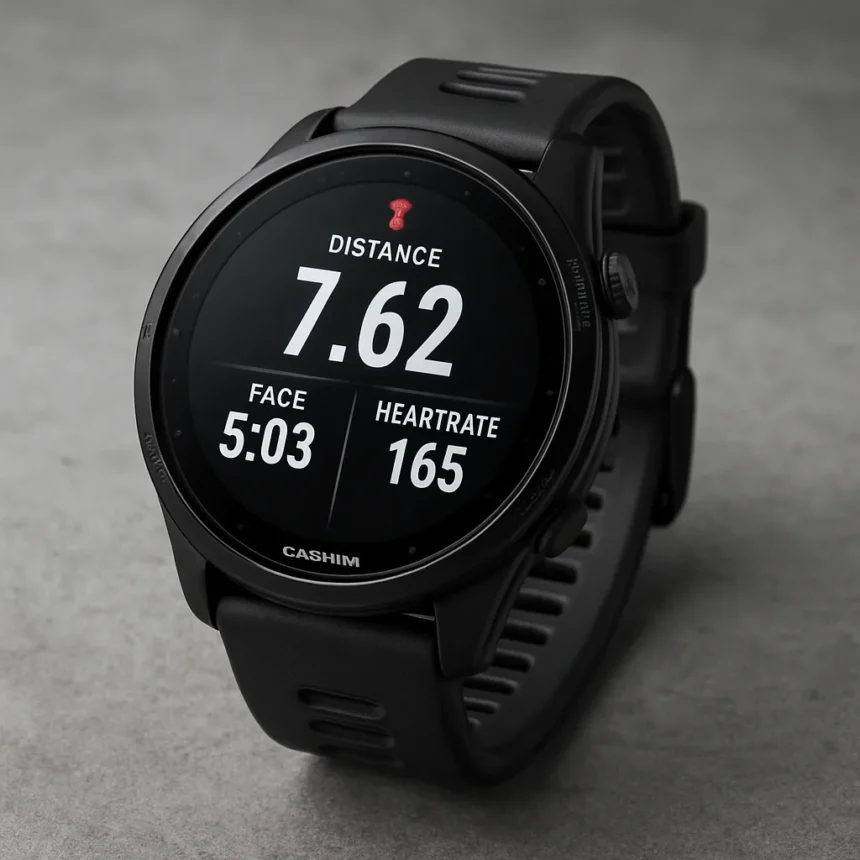
The Garmin Forerunner 970 is a premium sports watch made by Garmin, launched in June 2025, priced at $749.99 (£629.99 in the UK, AU$1,399 in Australia), available in a single 47mm size. After nine months of testing across weekly 5ks, half-marathon training, track work, trails, intervals, cycling, swimming, and strength sessions, this watch delivers something genuinely new to the running watch category: metrics designed to stop you from destroying yourself.
TL;DR: The Garmin Forerunner 970 introduces Running Tolerance to prevent overtraining, pairs a brilliant AMOLED screen with multi-band GPS accuracy, and requires a separate HRM 600 chest strap for some advanced features. At $750, it’s the most sophisticated running watch Garmin has made, though battery life trails the 965 due to that brighter display.
What Makes the Garmin Forerunner 970 Stand Out From Previous Models
The Garmin Forerunner 970 introduces five entirely new running metrics that previous Forerunner watches lacked. Running Tolerance is the headline feature—wear the watch for two months before a race, and it calculates your weekly maximum mileage based on impact load and training history, helping you build volume without crossing into overtraining territory. That’s not a gimmick. That’s injury prevention built into your wrist.
Running Economy (requiring five steady 30-minute runs on flat terrain and the HRM 600 chest strap) measures how efficiently your body moves. Step Speed Loss tracks energy loss on ground contact—lower numbers mean better running economy. Impact Load Factor distinguishes real miles from impact miles, shifting based on terrain and pace; hard, fast, steep runs register higher impact than easy jogs. These aren’t vanity metrics. They’re the difference between training smart and training hard.


The watch also adds Autolap by timing gates and Suggested Finish line for race-day precision. Compared to the Garmin Forerunner 965, the 970 shares a similar user experience and core features, but the new running metrics push it ahead for runners serious about preventing injury and optimizing performance.
Display, Design, and Real-World Comfort
The 1.4-inch AMOLED touchscreen is the brightest Garmin has ever shipped—crystal clear, vibrant, and ultra-readable in direct sunlight. The 47mm titanium bezel with scratch-resistant sapphire lens feels premium without the weight penalty; at 56g, it’s lighter and more comfortable for all-day wear than expected, though it’s chunkier than Garmin’s Venu and Vivoactive lines. The sporty design doesn’t pretend to be a fashion watch. It’s built for runners, and it looks the part.


The LED flashlight and physical light on the watch body are practical touches for early-morning and evening runs. After nine months of daily wear, the screen remained scratch-free and responsive to touch, even during sweat-soaked intervals.
GPS Accuracy and Navigation That Actually Works
Multi-band GNSS GPS with SatIQ auto-switches between modes to balance accuracy and battery life. In real-world testing across built-up areas, dense forests, and cities, the Garmin Forerunner 970 GPS proved excellent—mile marks matched perfectly with the Polar Grit X2, a watch known for rock-solid positioning. That level of consistency matters when you’re chasing a personal best and want to trust your splits.
Round-trip routing is clever: enter a distance, and the watch builds a loop back to your starting point, auto-rerouting if you drift off-course (say, to catch a view). Full color maps and turn-by-turn navigation handle longer runs across unfamiliar terrain. PacePro and a projected race-time predictor let you fine-tune pacing strategy before race day.
Battery Life: The Trade-Off of That Brilliant Screen
The Garmin Forerunner 970 delivers up to 15 days in smartwatch mode—a slight improvement over the Forerunner 570, but shorter than the 965. That brighter AMOLED screen demands more power, and Garmin chose visual clarity over multi-week battery life. For a running watch you’ll charge weekly anyway, this is a reasonable trade-off, but it’s worth knowing if you’re upgrading from the 965 expecting longer battery life.


The HRM 600 Chest Strap Requirement: A Hidden Cost
Running Economy and Step Speed Loss are locked behind the HRM 600 chest strap, announced alongside the 970 and 570. If you want those metrics, you’re buying an accessory on top of the $750 watch. The optical heart rate sensor works fine for general tracking, but it’s delayed compared to a chest strap, and some features simply won’t unlock without it. That’s a design choice that benefits Garmin’s accessory sales more than your training.
Health metrics beyond running are solid: VO2 max estimates, Body Battery, sleep tracking, step count, and detailed heart rate data all track reliably. Training Readiness and Training Load help you understand whether you’re recovered enough for hard work.
Triathlon and Multi-Sport Capabilities
The Garmin Forerunner 970 is positioned as Garmin’s best triathlon watch. Full support for running, cycling, and swimming, with seamless transitions and detailed post-workout analysis in Garmin Connect. Evening and Morning reports auto-deliver weather, calendar, and suggested workouts. Triathlon coaching features round out a watch built for multi-sport athletes.
What Holds the Garmin Forerunner 970 Back
Running Economy is genuinely difficult to unlock. Even after many qualifying runs, some users struggle to meet the criteria. Round-trip routing has an on-device bug with off-course rerouting, though it’s rarely used. And again, the HRM 600 requirement for advanced metrics feels like artificial gatekeeping.
The verdict is clear: the Garmin Forerunner 970 continues to raise the bar for training support. Whether you’re building toward a race, chasing a personal best, or simply curious about your true capacity as a runner, this watch delivers depth and precision. The new running metrics—especially Running Tolerance—are genuinely useful for preventing injury. The AMOLED screen is the best Garmin has made. GPS accuracy is excellent. Yes, it’s expensive, and yes, you’ll need a chest strap for the full feature set. But for serious runners, this is the most sophisticated Garmin watch yet.
How long does the Garmin Forerunner 970 battery last?
Up to 15 days in smartwatch mode, slightly longer than the Forerunner 570 but shorter than the 965 due to the brighter AMOLED screen. Actual battery life depends on GPS usage frequency and screen brightness settings.
Do you need the HRM 600 chest strap for the Garmin Forerunner 970?
No, but you’ll miss Running Economy and Step Speed Loss metrics without it. The optical heart rate sensor handles general tracking and most features, but those two running metrics require the HRM 600.
How does the Garmin Forerunner 970 compare to the Apple Watch Ultra 3?
The Garmin Forerunner 970 is a dedicated running watch with deeper training metrics, longer battery life, and multi-band GPS. The Apple Watch Ultra 3 is a general-purpose smartwatch with fitness capabilities. Choose Garmin if you’re a serious runner; choose Apple if you want a watch that does everything.
The Garmin Forerunner 970 is the watch for runners who want to train smart, not just hard. Nine months of testing proved that the new running metrics work, the screen is genuinely excellent, and the GPS is trustworthy. The price is high, the HRM 600 requirement stings, and battery life could be longer. But if you’re serious about running, this watch earns its place on your wrist.
Edited by the All Things Geek team.
Source: TechRadar