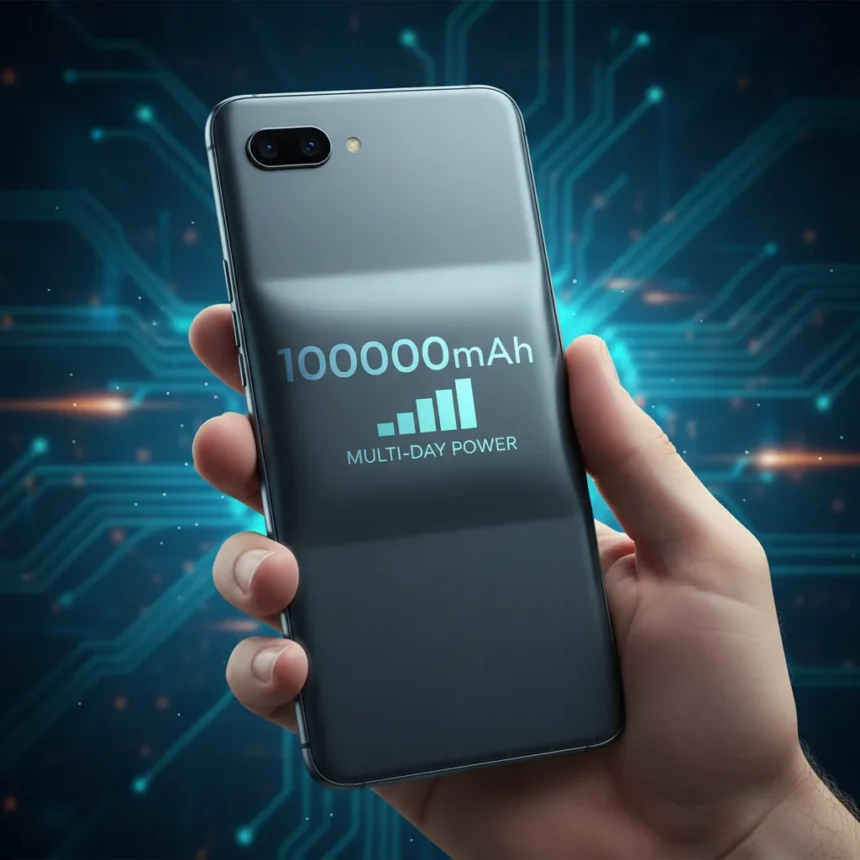
Huawei is reportedly working on a smartphone with a 10,000mAh phone battery, a capacity that would shatter conventional smartphone battery sizes and potentially deliver multi-day usage without charging. This development signals a major shift in how manufacturers approach the battery endurance problem that has plagued mobile phones for over a decade.
Key Takeaways
- Huawei’s rumored 10,000mAh phone battery would be exceptionally large for a mainstream smartphone.
- A 10,000mAh capacity could enable multi-day battery life under typical usage patterns.
- Current flagship phones typically feature batteries between 4,000mAh and 5,500mAh.
- This development reflects growing consumer demand for longer-lasting mobile devices.
- The device remains unconfirmed and may be in early development stages.
Why a 10,000mAh Phone Battery Matters Now
A 10,000mAh phone battery would represent a fundamental leap forward in smartphone endurance. Most flagship phones today carry batteries between 4,000mAh and 5,500mAh, meaning Huawei’s reported capacity would nearly double what users currently expect. This is not incremental—it is transformative. Users searching for better battery life would finally see a phone that genuinely lasts multiple days rather than requiring a daily charge.
The timing of this leak reflects a broader frustration in the smartphone market. Battery capacity has plateaued while processor power and screen brightness have climbed, creating a widening gap between what phones can do and how long they can do it. A 10,000mAh phone battery addresses this friction directly. If Huawei achieves reliable multi-day endurance without making the phone prohibitively thick or heavy, it would become an instant selling point against competitors still trapped in the 24-hour charging cycle.
What 10,000mAh Could Actually Deliver
The real question is not whether a 10,000mAh phone battery is physically possible—it is whether it delivers practical multi-day usage. A battery’s real-world endurance depends on screen size, processor efficiency, software optimization, and usage patterns. A 10,000mAh battery paired with a 6.7-inch display and high-refresh-rate technology would perform differently than the same capacity in a more compact device with a modest screen.


If Huawei’s engineers have optimized the phone’s power consumption alongside this battery upgrade, users could realistically expect 2-3 days of moderate use or 1.5-2 days of heavy use. For business travelers, remote workers, and anyone who dreads the hunt for a charger, this would be genuinely valuable. The real test will come when the device ships and reviewers measure actual runtime under standardized conditions.
How This Compares to Current Market Leaders
Today’s flagship phones—whether Samsung Galaxy S series, iPhone Pro models, or other Android competitors—max out around 5,500mAh. A 10,000mAh phone battery would nearly double that capacity. Some ultra-premium phones have experimented with larger batteries, but none have approached Huawei’s rumored figure at scale. This positions Huawei as willing to challenge the industry’s accepted battery-size ceiling, even if it means rethinking phone thickness or weight distribution.



The competitive advantage here is stark. If Huawei can deliver a phone that genuinely lasts two full days while remaining usable in hand, it would carve out a distinct market position. Competitors would face pressure to match the battery capacity or risk losing battery-conscious buyers. The smartphone industry has been incremental on battery life for years; a 10,000mAh phone battery could force a reset.
The Catch: What Remains Unconfirmed
This report is based on leaks and rumors rather than an official Huawei announcement. No model name has been confirmed. No launch date exists. No pricing has been disclosed. The device may be in early prototype stages, or it may never reach consumers. Smartphone leaks often describe ambitious plans that never materialize, so treating this 10,000mAh phone battery as confirmed would be premature.
That said, the rumor carries credibility because it aligns with market trends. Consumers consistently cite battery life as a top purchasing concern. Huawei has the engineering expertise to attempt such a feat. And a 10,000mAh phone battery is not physically impossible—it is just uncommon. The question is whether Huawei can make it work without sacrificing the design, weight, and thermal management that users expect from a flagship device.
What Would a 10,000mAh Phone Battery Mean for Charging?
A larger battery introduces charging challenges. A 10,000mAh phone battery would take significantly longer to charge fully via standard USB-C power delivery than a typical 5,000mAh battery. Huawei would likely need to support very fast charging—potentially 100W or higher—to keep charging time reasonable. This adds complexity and cost, and it may limit the phone’s compatibility with standard chargers.



Heat management becomes critical too. Rapid charging into a 10,000mAh phone battery generates substantial thermal stress. If Huawei’s engineers have not solved this problem elegantly, the phone could throttle charging speeds under certain conditions or suffer reduced battery longevity. These are engineering hurdles that the leak does not address, and they will determine whether the device is practical or just technically impressive.
Is This the Future of Smartphone Batteries?
A 10,000mAh phone battery would not be the future if it remains a one-off flagship experiment. It becomes the future only if competitors follow suit and the market normalizes multi-day endurance as a baseline expectation. If Huawei ships this device and users embrace it, pressure on Samsung, Apple, and other manufacturers would become intense. If the device flops or never launches, the industry may continue its slow, incremental approach to battery capacity.
The broader trend is clear: consumers want phones that last longer. A 10,000mAh phone battery is one answer. Improved power efficiency, faster charging, and battery management software are others. Huawei’s reported approach is the most straightforward—add capacity and optimize accordingly. Whether it succeeds will depend on execution, not concept.
Could a 10,000mAh phone battery actually fit in a normal phone?
Yes, though it would require careful engineering. Modern battery cells are thin and flexible, allowing manufacturers to stack them creatively within a phone’s frame. A 10,000mAh phone battery would likely make the phone slightly thicker than current flagships, but not dramatically so if weight and thermal design are managed well.
How long would a 10,000mAh phone battery actually last?
Real-world endurance depends on usage patterns and hardware efficiency. A 10,000mAh phone battery could deliver 2-3 days of moderate use or 1.5-2 days of heavy use, assuming the phone’s processor and display are reasonably efficient. Heavy gaming, video streaming, or constant 5G connectivity would reduce this figure significantly.
When will Huawei’s 10,000mAh phone battery device launch?
No official launch date has been announced. The device is currently unconfirmed and may be in early development. Rumors suggest it could arrive sometime in the coming year, but this remains speculation until Huawei makes an official statement.
A 10,000mAh phone battery represents the kind of bold engineering that could reshape smartphone expectations. If Huawei executes well, it will prove that manufacturers have been too conservative with battery capacity for too long. If the device struggles with heat, weight, or charging complexity, it will serve as a cautionary tale about chasing capacity without solving the harder problems of efficiency and thermal management. Either way, this rumor signals that the smartphone industry’s battery stagnation may finally be ending.
Edited by the All Things Geek team.
Source: T3