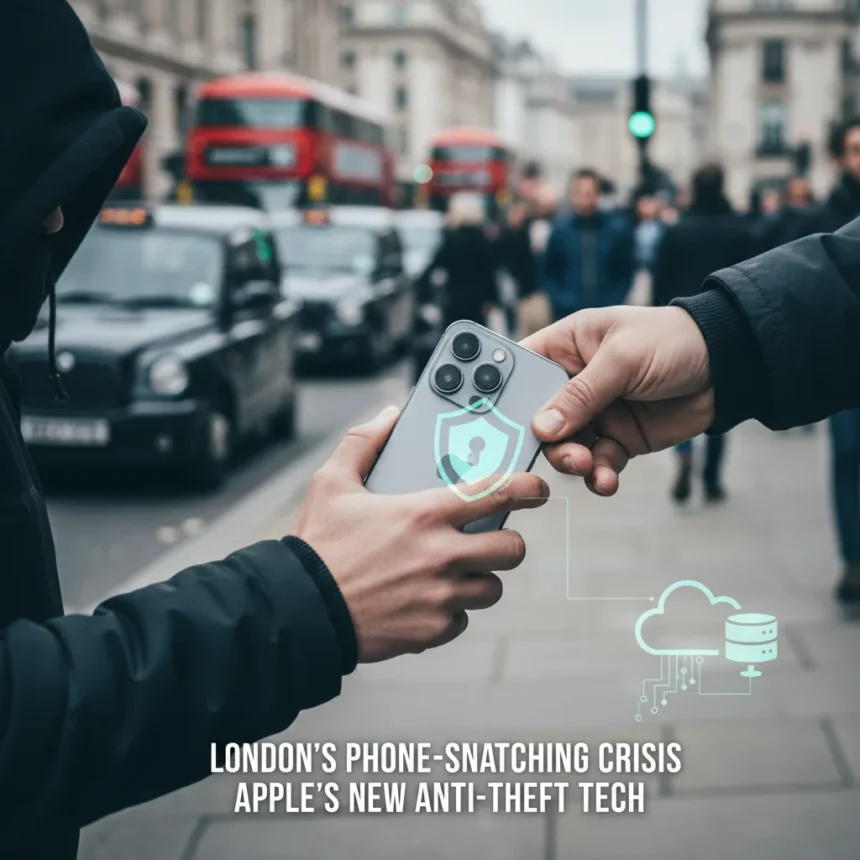
The iPhone theft protection feature could finally give London’s crime-weary smartphone users a fighting chance against phone snatchers. Every eight minutes, a phone disappears from someone’s hands in the capital, leaving victims not just without their device but vulnerable to identity theft and financial fraud. Apple is reportedly working on an Android-inspired upgrade designed to render stolen iPhones far less attractive to thieves by making the devices and their private data inaccessible without authentication.
Key Takeaways
- A phone is snatched every eight minutes in London, according to recent reports.
- Apple may soon introduce an Android-inspired theft deterrent feature for iPhones.
- The feature aims to protect private data from being accessed on stolen devices.
- The upgrade is expected to arrive soon but is not yet available.
- The move reflects growing concern over smartphone theft and mobile privacy.
Why London’s Phone Theft Problem Demands Urgent Solutions
London faces a smartphone theft epidemic that has become almost routine. With a phone snatched every eight minutes, the city’s streets have become hunting grounds for opportunistic criminals who see easy targets in distracted commuters and tourists. The scale of the problem is staggering—not just in terms of lost devices, but in the personal data exposed when thieves gain access to contacts, messages, banking apps, and photos. Current security measures have failed to deter these crimes effectively, leaving users and police scrambling for solutions.
The financial and emotional toll extends beyond the immediate loss. Victims face weeks of account recovery, fraudulent charges, and the violation of their digital privacy. Insurance rarely covers the full cost of a stolen phone, and replacing it is expensive. Police acknowledge the difficulty of tackling organized phone-snatching gangs, making prevention through device-level security increasingly critical. If a stolen iPhone becomes immediately useless to a thief, the incentive to steal it collapses entirely.
How the iPhone Theft Protection Feature Could Work
The iPhone theft protection feature borrows a proven strategy from Android’s approach to mobile security. Rather than allowing thieves to simply wipe a device and resell it, Apple’s upgrade would lock stolen iPhones behind authentication barriers that prevent access to personal data and core functions without the original owner’s credentials. This is fundamentally different from current Find My iPhone features, which can be circumvented or disabled by someone with physical access to the device.


By making a stolen iPhone worthless to criminals, Apple removes the primary motivation for phone snatching. A thief cannot sell a locked device, cannot extract data from it, and cannot use it for fraud. The feature would essentially neutralize the black market for stolen iPhones, similar to how Android’s theft deterrent has reduced incentive for Android phone theft in markets where it is already implemented. If the upgrade works as intended, London’s phone-snatching gangs would find their business model suddenly unprofitable.
Android’s Theft Deterrent as the Blueprint
Android has already demonstrated that built-in theft protection can reduce phone snatching. By requiring authentication to access data and disable security features on stolen devices, Android’s approach makes stolen phones significantly less valuable. Apple’s willingness to adopt this Android-inspired strategy signals that even the world’s most valuable technology company recognizes the need for cross-platform security standards when public safety is at stake.



The comparison is not about one platform being superior to another—it is about learning from proven solutions. Android’s theft deterrent works because it attacks the economics of phone theft. If every stolen phone is locked and useless, thieves stop stealing phones. London’s rising theft rates suggest that iPhone users have been left behind in this security evolution, making Apple’s reported move overdue rather than revolutionary.
What a Successful Rollout Could Mean for London
If Apple releases the iPhone theft protection feature soon, the impact on London’s crime statistics could be measurable within months. Organized theft rings operate on tight profit margins—if iPhones become unsellable, they will shift their focus elsewhere or disband entirely. Victims would gain the peace of mind knowing that losing their phone does not mean losing their identity or financial security. Police resources currently tied up investigating phone thefts could be redirected to other crimes.
The broader implication is that tech companies have the power to shape criminal behavior through smart security design. A feature that costs Apple nothing to implement could eliminate an entire category of street crime in one of the world’s largest cities. The only question is whether the company will release it quickly enough to address the crisis happening right now.
Is the iPhone theft protection feature available yet?
No. The feature is reported to be coming soon, but it is not currently available on any iPhone model. Apple has not announced an official release date or which iOS version will include it, so users cannot rely on it for protection today.



How does this compare to Android’s theft protection?
Android’s theft deterrent locks stolen devices behind authentication barriers, making them inaccessible to thieves without the original owner’s credentials. Apple’s reported feature is designed to work similarly, bringing iPhone security in line with Android’s proven approach.
Could this feature actually stop phone snatching in London?
If the feature is as robust as reported, it could significantly reduce phone theft by eliminating the resale value of stolen iPhones. When phones become worthless to criminals, the incentive to steal them disappears. However, success depends on how quickly Apple rolls it out and how thoroughly it locks down stolen devices.
The iPhone theft protection feature represents a long-overdue acknowledgment that Apple’s users deserve the same theft-deterrent technology Android has offered for years. With a phone snatched every eight minutes in London, the time for this upgrade is not next year—it is now. Apple must prioritize its release and make sure the feature is enabled by default, not buried in settings. Only then can it meaningfully address the crisis on London’s streets.
Where to Buy
Edited by the All Things Geek team.
Source: TechRadar