





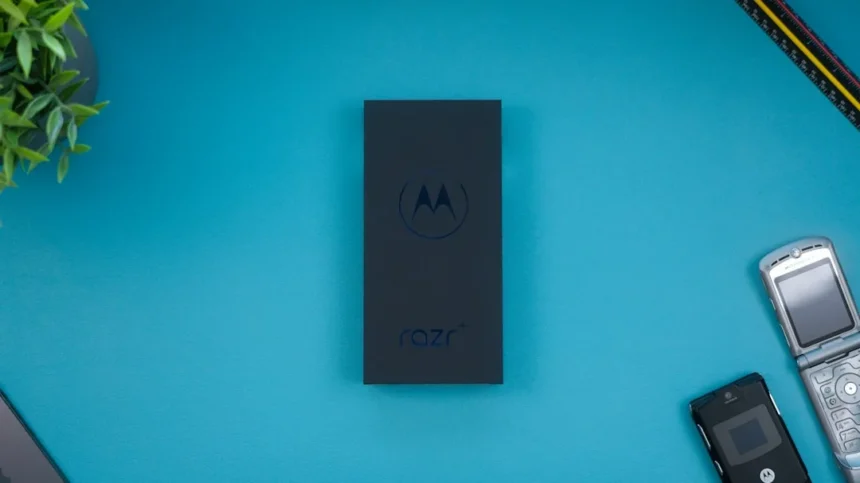
The Motorola Razr Fold 2026 represents a calculated gamble: take everything Motorola learned refining flip phones and scale it into a premium booklet-style foldable that Samsung abandoned. Announced at CES 2026 in Las Vegas, the Motorola Razr Fold 2026 is a bifold device featuring an 8.1-inch internal LPTO flexible screen, a 6.6-inch cover display, and Qualcomm’s Snapdragon 8 Gen 5 processor, arriving in the US on May 21, 2026.
Key Takeaways
- 8.1-inch inner display with minimal crease; larger than Samsung Galaxy Z Fold 7’s main screen
- Moto Pen Ultra stylus with palm rejection support—a feature Samsung removed from the Z Fold 7
- Snapdragon 8 Gen 5 processor enables flagship multitasking and gaming performance
- Thin, ergonomic design with bright displays visible in direct sunlight
- US launch May 21, 2026; camera and software performance still unproven
Why Motorola’s Stylus Move Matters
Samsung’s Galaxy Z Fold 7 dropped stylus support entirely, betting that ultra-thin engineering mattered more than input flexibility. Motorola disagreed. The Motorola Razr Fold 2026 supports the Moto Pen Ultra with palm rejection, a digitizing layer that gives creators and note-takers an option Samsung no longer offers. That single choice repositions the device from a consumption tablet into a productivity tool, carving out a niche Samsung left open.
The stylus advantage matters because foldable tablets occupy an awkward middle ground—too large for pockets, too small for laptops. Adding pen support gives the Motorola Razr Fold 2026 a reason to exist beyond novelty. Whether that translates to real adoption depends on software maturity and whether Motorola’s apps actually support the pen meaningfully. For now, the hardware choice is a smart differentiator.
Display and Design: Where Motorola Gets It Right
After hands-on time at Motorola’s villa in the Hollywood Hills, the standout observation was how thin and ergonomic the device feels in a premium package. Both the 8.1-inch inner display and 6.6-inch cover screen were impressively bright—even under direct sunlight—and opening and closing the device felt smooth without resistance. More importantly, the crease on the inner display was minimal and not immediately noticeable, addressing one of the biggest complaints about competing foldables.


The larger 8.1-inch inner screen outpaces Samsung’s Galaxy Z Fold 7, giving the Motorola Razr Fold 2026 more usable real estate for multitasking and content consumption. The bifold architecture also represents a genuine scaling of Motorola’s successful flip-phone refinements—lessons learned from the Razr Ultra series now applied to a larger form factor that enters foldable tablet territory.
Performance and the Snapdragon 8 Gen 5 Question
Under the hood, the Motorola Razr Fold 2026 is powered by Qualcomm’s Snapdragon 8 Gen 5 processor, paired with flagship-level performance built for heavy multitasking, gaming, and everything else you’d expect from a modern foldable. On paper, that’s competitive. In practice, processor power is table stakes—every flagship foldable this year runs the same chip. The real test is whether Motorola’s software and thermal management can sustain that performance during extended gaming or multitasking sessions, something a brief hands-on cannot reveal.


The device includes five cameras total: a 20MP internal front-facing camera and a triple rear system with main, ultra-wide, and 3x telephoto lenses. Motorola has not disclosed megapixel counts for the rear system, and that omission is telling. The company flagged camera and software performance as the unproven elements, and that’s the honest assessment. A powerful processor means nothing if the camera app is sluggish or the photos are mediocre.
The Motorola Razr Fold 2026 vs. Samsung’s Approach
Samsung‘s Galaxy Z Fold 7 is thinner, has no stylus, and costs more. The Motorola Razr Fold 2026 is thicker, includes a stylus, and Motorola has historically positioned the Razr line at lower prices than Samsung’s equivalents. That value proposition is compelling—if Motorola’s cameras and software actually deliver. If they don’t, then the stylus support and larger screen become afterthoughts, and Samsung’s engineering will feel like the smarter bet.
The flip-phone comparison is also relevant. The Razr Ultra 2026 offers a 7-inch foldable screen, three 50MP rear cameras, and Corning Gorilla Glass Ceramic 3 on the cover display—all in a more compact form factor. Some buyers will prefer the smaller, pocketable flip to the larger bifold. Motorola now offers both, which is a strength Samsung’s Z Flip and Z Fold lineup doesn’t quite match in terms of philosophical diversity.
What Still Needs Proof
Motorola’s hands-on demo was impressive on hardware, but the company has real work ahead. Camera performance in low light, software optimization for the large inner display, and long-term crease durability are all unknowns. A week of testing would have answered these questions; a few hours at a villa in Hollywood Hills cannot. The Motorola Razr Fold 2026 feels like Motorola’s most serious attempt yet at a true premium foldable—and a strong showing for a first-generation device. Now, Motorola just has to prove that the cameras and the software can keep up.



Is the Motorola Razr Fold 2026 worth buying?
That depends on whether you value stylus support and a larger inner display over proven camera performance. If you’re a digital artist or heavy note-taker, the Moto Pen Ultra makes the Motorola Razr Fold 2026 worth serious consideration. If you’re buying primarily for photography, wait for full reviews and camera samples before committing.
How does the Motorola Razr Fold 2026 compare to the Samsung Galaxy Z Fold 7?
The Motorola Razr Fold 2026 has a larger 8.1-inch inner display versus Samsung’s Z Fold 7, and it includes stylus support that Samsung removed. Samsung’s Z Fold 7 is thinner. Both run the same Snapdragon 8 Gen 5 processor. Camera and software quality will determine which is the better value.
When does the Motorola Razr Fold 2026 launch?
The Motorola Razr Fold 2026 arrives in the US on May 21, 2026, alongside the rest of the Razr 2026 family. Regional availability outside the US has not been confirmed.
The Motorola Razr Fold 2026 is a genuine alternative to Samsung’s foldable dominance, but it’s not a slam dunk. The hardware is refined, the stylus support is smart, and the pricing strategy appears competitive. What matters now is whether Motorola’s software and cameras are ready for the premium tier. If they are, this could reshape the foldable market. If they aren’t, it’s just a nice-looking device with unfulfilled potential.
Edited by the All Things Geek team.
Source: TechRadar




