





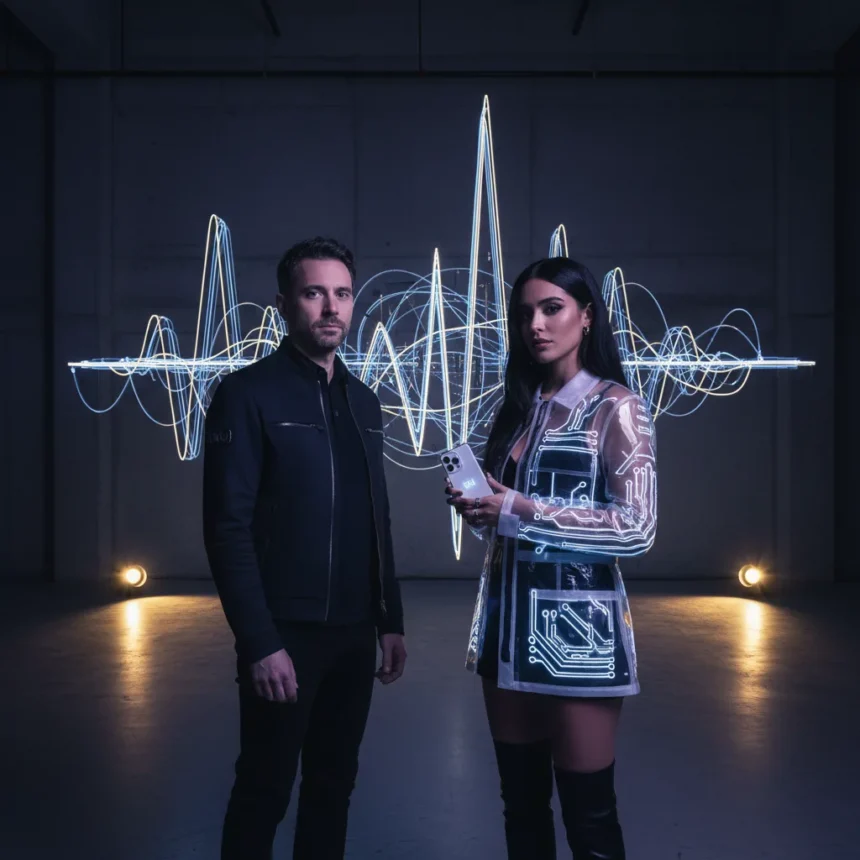
Tech brand celebrity collaboration typically follows a predictable formula: slap a famous face on a product, announce a limited-edition colorway, watch sales spike for a quarter. Nothing’s partnership with Charli XCX breaks that mold entirely. The collaboration positions the British tech company in territory most consumer electronics brands never reach—cultural relevance that transcends gadget specs and into genuine creative expression.
Key Takeaways
- Nothing appointed Charli XCX as first-ever ambassador and shareholder in the company
- The collaboration signals a shift toward artist-led brand strategy in consumer tech
- Charli XCX’s cultural influence extends beyond music into visual design and brand aesthetics
- Tech partnerships with genuine creative voices outperform traditional celebrity endorsements
- This move positions Nothing as a culture-first company, not just a hardware manufacturer
Why This Collaboration Actually Works
Charli XCX is not a typical tech brand ambassador. She does not simply appear in ads or lend her name to a product variant. Instead, Nothing appointed her as the company’s first-ever ambassador and shareholder, embedding her directly into the brand’s strategic direction. This structural choice matters enormously. It signals that her involvement is not a marketing stunt but a genuine partnership in shaping how Nothing presents itself to the world.
Most tech companies treat celebrity partnerships as one-directional transactions. A phone maker pays an influencer to post about their device, collects the engagement metrics, and moves on. Nothing’s approach inverts this dynamic. By making Charli XCX a shareholder, the company aligns her financial interests with its long-term success. She has skin in the game. That distinction transforms the partnership from a transactional endorsement into a collaborative vision.
Charli XCX’s creative output—her music, visual aesthetics, and cultural positioning—already embodies the kind of bold, unconventional thinking that Nothing claims to represent. She does not need to pretend to care about a phone’s processing power or battery life. Her involvement works because there is genuine overlap between her artistic sensibility and what Nothing is attempting to build as a brand. When that overlap exists, the collaboration feels authentic rather than forced.


The Broader Shift in Tech Marketing Strategy
This partnership reflects a larger realization within consumer tech: traditional celebrity endorsements no longer move the needle. A famous actor holding a phone in a glossy advertisement generates awareness, sure, but not the kind of cultural cachet that drives passionate adoption. Younger audiences, particularly those who care about design, aesthetics, and brand personality, respond to artists who have demonstrated creative credibility in their own fields.
Tech companies have spent decades trying to make hardware feel cool through marketing alone. They hire expensive agencies, shoot cinematic commercials, and craft carefully worded press releases. None of it substitutes for genuine cultural alignment. When Charli XCX endorses something, her audience listens because they trust her taste and her judgment. She has built credibility by making bold creative choices in her own work. That credibility transfers to any brand she genuinely supports.



Nothing’s decision to position Charli XCX as a shareholder and strategic partner acknowledges this shift explicitly. The company is saying: we do not just want your attention, we want your trust. We are inviting an artist whose cultural judgment you respect into our decision-making process. That is a fundamentally different pitch than traditional tech marketing offers.
What This Means for Tech Companies Looking to Build Culture
The Nothing and Charli XCX collaboration sets a template that other tech brands will attempt to replicate. But replication without authenticity will fail instantly. The partnership works because Charli XCX’s creative vision and Nothing’s brand positioning actually align. You cannot manufacture that overlap through casting calls and contract negotiations. Either a partnership feels genuine or it does not, and audiences can sense the difference immediately.
For tech companies attempting to build cultural relevance, the lesson is clear: stop thinking about celebrities as marketing assets and start thinking about them as creative collaborators. Invite artists whose work already embodies the aesthetic and values your brand claims to represent. Give them real influence over product design, brand direction, and strategic decisions. Make them shareholders if the relationship warrants it. In other words, treat the partnership as a genuine creative collaboration rather than a sponsored appearance.
Nothing’s move also signals confidence in a particular brand positioning. By aligning with Charli XCX, the company is saying: we are not trying to appeal to everyone. We are building products and a brand identity for people who value design, creativity, and cultural awareness. That specificity is harder to execute than a broad, mass-market approach, but it is also more defensible. A brand that stands for something specific attracts passionate users. A brand that tries to be everything to everyone attracts nobody.



Does the Collaboration Change How We Should Think About Tech Partnerships?
Yes, but not universally. Not every tech company should pursue artist collaborations, and not every artist is suited to tech partnerships. The Nothing and Charli XCX collaboration works because both parties bring something authentic to the table. Charli XCX has spent her career making unconventional creative choices. Nothing has positioned itself as a design-forward company willing to challenge industry norms. The partnership amplifies both identities rather than diluting either one.
For other tech companies evaluating partnership opportunities, the question should be: does this collaboration make our brand more authentically ourselves, or does it feel like we are chasing someone else’s credibility? If the answer is the latter, skip it. The market has become sophisticated enough to detect inauthentic partnerships instantly. A celebrity endorsement that feels forced will damage your brand more than no endorsement at all.
How does tech brand celebrity collaboration differ from traditional endorsements?
Traditional endorsements are transactional: a company pays a celebrity to promote a product in exchange for compensation. Tech brand celebrity collaboration, when done right, involves genuine creative partnership where the celebrity has strategic input and sometimes equity stake in the company. Nothing’s model with Charli XCX exemplifies this—she is not just appearing in ads, she is shaping brand direction as a shareholder and ambassador.
Why would Charli XCX want to be a tech company shareholder?
By taking an equity stake in Nothing, Charli XCX aligns her financial interests with the company’s long-term success. This structure transforms her from a hired endorser into a genuine stakeholder with influence over strategic decisions. For an artist building a brand and cultural presence, ownership in a design-forward tech company offers both financial upside and creative control—far more compelling than a standard endorsement deal.
Can other tech brands replicate Nothing’s Charli XCX strategy?
Replication without authenticity will fail. The partnership works because genuine overlap exists between Charli XCX’s creative vision and Nothing’s brand positioning. Other tech companies can pursue similar artist collaborations only if they identify creators whose work authentically aligns with their own brand values. Forcing a mismatched partnership will feel inauthentic and damage credibility with audiences who can instantly detect manufactured endorsements.
Nothing’s decision to elevate Charli XCX from ambassador to shareholder represents a fundamental shift in how tech companies can build cultural relevance. Rather than chasing celebrity endorsements, the smarter play is partnering with artists whose creative credibility already overlaps with your brand identity. That approach generates authentic cultural alignment instead of marketing noise. In a market saturated with gadgets and competing for attention, authenticity is the only differentiator that actually sticks.
Where to Buy
Nothing Headphone (a) | Nothing Headphone (1) | Nothing Ear | Nothing Ear (3) | Nothing Ear (a)
Edited by the All Things Geek team.
Source: Creativebloq




