





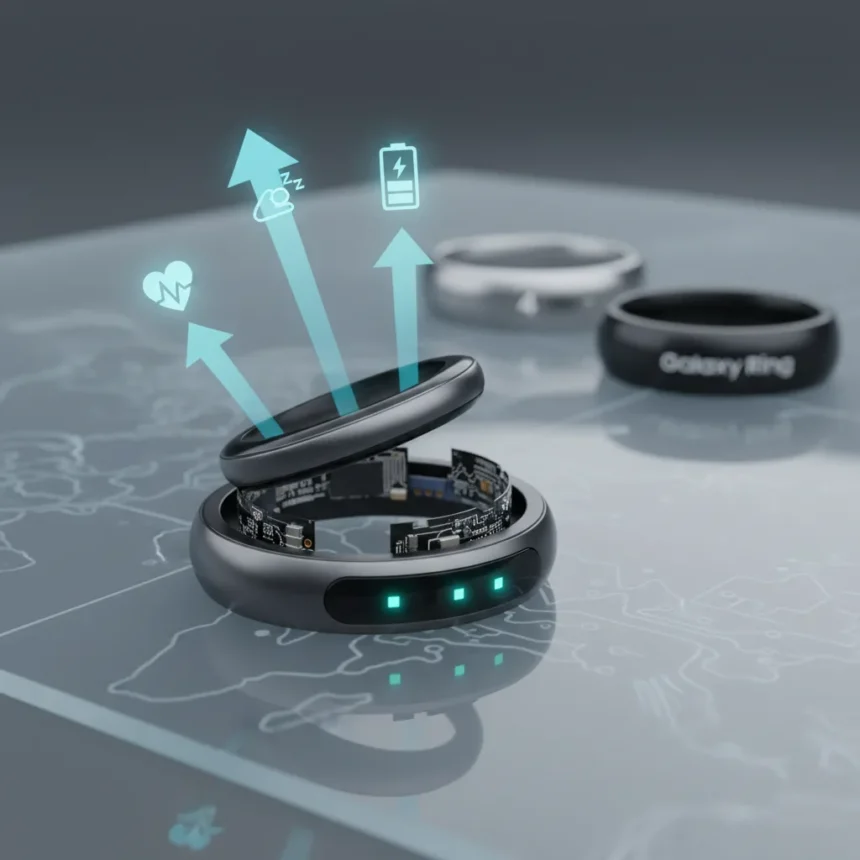
Smart ring competition is intensifying as Oura prepares to challenge Samsung’s dominance in the category. The Oura Ring 4 has established itself as a credible contender, but the upcoming Oura Ring 5 will need targeted improvements to claim the top spot in the smart ring market.
Key Takeaways
- Oura Ring 4 is currently positioned as a “future-proof” baseline model in the smart ring category.
- Oura Ring 5 could become a “day-one purchase” if it delivers the right feature upgrades.
- Samsung Galaxy Ring represents the main competitive threat to Oura’s market leadership.
- Smart ring competition now focuses on incremental hardware and software improvements rather than revolutionary leaps.
- The next generation of smart rings will determine which brand dominates wearable health tracking.
What Smart Ring Competition Means Right Now
Smart ring competition refers to the battle between wearable manufacturers to build the most capable health-tracking ring on the market. The category has evolved from niche fitness accessory to mainstream wearable, with Oura and Samsung now competing directly for consumer attention and loyalty. The stakes matter because smart rings offer continuous health monitoring in a form factor that smartphones and traditional smartwatches cannot match. Oura Ring 4 has earned recognition as the current category leader, but that position is not guaranteed to carry forward.
The competitive landscape has shifted dramatically. A year ago, smart rings were relatively unknown outside fitness enthusiast circles. Today, Samsung’s entry into the market has forced Oura to defend its territory while simultaneously planning the next generation. The winner of this competition will likely set the standard for how health data is collected, stored, and analyzed in wearables for years to come.
Why Oura Ring 5 Matters for Smart Ring Competition
Oura Ring 5 is not yet officially announced, but industry observers are already speculating about what upgrades would justify a purchase over the current Ring 4. The three anticipated improvements would need to address gaps that the Samsung Galaxy Ring has exploited while building on the strengths that made Ring 4 “future-proof” in the first place. If Oura executes correctly, Ring 5 could reclaim undisputed leadership in smart ring competition and force Samsung to respond with its own second-generation ring.


What makes this competitive moment crucial is timing. The smart ring category is still young enough that early dominance can establish brand loyalty and ecosystem lock-in. Readers waiting for Oura Ring 5 represent a significant pool of potential customers who are actively comparing it to Samsung Galaxy Ring before making a purchase decision. The winner captures not just this generation of users but their future upgrades as well.
How Samsung Galaxy Ring Changed Smart Ring Competition
Samsung Galaxy Ring entered the market as a credible challenger to Oura’s established position, forcing a direct comparison that was not possible before. Samsung’s resources, brand recognition, and integration with its broader Galaxy ecosystem gave it advantages that pure-play wearable makers like Oura could not easily match. For smart ring competition, this meant Oura could no longer rely solely on superior health-tracking algorithms—it now had to compete on features, price, ecosystem integration, and user experience simultaneously.



The competitive pressure is already visible in how Oura is being discussed. Rather than standing alone as “the” smart ring, Oura Ring 4 is now consistently evaluated against Samsung Galaxy Ring as the primary alternative. This shift forces both companies to innovate faster and more deliberately. Oura’s response—a potential Ring 5 with strategic upgrades—will either consolidate its market position or cede ground to Samsung’s growing momentum in wearables.
What Oura Ring 5 Needs to Win Smart Ring Competition
For smart ring competition, Oura Ring 5 must address three specific areas where it can differentiate from Samsung Galaxy Ring while improving on Ring 4’s foundation. The exact upgrades have not been officially confirmed, but industry anticipation suggests they would focus on hardware capabilities, software features, or ecosystem integration that matter to the target user. A successful Ring 5 launch would be a “day-one purchase” for current Oura users and a reason for Samsung Galaxy Ring owners to reconsider their choice.
The challenge for smart ring competition is that incremental improvements no longer guarantee success. Samsung entered with a strong product and aggressive marketing. Oura cannot simply iterate—it must innovate in ways that make Ring 5 feel like a meaningful leap forward, not just a minor refresh. The company is “patiently waiting” to announce the successor, which suggests Oura is taking time to get the upgrades right rather than rushing a mediocre product to market.
Frequently Asked Questions
Has Oura officially announced the Ring 5 release date?
Oura has not officially announced Oura Ring 5 or confirmed a release timeline. The article frames Ring 5 as a future product that readers are anticipating, not one that has been formally unveiled or dated.



How does the Samsung Galaxy Ring compare to Oura Ring 4 in smart ring competition?
Samsung Galaxy Ring is positioned as Oura Ring 4’s main competitor in the smart ring market. Both devices track health metrics, but they differ in ecosystem integration, feature set, and user interface. The competitive comparison suggests each has strengths that appeal to different user priorities.
What would make Oura Ring 5 a “day-one purchase”?
According to the article, Oura Ring 5 would need to deliver three specific upgrades beyond the Ring 4’s current capabilities to justify an immediate purchase for most users. The exact upgrades have not been publicly detailed, but they would likely address gaps that Samsung Galaxy Ring has filled.
Smart ring competition will ultimately be decided by execution. Oura Ring 5 has the potential to dominate the category if it delivers meaningful upgrades that Samsung Galaxy Ring cannot easily match. The next 12 months will determine whether Oura maintains its leadership or whether Samsung’s entry into the market signals a shift in wearable power dynamics. For consumers caught between these two options, the real winner is choice itself—competition drives both companies to build better products.
Edited by the All Things Geek team.
Source: TechRadar




