





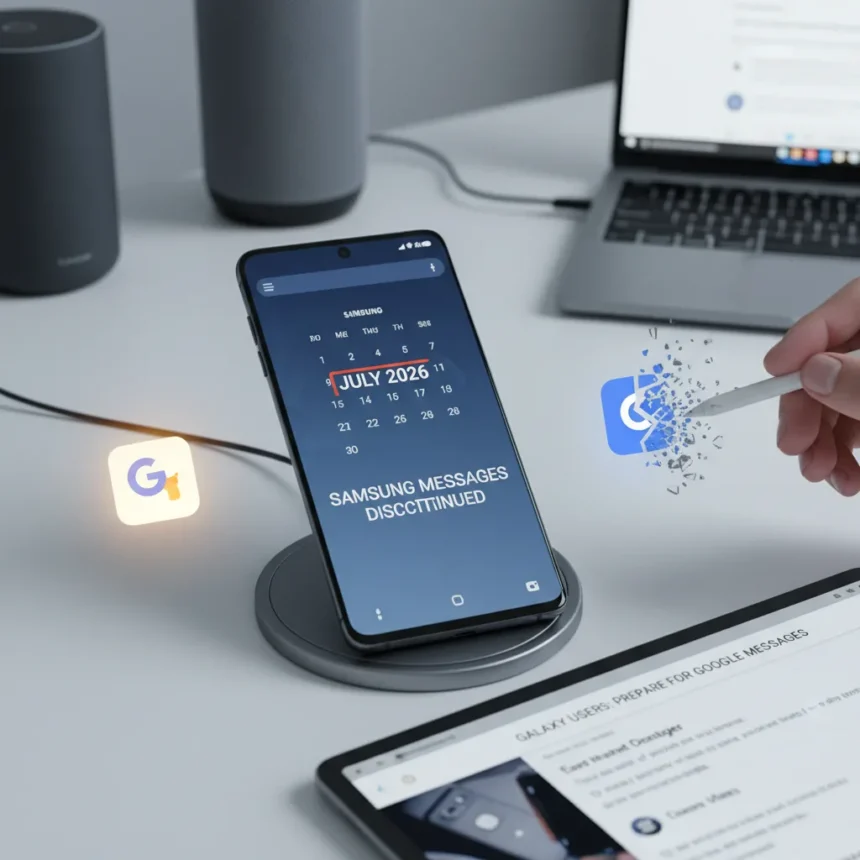
Samsung Messages shutdown is coming to US Galaxy phones in July 2026, ending a messaging app that has shipped on Samsung’s Android devices since the company’s smartphone lineup began. After that date, the app will no longer be available for download from the Galaxy Store, and current users will lose the ability to send messages through it except to emergency services and saved contacts.
Key Takeaways
- Samsung Messages will be discontinued July 2026 in the US and removed from the Galaxy Store
- Galaxy S26 and newer devices cannot download Samsung Messages at all
- Users must switch to Google Messages, which offers RCS, security features, and AI capabilities
- Devices older than 2022 may experience temporary RCS disruptions during the switch, though SMS and MMS remain available
- Samsung advises backing up important messages before the July 2026 deadline
Why Samsung Messages is being discontinued
Samsung’s decision to kill Samsung Messages reflects a broader shift toward Google’s ecosystem on Galaxy phones. In early 2025, Samsung confirmed that Google Messages would become the default messaging app on new Galaxy devices, and the Galaxy S25 family shipped with both apps installed. The Galaxy S26 series skips Samsung Messages entirely, signaling the company’s commitment to consolidating around Google’s platform. Rather than maintain two competing messaging apps, Samsung is choosing to align with Google’s solution, which includes RCS (Rich Communication Services), security features, and what Samsung describes as AI-powered capabilities.
This move may frustrate longtime users who prefer Samsung’s native implementation, and online reactions have been predictably negative. The decision eliminates user choice on devices that have shipped with Samsung Messages for years, forcing an ecosystem transition that many see as unnecessary. Samsung official statement: “The Samsung Messages application will be discontinued in July 2026. Upgrade to Google Messages as your default messaging app today to maintain a consistent messaging experience on Android”.
What devices are affected by Samsung Messages shutdown
The Samsung Messages shutdown applies to the US market only. Galaxy S26 and newer devices cannot download Samsung Messages from the start, while all other Galaxy phones lose access after July 2026. Older Samsung watches released before the Galaxy Watch4 may lose full message synchronization capabilities. Devices manufactured before 2022 may experience temporary RCS disruptions when users switch to Google Messages, though standard SMS and MMS messaging will continue to work normally. RCS functionality resumes once both parties are using Google Messages.


How to switch from Samsung Messages to Google Messages
Samsung provides official instructions for migrating to Google Messages. First, download Google Messages from the Play Store if you do not already have it installed. Open the app and you will see a prompt stating “To use Messages, make it your default SMS app.” Tap the “Set default SMS app” button, select Google Messages (identified by a white icon with a blue conversation bubble), then tap “Set as default”. If you want to remove the Samsung Messages icon from your home screen, long-press the icon in your dock and select “Remove”.
In-app notifications may guide you through the switch depending on your Android OS version. The process takes less than a minute, but Samsung recommends backing up or forwarding important messages before July 2026 arrives. After the discontinuation date, sending messages through Samsung Messages will no longer be possible except to emergency services and saved contacts.



Google Messages features Samsung Messages users will gain
Google Messages includes RCS capabilities that enable higher-quality messaging with read receipts, typing indicators, and larger file sharing compared to traditional SMS. The app offers security features and AI-powered functionality that Samsung positions as improvements over its native solution. Google Messages also includes options like autodelete after 24 hours and lock screen message previews, giving users more control over their messaging experience. For users on newer Galaxy devices like the S25 family, Google Messages is already the default, so the transition should feel natural.
Will you lose your message history?
Samsung Messages shutdown does not automatically delete your existing message history. However, the company advises users to back up or forward important messages before July 2026 to ensure they are preserved in Google Messages. Once you switch your default to Google Messages, new incoming messages will arrive in the Google app, but older Samsung Messages conversations may not migrate automatically depending on your device and Android version.
What happens to RCS on older Galaxy phones?
Older Galaxy devices released before 2022 may experience temporary RCS disruptions when switching from Samsung Messages to Google Messages. Standard SMS and MMS will continue to function without interruption, but advanced RCS features like read receipts and high-quality image sharing will resume once both parties are using Google Messages. This temporary gap is a known limitation of the transition, not a permanent loss of messaging capability.
Samsung’s decision to discontinue Samsung Messages reflects the company’s pragmatic choice to standardize around Google’s platform rather than maintain competing apps. For users, the transition is straightforward but feels forced—a reminder that even on Android, ecosystem control ultimately flows toward Google. The July 2026 deadline gives Galaxy users eighteen months to prepare, but the message is clear: Samsung’s native messaging era is over.



Edited by the All Things Geek team.
Source: Tom's Guide




