





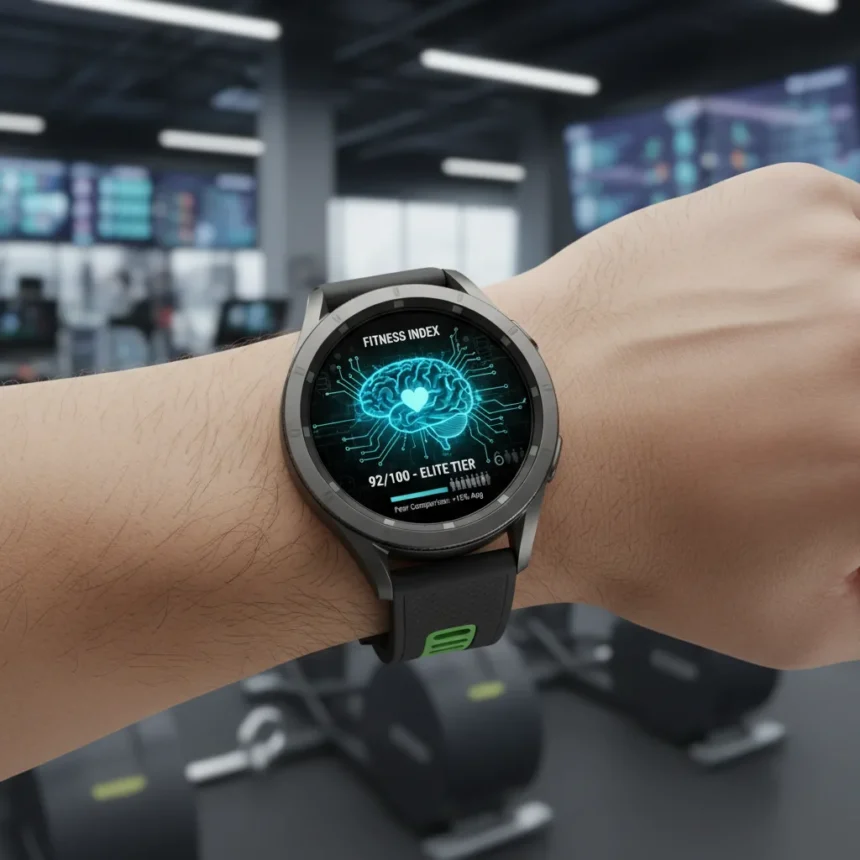
Samsung AI health tools are about to change what a smartwatch is actually for. Announced ahead of the Galaxy Watch 9 launch, these features — headlined by a peer-benchmarked Fitness Index — signal a clear shift in Samsung’s strategy: away from raw data collection and toward AI-driven interpretation that tells you what your numbers actually mean.
Key Takeaways
- Samsung announced a new set of AI health tools for the Samsung Health app and Galaxy Watch platform ahead of the Galaxy Watch 9 launch.
- The headline feature is a Fitness Index that rates your fitness against peers, introducing a social benchmarking element to Samsung Health.
- The move signals Samsung is expanding beyond basic health tracking into AI-generated wellness insights.
- No confirmed launch date or pricing for the Galaxy Watch 9 has been announced in the available material.
- The AI features are described as part of Samsung’s next-generation watch ecosystem, not a standalone app update.
What Are Samsung AI Health Tools and Why Do They Matter Now?
Samsung AI health tools refer to a new layer of artificial intelligence built into the Samsung Health app and Galaxy Watch ecosystem, designed to interpret health data rather than just display it. The announcement, reported by Tom’s Guide, positions these tools as arriving ahead of the Galaxy Watch 9 — meaning Samsung is building the software story before the hardware even ships.
That sequencing is deliberate. Samsung wants developers, health enthusiasts, and potential buyers to understand the platform’s capabilities before the device lands. It’s a page from Apple’s playbook, where software features often drive upgrade decisions more than processor bumps. The question is whether Samsung’s AI layer is genuinely useful or just a marketing wrapper around data you could already see.
The Fitness Index: What Peer Benchmarking Actually Means
The Fitness Index is the most distinctive of Samsung’s announced AI health tools — it rates your fitness level against a population of peers rather than just tracking your own progress in isolation. Instead of telling you that your resting heart rate dropped three beats per minute, it contextualises where you stand relative to people with similar profiles.


Peer benchmarking is a genuinely different approach to wearable wellness. Most competing platforms — including those from Apple, Garmin, and Fitbit — focus on personal trend lines. Showing users how they compare to a broader population adds a motivational dimension that personal data alone can’t provide. The risk, of course, is that population comparisons can discourage users who fall below average rather than inspire them to improve. How Samsung handles that UX tension will determine whether the Fitness Index becomes a beloved feature or a quietly ignored one.
The exact methodology behind the Fitness Index — how peers are defined, what metrics feed the score, and how the comparison population is segmented — has not been confirmed in the available material. Those details matter enormously for how trustworthy the score actually is.



How Samsung AI Health Tools Compare to the Broader Wearable Market
Samsung’s push into AI-driven health interpretation puts it in direct competition with platforms that have been building this capability for years. Garmin’s Body Battery and Training Readiness scores already synthesise multiple data points into single actionable metrics. Apple’s health app has steadily added trend analysis and cardio fitness estimates. Oura’s readiness score, built around recovery rather than performance, has attracted a loyal following among users who want nuance over raw numbers.
What Samsung is attempting with its AI health tools is a synthesis of these approaches — combining fitness benchmarking, AI interpretation, and deep hardware integration across the Galaxy Watch line. Whether the execution matches the ambition is the real test. Samsung Health has historically struggled with the kind of nuanced, trustworthy health guidance that Garmin and Oura users rely on daily. Adding AI labels to existing features won’t close that gap. Building genuinely smarter analysis might.
Is the Galaxy Watch 9 the Right Moment for This Push?
Timing an AI health feature announcement ahead of a hardware launch is smart, but it also raises expectations for the Galaxy Watch 9 itself. If the new AI tools require the Watch 9’s sensors or processing power to function properly, that’s a compelling upgrade argument. If they roll out to existing Galaxy Watch models as a software update, the hardware story weakens considerably.
No confirmed release date or price for the Galaxy Watch 9 appears in the currently available information, so the timeline remains open. What’s clear is that Samsung is framing the Watch 9 era as an AI-first platform shift — not just an incremental spec upgrade. That framing will resonate with health-conscious buyers who feel their current wearable tells them a lot but explains very little.



Are Samsung’s AI health tools available on older Galaxy Watch models?
The available information describes these tools as part of Samsung’s next-generation watch ecosystem ahead of the Galaxy Watch 9 launch, but does not confirm whether they will roll out to older models. Compatibility details have not been announced in the material available at the time of writing.
What is the Fitness Index and how does it work?
The Fitness Index is a new Samsung Health feature that rates your fitness level against a peer group rather than tracking only your personal progress over time. The exact scoring methodology and how peer groups are defined has not been confirmed in the available material.
How do Samsung AI health tools compare to Apple Watch health features?
Both Samsung and Apple are pushing wearable platforms toward AI-driven health interpretation rather than simple data display. Apple has built cardio fitness estimates and health trend analysis into its platform over several years. Samsung’s Fitness Index adds a peer-benchmarking angle that Apple’s platform does not currently offer in the same explicit form, though the full feature comparison will only be possible once Samsung’s tools are publicly available.
Samsung’s AI health tools announcement is more than a pre-launch teaser — it’s a statement about where the company thinks wearable wellness is heading. Benchmarking fitness against peers, layering AI interpretation over raw sensor data, and building a platform story before the hardware ships all suggest a company that understands its next Galaxy Watch needs to be more than a spec sheet. Whether the execution delivers on that promise is the question that only the Galaxy Watch 9’s real-world performance will answer.
Edited by the All Things Geek team.
Source: Tom's Guide





