





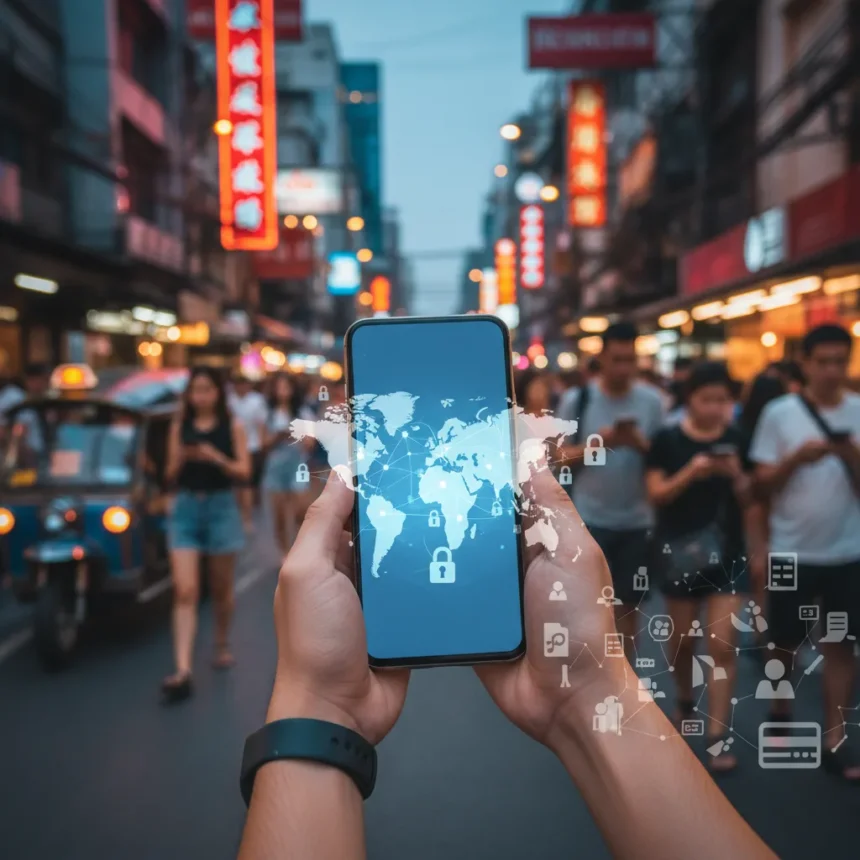
Silent data collection travel apps represent a growing threat to travelers returning from Asia, according to research from VPN provider Surfshark. The company’s latest investigation exposes how the most popular local travel applications across the region engage in extensive data harvesting—often without users realizing what information is being captured, where it’s stored, or who can access it.
Key Takeaways
- Popular Asian travel apps collect far more data than users typically realize or consent to.
- Silent data collection occurs in the background, often hidden in lengthy terms of service documents.
- VPN protection can shield travelers from data harvesting by local applications.
- Privacy risks extend beyond the trip itself—data collection continues after travelers return home.
- Awareness of app permissions is the first step toward protecting personal information while traveling.
What is silent data collection in travel apps?
Silent data collection refers to the practice of gathering user information without explicit, transparent consent or notification. Travel apps operating across Asia often collect location data, payment information, browsing history, device identifiers, and contact details—sometimes far beyond what is necessary to provide their core service. The data collection happens continuously, often in background processes that users never see or interact with directly. This practice is particularly concerning because travelers may use these apps while away from home, creating a detailed record of their movements, preferences, and financial transactions across multiple countries.
Surfshark’s research highlights that this data harvesting is not incidental—it is a deliberate business practice embedded into how these applications function. Users downloading and using these apps are often unaware of the scope of information being extracted, making informed consent impossible in practical terms.
Why Asian travel apps are particularly problematic
Asian travel apps dominate their regional markets because they offer localized services—booking trains, buses, hotels, and attractions specific to each country. Their market dominance means millions of travelers have no realistic alternative if they want to use convenient local transportation or accommodation services. This creates a leverage point: users must accept the data collection terms or forgo essential travel functionality.


The research indicates these applications collect data that goes far beyond operational necessity. Payment card details, passport information, travel itineraries, and real-time location tracking are standard practices. Once collected, this data is often shared with third parties, sold to advertisers, or stored indefinitely. The lack of strong regional data protection regulations in some Asian markets means users have fewer legal protections than they would in jurisdictions with stricter privacy frameworks.
How VPN protection addresses the problem
A VPN encrypts your internet traffic and masks your IP address, making it harder for applications to track your location and online activity. While a VPN cannot prevent an app from accessing the data it requests through system permissions (such as location or contacts), it can prevent the app from leaking that data to external servers or third parties undetected. VPN providers like Surfshark operate with strict no-logs policies, meaning they do not store records of what users do online—a fundamental difference from many travel apps, which actively monetize user data.



Surfshark has previously published transparency reports detailing data requests it receives from governments and law enforcement, demonstrating accountability in its privacy practices. This contrasts sharply with the opaque data handling of many travel applications, which rarely disclose what information they collect or how it is used. Other VPN providers like Windscribe have undergone third-party audits to verify their no-logs claims, setting a standard of transparency absent in the travel app ecosystem.
Practical steps for protecting your data while traveling
Awareness of app permissions is the first defense. Before installing any travel application, review what permissions it requests—location access, contact lists, camera, microphone, photo library. If an app requests permissions unrelated to its function, that is a red flag. Disable unnecessary permissions in your device settings after installation. Use a VPN whenever connecting to public WiFi, which travel apps often use to transmit data. Consider creating a separate email address for travel app registrations, isolating that data from your primary email account. Finally, delete travel apps after your trip ends rather than keeping them installed indefinitely, limiting the window for ongoing data collection.
The broader privacy landscape for travelers
This issue extends beyond travel apps. Global privacy concerns have intensified as major technology companies face scrutiny for tracking users even after they opt out of data collection. Turkey’s bans on popular VPN services in November 2023—affecting Surfshark, ProtonVPN, IPVanish, CyberGhost, and Psiphon—reflect growing government interest in controlling data flows and user privacy tools. These geopolitical tensions underscore why travelers need privacy protections: data collected while abroad can be accessed by governments, companies, or malicious actors across borders.
Free VPN services are generally not recommended as privacy solutions for travelers. They often impose data caps, limit server locations, and may themselves engage in data collection to monetize free access. Paid VPN services with transparent privacy policies and no-logs architectures offer substantially better protection, though no tool is perfect. The responsibility ultimately lies with users to understand what data they are sharing and to use available tools to minimize exposure.



Is a VPN enough to protect my data while traveling?
A VPN is one layer of protection, but it is not a complete solution. It secures your internet connection and masks your location from your internet service provider and network observers, but it cannot prevent apps from collecting data through system permissions you have granted them. You must also manage app permissions, use strong passwords, enable two-factor authentication, and avoid connecting to unsecured public WiFi networks without a VPN. A comprehensive approach combines VPN protection with privacy-conscious app choices and device settings.
Should I avoid using local travel apps altogether?
Avoiding local travel apps entirely is impractical for most travelers—they offer essential services unavailable through international alternatives. Instead, use them strategically: install apps only when you need them, disable unnecessary permissions, use a VPN to protect your traffic, and delete the apps when your trip ends. This limits the duration and scope of data collection while still allowing you to access necessary services. Research each app’s privacy policy before installation, even if the policy is lengthy and dense—the effort is worthwhile.
Travelers returning from Asia face a real but manageable privacy risk from the apps they use to book transportation and accommodations. While Surfshark’s research serves partly as a marketing tool for VPN services, the underlying concern is legitimate: popular travel apps do collect extensive data with minimal transparency. The solution is not paranoia but pragmatism—understanding what data you are sharing, using privacy tools like VPNs, and managing app permissions carefully. Your personal information is valuable, and the apps you trust with it during travel should be worthy of that trust.
Edited by the All Things Geek team.
Source: TechRadar




