


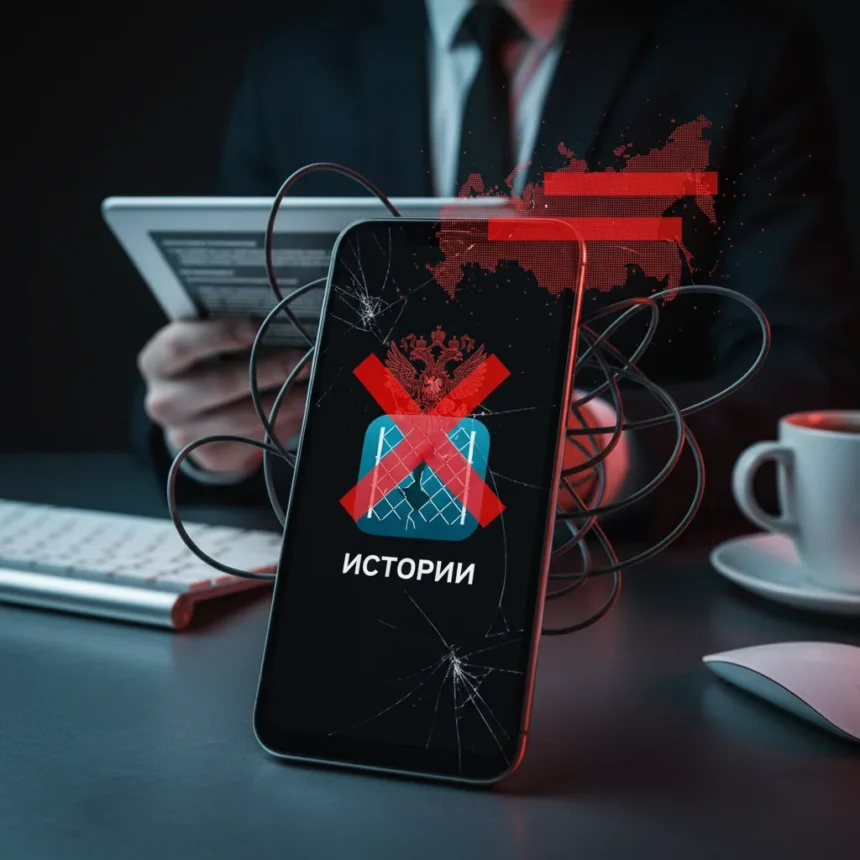
Independent news apps Russia are facing unprecedented pressure as Moscow’s state internet regulator escalates its crackdown on uncensored journalism. Roskomnadzor, Russia’s federal communications agency, has sent formal demands to Apple and Google ordering them to remove IStories—a mobile application launched in February 2026 specifically designed to deliver investigative reporting without requiring a VPN.
Key Takeaways
- Roskomnadzor demanded Apple and Google remove the IStories app, which provides uncensored news and investigations into political corruption and Ukraine war coverage.
- IStories launched in February 2026 as a VPN-free workaround to Russia’s widespread website blocking and internet censorship.
- The regulator accused the app of spreading “fakes” and “destabilizing the socio-political situation” without specifying which content violates Russian law.
- Apple previously complied with similar removal demands in late 2024 for the RFE/RL Russian service app, setting a precedent for enforcement.
- Dozens of VPN applications have been removed from Russian app stores in recent months as Moscow tightens control over circumvention tools.
What Roskomnadzor Wants Removed
Roskomnadzor has not identified specific content that violates Russian law. Instead, the regulator issued a vague accusation that IStories spreads “fakes” and destabilizes Russia’s political environment, then demanded the company delete unspecified materials or face full app removal. IStories responded with a statement that captures the absurdity of the demand: “We don’t know exactly what information we are supposed to remove.” Without clarity on which articles, investigations, or video reports offend the state, the news organization cannot comply—a catch-22 designed to force removal regardless of actual content disputes.
This approach mirrors Moscow’s broader censorship strategy. Rather than transparently banning specific reporting, authorities weaponize vague accusations of “extremism” or “destabilization” to pressure tech platforms into compliance. The burden shifts from the state to prove a violation to the publisher to guess what the state wants hidden. It is a regulatory technique perfected over years of targeting independent outlets.
Independent News Apps Russia and the VPN-Free Workaround
IStories is an independent investigative news outlet that exposes political corruption and documents the realities of Russia’s war in Ukraine. The organization launched its mobile app in February 2026 as a direct response to Russia’s systematic blocking of independent news websites. Unlike relying on VPN services—which users must manually activate and which authorities actively work to disable—the IStories app functions automatically within Russia, delivering text and video content with built-in updates that bypass state interference.


This architecture made IStories uniquely dangerous to Moscow’s censorship apparatus. VPN apps can be removed from app stores, but users who already installed them retain access. A native news app, however, reaches new readers and updates smoothly. It normalizes uncensored journalism as a standard mobile experience rather than a technical workaround. That accessibility is precisely why Roskomnadzor moved to eliminate it.
Apple’s History of Compliance Sets Dangerous Precedent
Apple has already demonstrated willingness to enforce Russian censorship demands. In late 2024, the company removed the RFE/RL Russian service app from its Russian App Store at Roskomnadzor’s explicit request, citing materials from an “undesirable” organization. That precedent signals that Apple may comply with the IStories removal demand as well, prioritizing market access in Russia over press freedom.



Google faces identical pressure. Both companies operate in Russia and depend on regulatory approval to maintain app store access. Refusing Roskomnadzor’s demands risks broader retaliation—app store suspension, payment processing blocks, or legal action against local employees. Compliance is the path of least resistance, even when it silences independent journalism. This dynamic reveals a structural vulnerability in the global app store system: authoritarian governments can leverage market access as leverage to enforce censorship that would be illegal in democracies.
Broader Campaign Against Circumvention Tools
The IStories removal is not an isolated incident but part of a sustained campaign. Roskomnadzor has removed dozens of VPN applications from both the Apple App Store and Google Play in recent months, systematically dismantling tools that Russians use to access blocked content. Each removal narrows the available pathways to uncensored information. The IStories app represented a new frontier—not a tool to bypass censorship, but a news outlet that integrated circumvention into its core product design.
By targeting independent news apps directly, Moscow is closing loopholes faster than they can be created. Traditional websites can be blocked at the ISP level. VPN apps can be removed from stores. But a news app that works without additional tools, distributed through official channels, is harder to counter. Its removal signals that Moscow will not tolerate any distribution method for independent journalism, regardless of technical sophistication.
What This Means for Russian Readers
If Apple and Google comply with Roskomnadzor’s demands, millions of Russians lose a key source for uncensored news about political corruption and the war in Ukraine. Readers who have not yet installed the app will be unable to download it. Existing users may see the app stop updating or lose access entirely if forced removal includes backend infrastructure shutdown. The practical effect is state-enforced information control.



Readers in Russia still have options—VPN services, Tor, proxy networks, and cached versions of blocked websites. But each workaround requires technical knowledge, carries legal risk, and demands active effort. A native news app required none of that. Its removal raises the friction cost of accessing independent journalism to levels that will deter casual readers and reinforce state-approved narratives as the default information diet.
Do Apple and Google have a choice?
Legally, Apple and Google operate under Russian law when serving Russian users. Roskomnadzor’s demands carry the force of regulatory authority. Refusal risks escalating penalties—fines, service restrictions, or criminal liability for executives. Practically, both companies have already chosen compliance in similar situations. The question is not whether they have a choice, but whether they will exercise it.
What happens if IStories is removed?
If both Apple and Google remove IStories, the app becomes inaccessible to new Russian users through official channels. Existing users may retain the app on their devices, but it will stop receiving updates and new content. The news organization could distribute the app through alternative channels—direct APK downloads, third-party stores—but reach would plummet dramatically.
Why target independent news apps instead of websites?
Apps are more effective at reaching casual readers than websites because they integrate smoothly into the phone experience, auto-update, and do not require users to remember URLs or navigate firewalls. By removing apps, Roskomnadzor eliminates the easiest path to uncensored information. Websites can still be blocked, but blocking is visible and provokes circumvention. App removal is quieter and more effective.
The removal of IStories marks an inflection point in Russia’s information control strategy. Rather than simply blocking websites or banning VPN services, Moscow is now targeting the architecture of independent journalism itself—demanding that global tech platforms become enforcers of state censorship. If Apple and Google comply, they will have set a precedent that authoritarian governments can weaponize app stores to silence dissent. If they refuse, they risk market access and regulatory retaliation. Either way, Russian readers lose. That is the calculus Moscow is betting on.
This article was written with AI assistance and editorially reviewed.
Source: TechRadar