







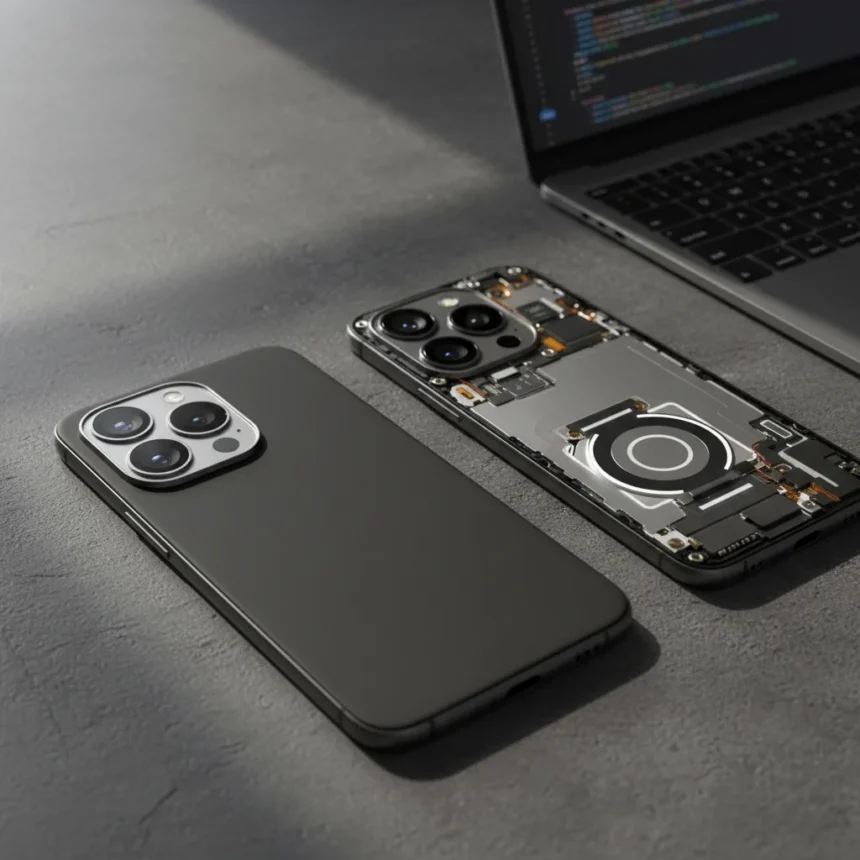
The Nothing Phone 4a Pro is a mid-range Android phone powered by the Snapdragon 7 Gen 4 chipset, priced under $500, and equipped with triple rear cameras including a 50MP periscope telephoto lens. It launches with Nothing OS 4.1 on Android 16, a clean software experience with minimal bloat. Yet for all its technical competence, the Nothing Phone 4a Pro commits a cardinal sin: it abandons the very design philosophy that made Nothing worth paying attention to in a sea of interchangeable gray rectangles.
Key Takeaways
- Nothing Phone 4a Pro features a 6.83-inch 1.5K AMOLED display with 144Hz refresh rate and 5000 nits peak brightness.
- Triple camera setup includes 50MP main with OIS, 50MP periscope telephoto with 3.5x optical zoom, and 8MP ultrawide.
- Metal unibody design abandons Nothing’s signature transparent back, alienating core fans.
- Glyph Matrix simplified to basic clock and notification display, stripping away interactivity from previous models.
- Battery life ranks among the best in its price segment with strong endurance.
The Design Betrayal That Undermines Everything Else
Nothing built its brand identity on radical transparency. The original Nothing Phone 1 and Phone 2 featured see-through backs with LED strips running across the chassis—a bold visual statement that said: we are different. The Nothing Phone 4a Pro throws that away. In its place sits an aluminum unibody with a matte metal finish, 7.95mm thick, wrapped in Gorilla Glass 7i. It is, by every measure, a conventional mid-range phone. Without the transparent design language, the Nothing Phone 4a Pro risks becoming just another iPhone 17 clone without the Glyph window to distinguish it.
This design pivot would sting less if Nothing had made a compelling case for the change. The pre-installed screen protector—supposedly a protective upgrade—is one of the worst ever applied to a phone, according to reviewers. The Gorilla Glass 7i is welcome, but the execution undermines the benefit. For a phone that Nothing actively encourages users to place face down, the protection strategy feels half-baked.
Cameras and Battery Carry the Weight
If the Nothing Phone 4a Pro has a redemption arc, it lives in the camera system and battery endurance. The triple rear setup—50MP main with optical image stabilization, 50MP periscope telephoto with 3.5x optical zoom, and 8MP ultrawide—is powered by TrueLens Engine 4, co-developed with Google. The main and telephoto sensors support Ultra XDR, and the AI night mode processes images 1 second faster than previous models. In practice, this translates to strong photo quality and reliable low-light performance that punches above the sub-$500 price point.

Battery life emerges as a consistent strength across testing. The Nothing Phone 4a Pro delivers excellent endurance—the kind of all-day-plus performance that makes a phone genuinely useful rather than a perpetual hunt for a charger. This is the feature that justifies recommending the phone to budget-conscious buyers, even if the design changes disappoint.
The Glyph Matrix: A Feature in Name Only
The Glyph Matrix, inherited from the Nothing Phone 3, represents everything wrong with this phone’s identity crisis. It is a low-resolution circular display on the camera island, simplified to show only clock, notifications, timers, flashlight controls, and interactive toys. It cannot do much beyond that. Yet it remains clunky, with poor preview visibility in bright light, and reviewers describe it as pointless at best. Nothing stripped away the interactive controls that made the Glyph concept worth exploring, leaving a feature that feels like a design afterthought rather than a core selling point.


The irony cuts deep: Nothing removed the transparent back—the feature that made the Glyph worth showing off—and kept a neutered version of the Glyph itself. It is the worst of both worlds.
Performance and Software: The Competent Middle
The Snapdragon 7 Gen 4 handles multitasking and gaming without major slowdowns, delivering smooth performance for the price segment. The 6.83-inch 1.5K AMOLED display with adaptive 144Hz refresh rate (30–144Hz) and 2500Hz touch sampling tuned for gaming provides a responsive, visually sharp experience. Nothing OS 4.1 keeps bloat minimal and offers customizable AI tools for notes, screenshots, and recordings with user-controlled access. Dark and extra-dark themes, adaptive brightness, and HDR boosting round out a clean software package.
Storage options of 128GB/8GB or 256GB/12GB with UFS 3.1 ensure faster app loading. Performance is usually good, though occasional hiccups suggest the hardware is stretched in demanding scenarios. For its price and category, the Nothing Phone 4a Pro competes fairly—it does not lead, but it does not lag.
Where the Nothing Phone 4a Pro Falls Short
Video recording lags behind the photo and night-shot quality. The zoom range, while impressive for the price with the 3.5x periscope, is not class-leading—competitors in the mid-range offer comparable or better optical zoom capabilities. The display’s claimed 5000-nit peak brightness measures closer to 1500–1600 nits in real-world all-screen scenarios, a gap between marketing and practice that erodes trust.



Most critically, the Nothing Phone 4a Pro represents a retreat from what made Nothing interesting. A phone that looks like every other metal-and-glass slab, with a simplified Glyph Matrix and no transparency, is not a Nothing phone—it is a phone made by Nothing.
Should You Buy the Nothing Phone 4a Pro?
If you prioritize camera quality, battery life, and smooth performance in a sub-$500 package, the Nothing Phone 4a Pro is easy to recommend. The cameras deliver strong results, the battery lasts all day and beyond, and Nothing OS remains one of the cleanest Android experiences available. For buyers who do not care about design identity and just want a capable mid-range phone, this is a solid choice.
But if you were drawn to Nothing because of its bold, transparent aesthetic and willingness to challenge design conventions, this phone will disappoint you. The Nothing Phone 4a Pro is technically competent but spiritually empty—a phone that forgot why people noticed it in the first place.
What are the Nothing Phone 4a Pro’s main camera specs?
The Nothing Phone 4a Pro features a triple rear camera setup: 50MP main sensor with optical image stabilization, 50MP periscope telephoto with 3.5x optical zoom and up to 140x digital zoom, and 8MP ultrawide. The system uses TrueLens Engine 4 (co-developed with Google), supports Ultra XDR, and includes AI night mode for faster low-light processing.
How long does the Nothing Phone 4a Pro battery last?
Battery life is one of the Nothing Phone 4a Pro’s strongest attributes, delivering excellent endurance across reviews. The phone easily lasts a full day of typical use and often extends into a second day, making it one of the best performers in its price segment for battery longevity.
Why did Nothing remove the transparent back design?
Nothing has not publicly justified the shift to an aluminum unibody in detail, but the move represents a fundamental departure from the brand’s original design philosophy. Reviewers express frustration that transparency—the core of Nothing’s visual identity—has been abandoned, leaving the Nothing Phone 4a Pro looking like any other conventional mid-range phone without a clear reason for the change.
The Nothing Phone 4a Pro is a technically capable mid-range phone that betrays the design courage Nothing built its reputation on. Strong cameras and battery life cannot compensate for losing the identity that made the brand worth caring about.
Where to Buy
$499 at Amazon | $499 at Amazon
Edited by the All Things Geek team.
Source: Tom's Guide




