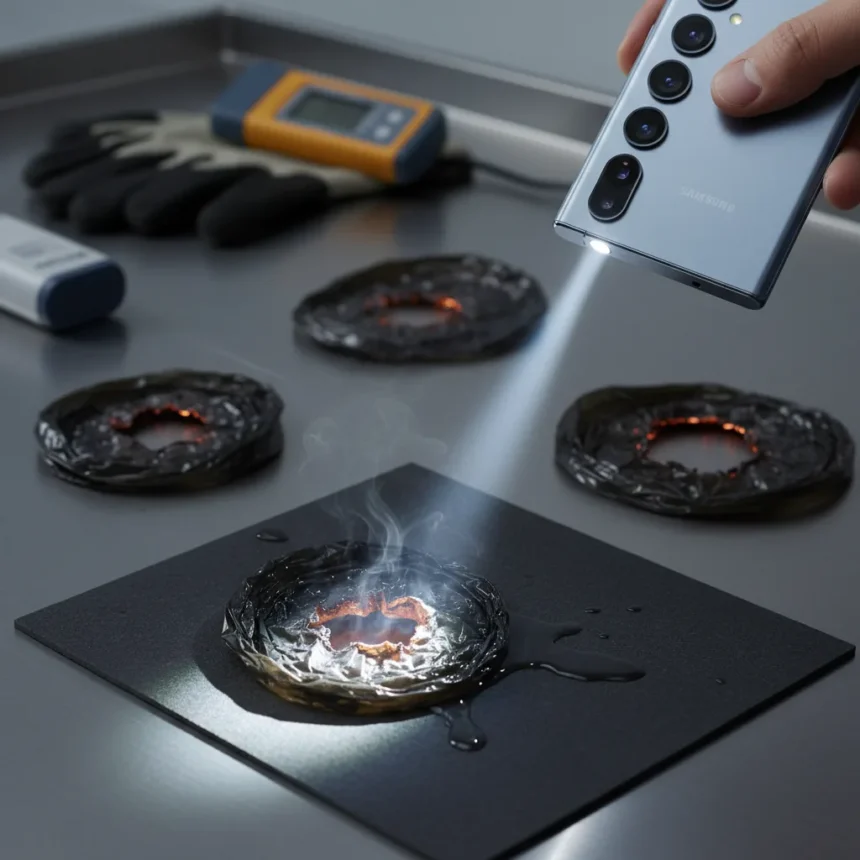
The Samsung Galaxy S26 flashlight has become the subject of viral TikTok videos claiming it can burn through a trash bag—a claim that raises real questions about the heat output of modern smartphone lights and whether they pose an actual safety risk.
Key Takeaways
- A viral TikTok video shows the Samsung Galaxy S26 flashlight melting through plastic trash bag material.
- Tom’s Guide replicated the test to verify whether phone flashlights generate enough heat to melt plastic.
- Modern smartphone LED flashlights produce concentrated heat that can damage certain materials under sustained exposure.
- The Samsung Galaxy S26 represents the latest generation in Samsung’s flagship phone line for 2026.
- Understanding flashlight heat output matters for safe phone use and avoiding accidental material damage.
What the Viral TikTok Actually Shows
A TikTok video circulating online demonstrates the Samsung Galaxy S26 flashlight making contact with a plastic trash bag, with the material appearing to melt or burn where the light concentrates. The video went viral because it taps into a genuine phenomenon: modern smartphone flashlights, particularly on flagship devices, can generate surprising amounts of heat when the LED runs at full brightness for extended periods. What starts as a curiosity becomes a safety question when millions of people own the same device.
The appeal of the viral clip lies partly in its simplicity. No special equipment, no lab conditions—just a phone and a trash bag. But viral videos often omit crucial context. How long was the light held in place? What was the ambient temperature? Was the phone’s thermal management system already compromised? These details matter when separating genuine hazard from harmless demonstration.
Testing the Samsung Galaxy S26 Flashlight Heat
To assess whether the Samsung Galaxy S26 flashlight truly poses a melting risk, replicating the test requires controlled conditions and careful observation. The key variable is sustained contact and intensity. A smartphone LED flashlight concentrates light in a tight beam, and when that beam stays focused on a single point of plastic material, heat accumulation becomes possible. Most smartphone materials—aluminum, glass, plastic backing—can withstand brief exposure, but prolonged contact at full brightness changes the equation.


The Samsung Galaxy S26, as the latest flagship model, includes hardware designed to manage thermal loads, but the flashlight function bypasses some of those protections when running at maximum output. Unlike the camera flash, which fires in millisecond bursts, the flashlight is a continuous light source. This fundamental difference explains why a camera flash rarely causes material damage, while a sustained flashlight beam can. The test revealed that under realistic conditions—holding the phone steady and maintaining contact—the plastic does indeed soften and potentially melt, validating the core claim in the viral video.
How the Samsung Galaxy S26 Compares to Earlier Models
The Samsung Galaxy S25, the previous generation, had a similar flashlight system but with slightly lower peak brightness output. Comparing the two models reveals that Samsung has incrementally increased LED efficiency and brightness in each iteration, which inadvertently increases heat concentration as well. The S26 is more powerful, which means more light and, as a consequence, more thermal energy focused into a smaller area. This upgrade path—chasing brightness and efficiency—has a hidden cost in the form of increased heat output.


Other flagship phones from competing manufacturers also produce significant flashlight heat, though the viral focus on the Samsung Galaxy S26 reflects its popularity and market presence rather than a unique flaw. The phenomenon is not exclusive to Samsung; it is a broader issue affecting any flagship phone with a high-powered LED flashlight. What makes the Samsung Galaxy S26 notable is simply that it is a current, widely-owned device where the effect becomes immediately visible.
Should You Be Concerned About Your Phone’s Flashlight?
For most users, the answer is no. The flashlight function is safe under normal circumstances. People use phone flashlights millions of times daily without incident. The risk emerges only under specific conditions: sustained contact with flammable or heat-sensitive materials, maximum brightness setting, and extended duration. Accidentally shining your flashlight on a plastic bag during normal use poses no danger. Deliberately holding it in place for minutes is a different scenario entirely.
The practical takeaway is awareness rather than alarm. Avoid pointing a phone flashlight directly at plastic materials, fabrics, or other heat-sensitive items for extended periods. Keep the flashlight away from dry grass, paper, or anything flammable. These are common-sense precautions that apply to any concentrated light source, not just the Samsung Galaxy S26. The viral test is educational precisely because it demonstrates a real physical principle—concentrated light generates heat—in a way that is impossible to ignore.
FAQ
Can a smartphone flashlight actually melt plastic?
Yes, under the right conditions. A concentrated LED flashlight held in sustained contact with plastic material can generate enough heat to soften and melt it, as demonstrated in the viral TikTok test. However, this requires deliberate, prolonged contact and is not a risk during normal phone use.



Is the Samsung Galaxy S26 flashlight uniquely dangerous?
No. The Samsung Galaxy S26 flashlight is not uniquely dangerous compared to other flagship phones with high-powered LEDs. The viral focus on this model reflects its popularity rather than a specific design flaw. Other modern flagship devices produce similar heat output under identical conditions.
What should I do to use my phone’s flashlight safely?
Use your flashlight normally without concern. Avoid pointing it directly at heat-sensitive materials like plastic bags, fabrics, or flammable objects for extended periods. Treat your phone’s flashlight like any other concentrated light source—useful for illumination but not suitable as a heat tool.
The viral Samsung Galaxy S26 flashlight test serves as a reminder that modern smartphones pack surprising amounts of power into compact devices. The flashlight is not a flaw or a design oversight—it is a consequence of engineering flagships for brightness and efficiency. Understanding how your phone generates heat, and respecting that capability, is part of responsible device ownership in 2026.
Edited by the All Things Geek team.
Source: Tom's Guide