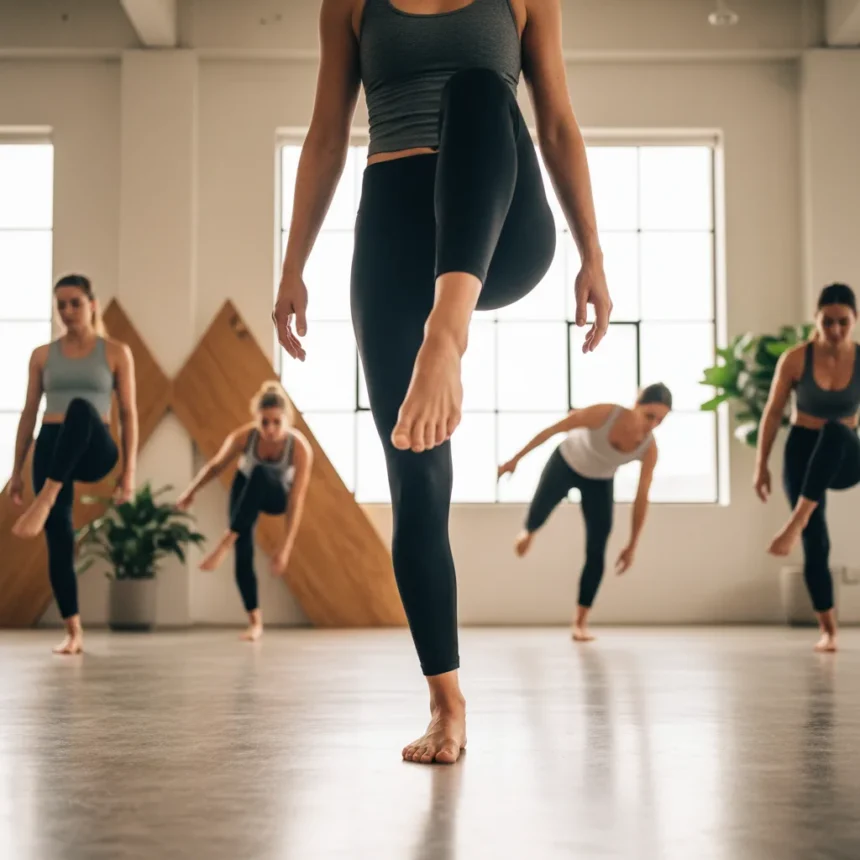
A barefoot mobility routine consisting of five targeted exercises can rewire how your feet and nervous system communicate with the ground, eliminating the wobbles that plague sedentary workers and athletes alike. This equipment-free approach, developed by mobility coach Gideon Farrow of MoveU, takes just 10-15 minutes per session and requires nothing but a mat or soft surface. Perform the routine 3-5 times weekly, and most people notice measurable improvements in balance and stability within 2-4 weeks.
Key Takeaways
- Barefoot mobility routine consists of exactly 5 exercises targeting foot arches, toes, ankles, and hips
- Sessions take 10-15 minutes, performed 3-5 times weekly for noticeable results in 2-4 weeks
- No equipment needed; barefoot training improves proprioception and reduces injury risk
- Each move includes progressions for advancing from beginner to advanced difficulty
- Benefits include better posture, enhanced athletic performance, and improved daily stability
Why Your Feet Are the Foundation of Balance
Most balance issues start at the feet. When you wear shoes constantly, your foot muscles atrophy and your nervous system loses critical feedback from the ground. Barefoot mobility routine work reverses this by forcing your feet to actively grip and stabilize with every movement. Gideon Farrow explains the mechanism simply: “Barefoot training rewires your nervous system for superior feedback from the ground up.” Unlike generic balance exercises such as tree pose in yoga, a barefoot mobility routine specifically activates the intrinsic foot muscles and arch structures that shoes suppress.
This approach differs fundamentally from traditional physical therapy, which often relies on static holds and resistance bands. A barefoot mobility routine is dynamic, progressing through multiple planes of motion and building real-world stability applicable to sprinting, jumping, and everyday walking. The routine is accessible to beginners and advanced users alike because each of the five moves includes built-in progressions, allowing you to scale difficulty as your proprioception improves.
The 5-Move Barefoot Mobility Routine Explained
Perform all five moves in sequence, completing 2-3 full rounds. Rest 30 seconds between rounds. Perform barefoot on a yoga mat or soft carpet to protect your feet while maintaining ground contact.

Move 1: Toe Splay & Lift activates your foot arches from the ground up. Stand barefoot with feet hip-width apart. Spread all your toes as wide as possible, as if gripping the floor. Then lift your big toe while keeping your other four toes pressed down, hold for 2-3 seconds, and reverse—press your big toe down while lifting your smaller toes. Complete 10 reps per foot (20 total). The key form cue is to feel your arches engage with each repetition. Once you master the bilateral version, progress to single-leg toe splays for an added balance challenge.
Move 2: Ankle Circles with Toe Reach builds ankle mobility and proprioception. Sit or stand and lift one foot off the ground. Circle your ankle clockwise 10 times, then counterclockwise 10 times, reaching your toes toward your shin on each rotation. Perform 10 circles in each direction per ankle. Keep your standing knee stable and point and flex your toes fully throughout. Once this feels easy, try the same circles with your eyes closed to dramatically increase the balance demand.



Move 3: Barefoot Calf Raise Ladder builds foot and ankle strength in a specific ascending-descending pattern. Stand on your toes with feet parallel, and perform calf raises in a ladder format: 10 full-height rises, 8 half-height rises (only lifting halfway), and 6 quarter-height rises (minimal lift). Emphasize the eccentric (lowering) phase by taking 3 seconds to lower each repetition. Complete one ladder per set, rest 30 seconds, and repeat. Grip the floor with your toes and keep your knees aligned directly over your toes. Advance to single-leg calf raise ladders once the bilateral version feels stable.
Move 4: Windshield Wiper Toes trains hip and ankle stability simultaneously. Lie on your back with knees bent and feet flat on the floor. Let your knees fall side to side like windshield wipers while pressing the outer edges of your feet into the ground and splaying your toes. Perform 12 repetitions per side, holding the end range for 2 seconds. Maintain a neutral spine throughout and breathe deeply. Progress by elevating your feet on a small cushion or step to increase the difficulty.
Move 5: Single-Leg Balance Reach integrates all previous gains into a functional balance challenge. Stand on one leg with your other knee lifted to hip height. Reach your opposite arm forward while hinging at your hips, attempting to touch your hand to the floor if possible, then return to standing. Perform 8-10 reaches per leg, holding your balance for 20-30 seconds between sets. Keep your standing knee soft (slightly bent, not locked) and fix your gaze ahead to maintain balance. Advance by closing your eyes or standing on an unstable surface such as a pillow.
Real Results From a Barefoot Mobility Routine
The benefits extend far beyond balance party tricks. A barefoot mobility routine reduces injury risk by strengthening the small muscles and ligaments in your feet and ankles that shoes typically suppress. Improved proprioception translates to better posture because your body no longer relies on visual cues and upper-body compensation to maintain alignment. Athletes report measurable gains in sprinting and jumping performance after consistent barefoot mobility routine training because ground contact becomes more efficient and powerful.



Gideon Farrow summarizes the compounding effect: “Most balance issues start at the feet—fix that, and your whole chain stabilizes.” This is why the barefoot mobility routine works across populations. A desk worker battling postural collapse gains immediate relief. A runner reducing ankle injuries finds a performance edge. An older adult rebuilding confidence in uneven terrain discovers newfound stability.
How Barefoot Training Compares to Alternatives
Minimalist shoes like Vivobarefoot can serve as a transition tool, but they still provide some cushioning and support that your feet do not develop when truly barefoot. Digital mobility apps such as Pliability and GOWOD offer similar mobility flows, but they lack the foot-specific activation that comes from direct ground contact. This barefoot mobility routine costs nothing, requires no app subscription, and delivers the purest form of proprioceptive training because your feet are directly sensing the ground beneath them.
Frequently Asked Questions
How long does it take to see results from a barefoot mobility routine?
Most people notice improvements in balance and stability within 2-4 weeks when performing the barefoot mobility routine 3-5 times per week. Consistency matters more than intensity—three 15-minute sessions beat one 45-minute session.
Can beginners do this barefoot mobility routine?
Yes. The routine is designed for all levels. Start with the base versions of each move and progress to single-leg or eyes-closed variations only when the foundational movement feels stable and controlled.
Do I need special shoes or equipment for this barefoot mobility routine?
No. Barefoot training requires only a yoga mat or soft surface to protect your feet. Shoes are not needed and would actually reduce the proprioceptive benefit by cushioning ground feedback.
Is barefoot training safe for people with foot pain?
Before beginning this barefoot mobility routine, consult a qualified healthcare professional or physical therapist if you have existing foot pain, plantar fasciitis, or any foot condition. A professional can assess whether barefoot training is appropriate for your specific situation and recommend modifications.
The barefoot mobility routine succeeds because it addresses the root cause of imbalance—weak, underactive feet disconnected from the ground. Shoes are convenient, but they are also a stability crutch that your nervous system learns to depend on. By spending 10-15 minutes barefoot, moving intentionally through five simple exercises, you reclaim the ground-sensing ability your ancestors relied on. That rewired connection translates into fewer wobbles, better posture, improved athletic performance, and genuine confidence in your body’s ability to stay upright, whether on solid ground or unstable terrain.
Edited by the All Things Geek team.
Source: Tom's Guide