





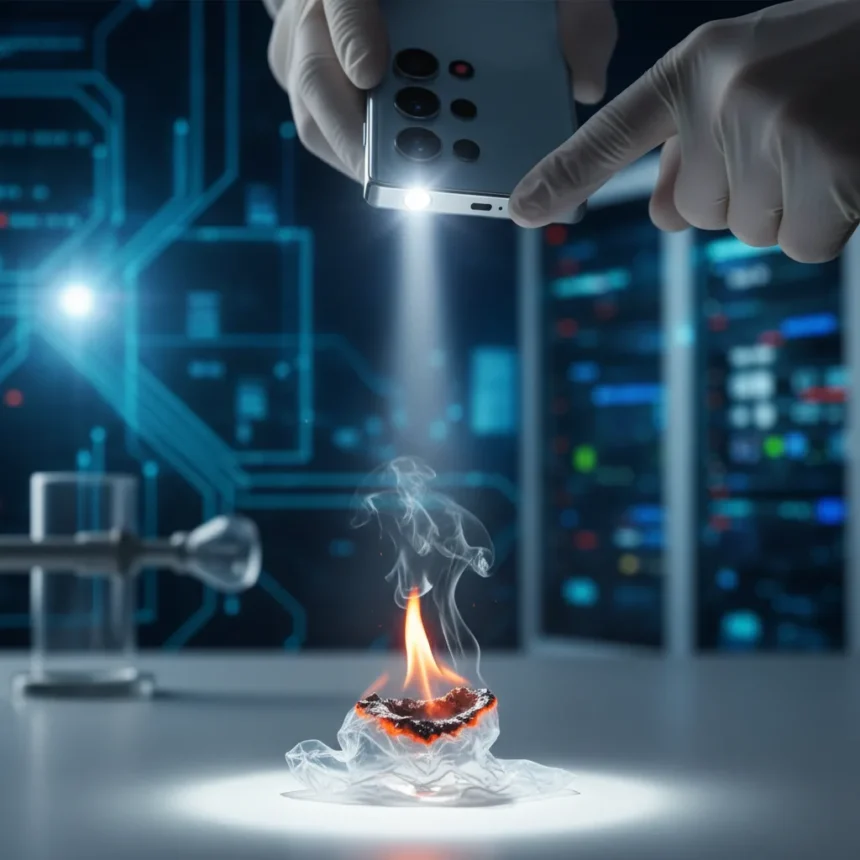
The Samsung Galaxy S25 flashlight has become the center of a safety debate after a viral TikTok video demonstrated how the phone’s LED can burn a hole through a plastic bag in under 15 minutes, raising alarm bells about accidental activation and fire risk.
Key Takeaways
- A viral TikTok shows the Samsung Galaxy S25 flashlight melting through plastic after 10-15 minutes of continuous use.
- The phone’s rear camera LED reaches temperatures between 100-120°C when left on for extended periods.
- Samsung Galaxy S25 Plus has experienced separate overheating incidents in South Korea and Indiana, with one user suffering first-degree burns.
- The flashlight activates via quick settings toggle, making accidental activation easy and difficult to notice.
- Fire safety experts warn the feature poses a genuine fire hazard on flammable materials like bedding and curtains.
How the Samsung Galaxy S25 Flashlight Became a Fire Hazard
The Samsung Galaxy S25 flashlight uses the phone’s rear camera LED, a component designed for photography rather than sustained illumination. When activated continuously, this LED generates substantial heat. A fire safety expert reviewing the viral incident stated: “This could potentially become a fire risk” when the flashlight contacts flammable materials for extended periods. The TikTok video that sparked the controversy placed a plastic bag over the phone’s rear camera and activated the flashlight via the quick settings menu. Within 10 to 15 minutes, the heat from the LED melted through the plastic, creating a visible hole. The demonstration, which circulated widely across social media, raised concerns that users could accidentally leave the flashlight active without realizing it.
The danger lies partly in how easily the feature can be left on unintentionally. Samsung Galaxy phones activate the flashlight through a quick settings toggle, a single tap that many users perform without deliberate attention. Unlike some competitor devices that include automatic shutoff timers, the Samsung Galaxy S25 flashlight remains active indefinitely until manually disabled. An owner who experienced an S25 Plus fire reported that the phone “started overheating even though it was under normal operation,” producing a popping sound and visible smoke before bursting into flames. This incident, combined with the flashlight demonstration, has intensified scrutiny of Samsung’s thermal management on its latest flagship line.
Samsung Galaxy S25 Plus Fire Incidents Raise Broader Safety Questions
The viral flashlight video arrived amid separate, more serious incidents involving the Samsung Galaxy S25 Plus. In South Korea and Indiana, users reported their S25 Plus devices catching fire during normal use, not while charging. One incident occurred while the phone sat idle on carpet, entering thermal runaway and igniting. The owner sustained first-degree finger burns in the process. Samsung’s investigation into these fires focused on the battery management system, thermal design, and the Snapdragon 8 Elite for Galaxy chipset’s heat output. In the South Korea case, Samsung provided a refund and replacement. For the Indiana incident, Samsung accepted responsibility for a charging-related fire and offered compensation.



These incidents echo concerns raised after the Galaxy Note 7 battery crisis nearly a decade ago. While the S25 Plus uses advanced vapor chamber cooling technology designed to prevent overheating, the real-world fire reports suggest the thermal architecture may not adequately handle sustained load from the device’s powerful processor and camera system. Samsung has not issued a public statement addressing the flashlight hazard specifically, though the company is actively investigating the S25 Plus fires. The absence of an official response, combined with the viral video evidence, has left users uncertain about whether the flashlight feature poses an immediate threat to their devices and surroundings.
What Samsung Galaxy Users Should Do Right Now
Fire safety authorities recommend immediate steps if a phone begins overheating or catching fire. First, evacuate the area immediately—do not attempt to handle a burning device. Never use water on an electrical fire; instead, use a fire extinguisher if safe to do so, and call emergency services. Prevention is equally critical. Users should avoid charging their Samsung Galaxy phones on soft surfaces like beds, carpets, or upholstered furniture, which can trap heat. Use only original Samsung chargers and avoid using damaged cables or third-party adapters that may cause irregular power delivery. Periodically inspect your phone for signs of damage, swelling, or unusual heat during normal use.



For the flashlight specifically, develop a habit of checking your quick settings menu after using the feature. Set a mental reminder to disable the flashlight immediately after each use rather than relying on memory. If you frequently use your phone’s light in dark environments, consider using a dedicated flashlight app that may include automatic shutoff timers, or invest in a small external LED flashlight to reduce reliance on your phone’s built-in feature. These precautions are especially important if you have young children or pets who might accidentally activate the flashlight and leave it running unattended.
Samsung Galaxy S25 vs. Competitors: Thermal Management Differences
The Samsung Galaxy S25 flashlight hazard highlights design trade-offs that differ across Android manufacturers. Some Google Pixel models include automatic shutoff timers for the flashlight, disabling it after five minutes of inactivity—a feature that would have prevented the TikTok incident entirely. iPhone flashlights present similar heat risks in laboratory tests, melting plastic bags when held continuously, but Apple’s implementation includes more conservative thermal throttling that reduces LED brightness after sustained use. Samsung’s approach prioritizes brightness and user control over automatic safety constraints, a choice that prioritizes functionality at the cost of passive safety features.
The S25 Plus fires also raise questions about Samsung‘s chipset thermal efficiency compared to competitors. The Snapdragon 8 Elite for Galaxy and Exynos 2500 processors both generate significant heat under load, and Samsung’s vapor chamber cooling, while advanced, may not scale adequately for users who game, record video, or use camera-intensive apps for extended periods. In contrast, some competitors have implemented more conservative performance scaling or larger thermal dissipation systems. Until Samsung addresses the root cause of the S25 Plus fires, users considering the device should weigh its performance advantages against documented thermal concerns.
Why Samsung Has Not Yet Addressed the Flashlight Issue Publicly
Samsung’s silence on the viral flashlight video is notable given the company’s history with safety crises. The Galaxy Note 7 battery explosions forced a complete product recall and cost Samsung billions in damages and reputation harm. One might expect Samsung to proactively address the flashlight hazard with either a software fix (automatic shutoff timer) or a public statement clarifying the feature’s safe use. The absence of such communication suggests Samsung may be evaluating whether the risk is statistically significant enough to warrant intervention, or whether legal liability concerns are preventing public acknowledgment.



The flashlight hazard is, technically, a design flaw rather than a manufacturing defect. The LED itself is functioning as intended; the problem is that the intended function—continuous illumination—creates dangerous heat when applied to flammable materials. Fixing this would require either hardware redesign (a lower-power LED) or software intervention (automatic shutoff). Given that the flashlight feature serves a legitimate use case for millions of users, Samsung may be reluctant to disable or limit it without a clear pattern of real-world fires directly attributable to flashlight use. The S25 Plus fires are more serious, but Samsung’s investigation has not yet published findings, leaving the company unable to make definitive public statements.
Is the Samsung Galaxy S25 flashlight safe to use?
The flashlight itself is safe for normal use—brief illumination in dark environments poses no fire risk. The danger emerges only when the flashlight remains active continuously for 10-15 minutes against flammable materials. In real-world scenarios, this means avoiding placing your phone near curtains, bedding, paper, or plastic bags while the flashlight is on. The greater concern is accidental activation: if you tap the flashlight toggle and forget it is running, the device could sit in a drawer or bag for an extended period, potentially creating a hazard. Always verify the flashlight is off after use.
What should I do if my Samsung Galaxy S25 Plus is overheating?
Stop using the device immediately and allow it to cool in a well-ventilated area away from flammable materials. Do not place it on soft surfaces like beds or carpets. If the phone continues to overheat even at rest, or if you notice swelling, unusual odors, or visible damage, do not attempt to charge it—contact Samsung support or visit a service center. If the phone begins smoking or shows signs of fire, evacuate the area and call emergency services.
Can I disable the flashlight feature on my Samsung Galaxy?
Yes. Remove the flashlight toggle from your quick settings menu by long-pressing the quick settings panel, finding the flashlight icon, and dragging it away. Alternatively, you can simply avoid tapping the flashlight toggle. Some users have also switched to flashlight apps from the Google Play Store that include automatic shutoff timers, providing an extra layer of safety.
The Samsung Galaxy S25 flashlight incident serves as a reminder that smartphone safety extends beyond battery chemistry and charging practices. Even features designed for convenience can pose risks if their thermal properties are not carefully managed. Until Samsung addresses the issue with either a software fix or clear public guidance, users must take personal responsibility for verifying that the flashlight is disabled after each use. The separate S25 Plus fire incidents remain under investigation, but they reinforce that thermal management is a critical design concern for high-performance phones. Samsung’s next move—whether a public statement, a software update, or continued silence—will signal how seriously the company takes these emerging safety concerns.
Where to Buy
Samsung Galaxy S25 Edge | Samsung Galaxy Z Fold 7 | Samsung Galaxy Z Flip 7 | Samsung Galaxy S26 | Samsung Galaxy S26 Plus
This article was written with AI assistance and editorially reviewed.
Source: TechRadar