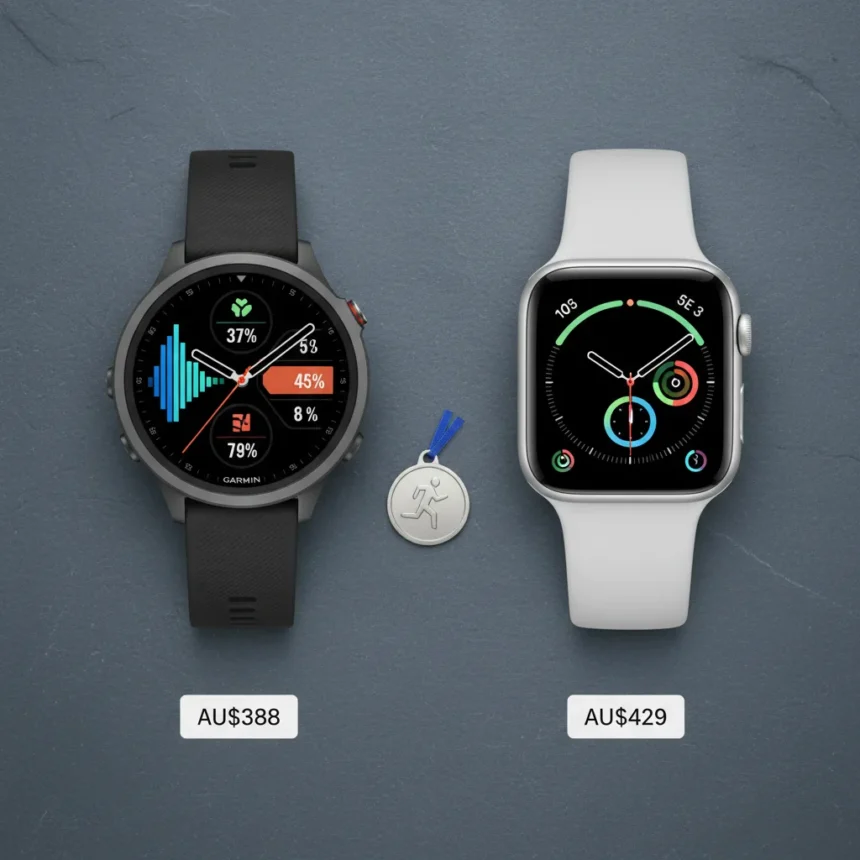
The Garmin Vivoactive 6 is an entry-level fitness smartwatch made by Garmin, priced at AU$388 in Australia, positioned as a direct competitor to the Apple Watch SE 3. For fitness-focused users, this matchup reveals a clear winner: the Garmin Vivoactive 6 delivers substantially better health and fitness tracking capabilities, even at a higher price point than Apple’s budget alternative.
Key Takeaways
- Garmin Vivoactive 6 priced at AU$388 makes entry-level Garmin watches more accessible than their typical premium positioning.
- Apple Watch SE 3 costs AU$329, undercutting Garmin on price but sacrificing fitness tracking depth.
- Garmin excels in health metrics and training tools; Apple prioritizes smartwatch features like notifications and apps.
- The Vivoactive 6 appeals to serious fitness users willing to trade smart features for superior workout data.
- Garmin’s deal price temporarily closes the cost gap that usually keeps budget buyers locked into Apple’s ecosystem.
Why Garmin Vivoactive 6 Dominates for Fitness Tracking
The Garmin Vivoactive 6 wins decisively on the metric that matters most to dedicated athletes and fitness enthusiasts: health and fitness tracking accuracy and depth. Garmin has built its reputation on delivering granular workout data, advanced training metrics, and reliable health monitoring. The Vivoactive 6, despite being positioned as an entry-level model, carries forward this core strength. Apple Watch SE 3, by contrast, treats fitness as a secondary feature layered onto a smartwatch-first device. For users whose priority is logging workouts, analyzing training stress, and monitoring recovery, this philosophical difference is decisive.
The deal price of AU$388 for the Garmin Vivoactive 6 is significant because it dismantles Garmin’s traditional barrier to adoption: upfront cost. Garmin smartwatches generally command higher prices than comparable Apple models, which has historically steered budget-conscious buyers toward the Apple Watch SE 3 and its AU$329 price tag. When the Vivoactive 6 reaches AU$388, the price gap narrows enough that fitness-focused users can justify the investment based on superior tracking capabilities rather than ecosystem lock-in or brand familiarity.
The Smart Features Trade-Off
Here is where the Apple Watch SE 3 reclaims ground: if you value notifications, app ecosystems, and seamless iOS integration, the SE 3 is the obvious choice. Apple’s smartwatch ecosystem remains unmatched in breadth and polish. The SE 3 lets you reply to messages, check calendar events, and run third-party apps with the fluidity that only comes from tight hardware-software integration. The Garmin Vivoactive 6, by contrast, prioritizes fitness data over smartwatch conveniences. Notifications and apps exist on Garmin watches, but they are secondary concerns, not the primary selling point.


This is not a flaw in the Garmin Vivoactive 6—it is an intentional design choice. Garmin understands that serious fitness users often prioritize battery life, durability, and training data fidelity over the ability to check Instagram notifications on their wrist. The Vivoactive 6 delivers on that promise. The Apple Watch SE 3, meanwhile, assumes users want a smartwatch that also tracks fitness, rather than a fitness watch that also happens to be smart.
Which Watch Should You Buy?
If your primary goal is health and fitness tracking, the Garmin Vivoactive 6 at AU$388 is the stronger choice, even though it costs AU$59 more than the Apple Watch SE 3. The Vivoactive 6 is built for runners, cyclists, swimmers, and gym-goers who want detailed workout metrics and training guidance. You sacrifice some convenience features, but you gain a device that speaks the language of serious fitness.



If you are a casual fitness user who values notifications, music streaming, and app ecosystem, the Apple Watch SE 3 at AU$329 remains the better entry point. It is cheaper, integrates smoothly with iPhone, and handles everyday smartwatch tasks with polish that Garmin does not prioritize.
The key insight is that this is no longer a question of price alone. At AU$388, the Garmin Vivoactive 6 competes directly with the SE 3 on cost, not just value. For fitness enthusiasts, that price parity makes the choice clear.
Is the Garmin Vivoactive 6 worth the extra cost over Apple Watch SE 3?
Yes, if fitness tracking is your priority. The Vivoactive 6’s superior health metrics and training tools justify the AU$59 premium for dedicated athletes. If you prioritize smartwatch features like notifications and apps, the cheaper SE 3 is better value.
Does the Garmin Vivoactive 6 work with iPhone?
Yes, Garmin watches are compatible with iPhone through the Garmin Connect app, though the integration is less seamless than Apple Watch with iOS. Notifications and basic smart features work, but the experience is not as polished as the native Apple ecosystem.



What is the battery life difference between these watches?
The research brief does not specify battery life for either model, so a direct comparison cannot be made. Check the manufacturers’ specifications for current battery performance claims.
The Garmin Vivoactive 6 at AU$388 represents a rare moment when a fitness-first smartwatch can compete with Apple on price while maintaining its core advantage: superior health tracking. For fitness enthusiasts tired of compromising on data depth for the sake of smartwatch convenience, this deal makes Garmin’s entry-level option worth serious consideration.
Where to Buy
Garmin Vivoactive 6 for AU$388 | Garmin Vivomove 6: | $244
Edited by the All Things Geek team.
Source: TechRadar