





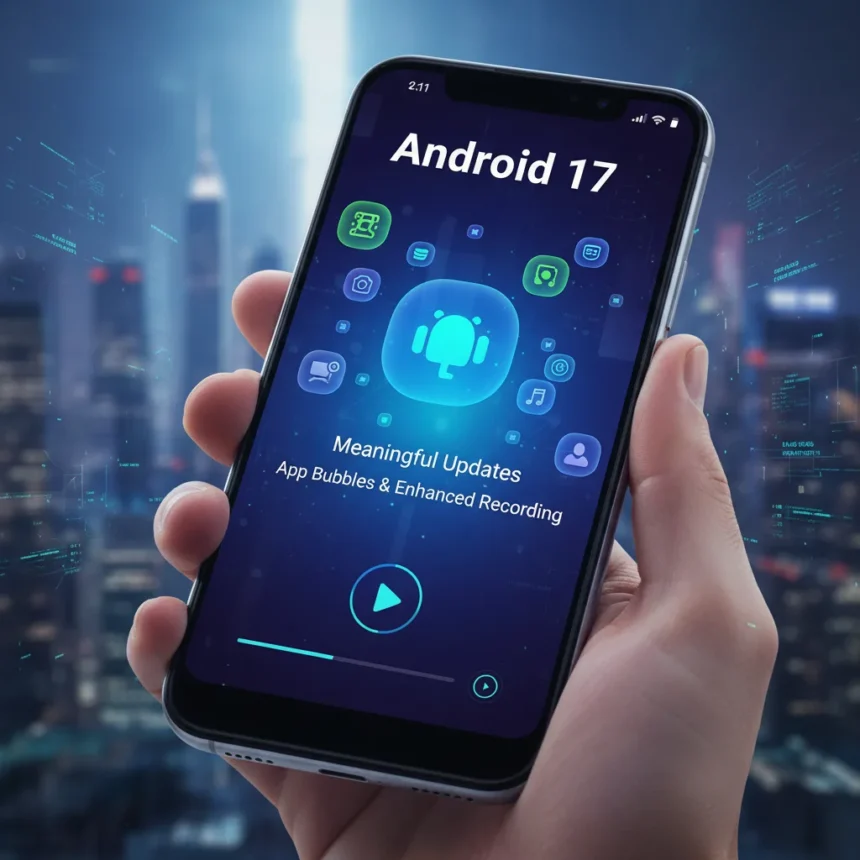
Android 17 new features finally give Android users something to actually care about after months of underwhelming incremental updates. After spending time with an early build of Android 17, it is clear that Google heard the criticism about Android 16 and responded with tangible, user-facing improvements that go beyond under-the-hood tweaks.
Key Takeaways
- Android 17 introduces app bubbles for persistent floating chat notifications that stay visible across apps.
- Improved screen recording offers better UI controls and more intuitive access from quick settings.
- The update marks a significant shift from Android 16’s underwhelming feature set to genuinely useful additions.
- Early builds show Google is prioritizing multitasking and content-creation workflows.
- Android 17 rollout will be phased across supported devices, not immediate for all phones.
Android 17 New Features: App Bubbles Change How You Chat
App bubbles represent one of the most practical additions to Android 17. These persistent, floating chat-style notifications stay on top of other applications, letting you maintain ongoing conversations without constantly switching between apps. Instead of dismissing a notification and losing the thread, the bubble remains accessible, collapsible, and repositionable across your screen. This mirrors the way modern messaging workflows actually function—conversations are ongoing, not episodic.
The implementation feels natural within Android’s notification system. Long-pressing a chat notification triggers the bubble, and the feature integrates smoothly with the existing notification shade. For users juggling multiple conversations while working, browsing, or streaming, app bubbles eliminate the friction of app-switching. It is the kind of feature that seems obvious in hindsight but took Google years to properly execute.
Screen Recording Gets the Overhaul It Desperately Needed
Android 17’s improved screen recording addresses one of the platform’s most frustrating gaps compared to iOS. The new implementation features a cleaner UI, more accessible controls, and better integration with the quick settings panel. Users can now record with or without audio, toggle on-screen tap indicators, and adjust resolution or bitrate settings without diving into developer options or third-party apps.


For content creators, educators, and anyone documenting their phone’s screen, this is a material quality-of-life improvement. Previous Android versions buried screen recording functionality or made it cumbersome to access mid-task. Android 17 treats it as a first-class feature, not an afterthought. The controls are contextual and non-intrusive, staying out of the way until you need them.
Why Android 17 Matters More Than Android 16
Android 16 earned criticism for delivering minimal visible improvements—mostly backend optimizations and minor tweaks that users could not directly feel. The update felt like a placeholder between more substantial releases. Android 17 corrects that trajectory by focusing on features that directly impact how people use their phones every day. App bubbles and screen recording are not flashy, but they solve real friction points in the user experience.



The shift signals that Google understands Android users want practical features, not marketing buzzwords. These are the kinds of updates that justify upgrading, even for users on relatively recent devices. The feature set suggests Google is paying attention to how multitasking and content creation have evolved since Android 16 launched.
Rollout and Device Support
Android 17 is currently available only in early preview or beta builds on select devices, primarily Google Pixel phones and partner devices in early-access programs. The full rollout will be phased and device-dependent, meaning not every Android phone will receive the update immediately upon release. Older or budget devices may never receive Android 17, depending on manufacturer support policies and hardware constraints.
For users on supported devices, the wait for the stable release will determine when these features arrive. The preview builds offer a glimpse at what is coming, but Google could refine or modify features before the final version ships. Early adopters testing Android 17 now are effectively beta testers, helping Google identify bugs and usability issues before mass deployment.
The Bigger Picture: Android Finally Catching Up
Android 17 does not reinvent the operating system, but it demonstrates that Google is listening to user feedback about what actually matters. After years of playing catch-up to iOS on features like persistent notifications and screen recording, Android 17 shows the platform can deliver polished, thoughtful improvements. The focus on multitasking workflows and content creation reflects how phones are genuinely used in 2025.


The five highlighted changes in Android 17 represent a course correction from the bland trajectory of recent updates. This is the kind of update that makes upgrading feel worthwhile, not obligatory.
What is the difference between Android 17 and Android 16?
Android 16 focused primarily on backend optimizations and received criticism for lacking visible user-facing improvements. Android 17 new features emphasize practical additions like app bubbles and screen recording enhancements that directly improve daily usability. The shift reflects Google’s response to feedback that Android 16 felt underwhelming and incremental.
Will all Android phones get Android 17?
No. Android 17 rollout will be phased and device-dependent. Newer flagship devices, particularly Google Pixel phones and select Samsung and OnePlus models, will receive the update first. Older devices and budget phones may not receive Android 17 at all, depending on manufacturer support policies and hardware compatibility.
When will Android 17 be available?
Android 17 is currently available only in early preview or beta builds on select devices. The stable release date has not been officially announced, but early-access users can test the features now. Full rollout across supported devices will occur after the stable version launches, with a phased deployment over several weeks or months.
Android 17 demonstrates that meaningful updates are still possible when Google prioritizes features users actually need. App bubbles and improved screen recording may not sound revolutionary, but they solve real problems in how people multitask and create content on their phones. For anyone frustrated by Android 16’s lack of substance, Android 17 finally gives you reasons to care about the next update.
Edited by the All Things Geek team.
Source: Tom's Guide




