





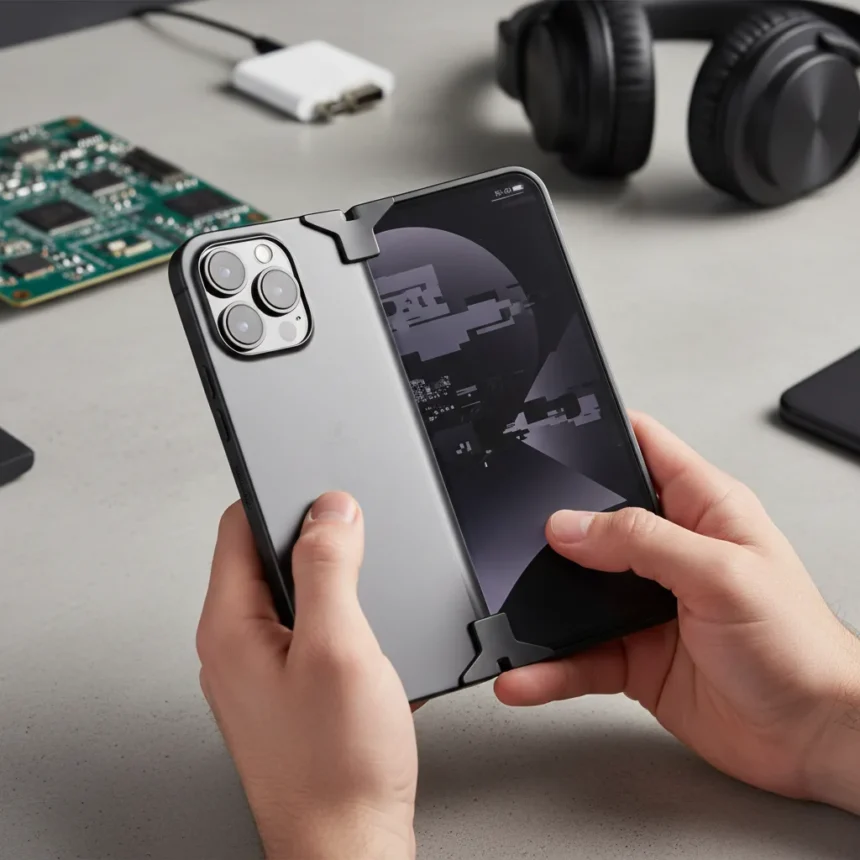
Apple’s first foldable iPhone, tentatively named the Apple iPhone Ultra, has surfaced as a dummy unit in YouTuber hands-on videos, and the reaction is surprisingly critical. The device abandons the tall, narrow foldable template Samsung perfected and instead adopts a wide, passport-style form factor that opens like a small tablet. One YouTuber summed it up bluntly: the Apple iPhone Ultra “feels like a major downgrade from your existing iPhone experience”.
Key Takeaways
- Apple iPhone Ultra uses a wide, passport-style form factor instead of the tall narrow design competitors use
- Cover screen is 5.3 inches with a 2:3 aspect ratio; inner screen is 7.7 inches in landscape with a 4:3 ratio
- Folded thickness sits around 9.6mm; unfolded it tapers to 5.5mm, thinner than most current iPhones
- Massive horizontal camera bump spans roughly three-quarters of the rear, with two side-by-side lenses
- YouTubers claim the wide design solves foldable problems but creates new ergonomic issues for daily iPhone users
Why Apple iPhone Ultra’s Design Sparks Controversy
The Apple iPhone Ultra dummy unit reveals a deliberate departure from foldable phone conventions. Instead of the tall, phone-like form that Samsung Galaxy Z Fold 8 users expect, Apple has chosen a wide design that more closely resembles a small iPad Mini when unfolded. When folded, the device is similar in height to an iPhone 4 but considerably wider than an iPhone 17 Pro Max, creating an awkward pocket profile that traditional iPhone owners would find jarring.
YouTubers handling the dummy unit highlighted a fundamental tension in Apple’s approach: the company appears to be trying to reinvent what a foldable should be rather than simply copying competitors. The 5.3-inch cover screen uses a squarish 2:3 aspect ratio, and the 7.7-inch inner display adopts a 4:3 landscape orientation that supports side-by-side apps or a full keyboard layout. This is less like unfolding a phone and more like opening a small computing device. For users accustomed to the iPhone’s single-screen experience, that shift feels radical and uncomfortable.
Camera Bump and Build Details Raise Questions
The most visually striking feature of the Apple iPhone Ultra dummy is its camera system. A massive horizontal plateau runs roughly three-quarters across the rear, housing two side-by-side lenses in landscape orientation. This is not the integrated, flush design Apple typically favors—it is a deliberate, utilitarian bump that breaks from iPhone’s aesthetic language. The dummy unit lacks a glass insert window for wireless charging or MagSafe support, suggesting Apple may have simplified the rear design.


The hinge mechanism opens and closes smoothly on the dummy, but the plastic prototype lacks the precision damping and magnets expected from a final Apple product. Button placement appears unconventional, with reports of Touch ID integration positioned in unusual locations. USB-C sits on the front edge rather than the bottom, a choice that defies foldable phone conventions and raises questions about daily usability.
How Apple iPhone Ultra Compares to Samsung’s Approach
Samsung’s Galaxy Z Fold 8 pursues a tall, narrow folding design that preserves phone-like handling when closed. The Apple iPhone Ultra inverts that philosophy entirely. Instead of a cover screen that feels like a secondary display, Apple’s 5.3-inch screen is proportioned to be a genuine primary interface. When unfolded, Samsung’s device opens to a 7.6-inch screen; Apple’s 7.7-inch inner display uses a wider 4:3 aspect ratio, making it feel more like a tablet than a phone. This philosophical difference is not a minor tweak—it redefines what Apple believes a foldable should accomplish.



Competitors in the Android space are watching closely. Industry reports suggest other manufacturers are considering “Ultra” rebranding to match Apple’s premium positioning, but none have committed to the wide foldable form factor. If the Apple iPhone Ultra reaches market, it could split the foldable category into two camps: phone-like (Samsung’s path) and tablet-like (Apple’s path).
Dummy Unit Limitations and What Remains Unconfirmed
The YouTuber’s “major downgrade” assessment is based on handling a non-functional plastic mockup. The dummy lacks real lenses, sensors, or the precision engineering of a finished product. Thickness measurements vary across leaks—reports range from 5.5mm unfolded to 9.6-11mm folded, but these are CAD renders and prototype estimates, not final specifications. No pricing, launch timeline, or regional availability has been confirmed.
Leaker Mark Gurman has confirmed that display production has begun and that the device is expected to launch alongside the iPhone 18 Pro and Pro Max, but the exact timeline remains speculative. The name “Apple iPhone Ultra” itself is tentative, derived from leaker reports and YouTuber commentary rather than official Apple sources.
Does the Apple iPhone Ultra’s Design Actually Solve Foldable Problems?
One YouTuber noted that “in trying to fix one of the biggest problems with foldables, Apple may have created a brand new one”. The wide form factor does eliminate the tall, narrow proportions that make some foldables feel awkward to hold one-handed. The 4:3 inner screen ratio is closer to a traditional computing aspect ratio, potentially making landscape apps feel more natural. However, the trade-off is that the folded device becomes wider and less phone-like, which could frustrate users upgrading from standard iPhones.



The question is whether Apple’s radical redesign will appeal to iPhone users or alienate them. Samsung’s approach preserves phone-like behavior; Apple’s prioritizes tablet-like capability when unfolded. These are fundamentally different visions of what a foldable should be.
Is the Apple iPhone Ultra a confirmed product?
The Apple iPhone Ultra is not officially confirmed by Apple. The leaked dummy unit and CAD renders come from leakers and YouTubers, with leaker Mark Gurman providing credibility to the project. Display production is reportedly underway, but Apple has not announced the device or provided specifications.
How thick is the Apple iPhone Ultra when folded?
Reports vary, but the Apple iPhone Ultra dummy suggests a folded thickness around 9.6mm, with the unfolded device tapering to approximately 5.5mm. These measurements come from plastic prototypes and CAD renders, not final hardware.
What is the screen size of the Apple iPhone Ultra?
The Apple iPhone Ultra features a 5.3-inch cover screen with a 2:3 aspect ratio and a 7.7-inch inner display with a 4:3 landscape ratio, roughly iPad Mini-like in proportion when fully extended.
The Apple iPhone Ultra’s wide foldable design represents Apple’s boldest hardware bet in years—but the early verdict from YouTubers handling the dummy is that boldness does not always translate to usability. Whether this radical departure from iPhone ergonomics will succeed depends entirely on how Apple executes the final product and whether users are willing to embrace a foldable that feels less like a phone and more like a portable tablet.
Where to Buy
Edited by the All Things Geek team.
Source: TechRadar




