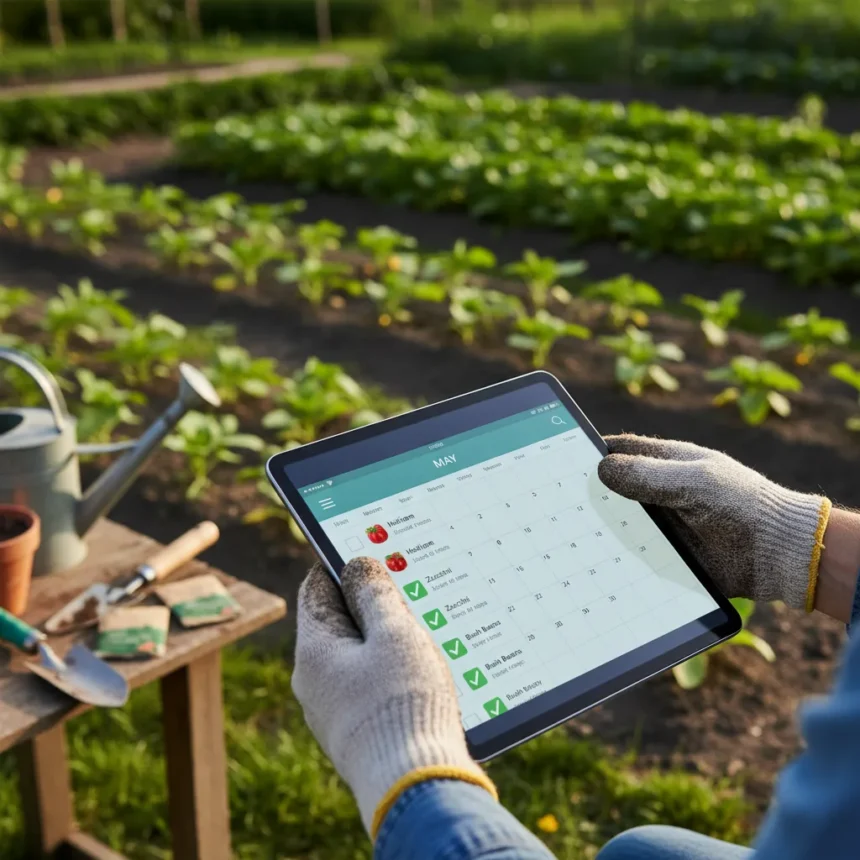
High-yield vegetables in May represent a critical window for gardeners aiming to maximize harvests on minimal budgets. May’s warmer soil temperatures trigger rapid seed germination, with many varieties ready for harvest within three to four weeks, creating an opportunity for multiple succession plantings before summer heat arrives.
Key Takeaways
- May soil temperatures accelerate seed germination, enabling 3-4 week harvests for many varieties.
- Climbing beans maximize productivity in small spaces by utilizing vertical trellising.
- Green beans offer both bush and climbing varieties suited to different garden layouts.
- Spring planting allows multiple succession crops before summer heat stress.
- Budget-conscious growers can achieve abundant yields with proper variety selection.
Why May Matters for High-Yield Vegetables
May presents a unique agricultural moment. The soil has warmed sufficiently to trigger rapid germination, yet temperatures remain cool enough to prevent bolting in leafy crops. This narrow window is precisely why high-yield vegetables in May demand immediate action rather than procrastination. Gardeners who wait until June sacrifice weeks of growing time and miss the opportunity for early-season abundance.
The Royal Horticultural Society confirms that vegetables can be grown year-round, with April through October representing the peak growing season. May sits squarely within this optimal window, offering conditions that minimize pest pressure while maximizing photosynthetic potential. The mathematics are simple: earlier planting equals longer growing season equals higher yields.
Green Beans: The Workhorse Crop
Green beans stand out as exceptionally easy to grow and highly productive. They arrive in two distinct architectures: bush varieties that mature compactly and climbing varieties that require support structures. For gardeners with limited space, climbing beans deliver superior yields per square foot by exploiting vertical real estate that would otherwise remain unused.


The choice between bush and climbing varieties depends entirely on your garden’s geometry. Bush beans suit traditional row gardens and produce concentrated harvests ideal for preservation. Climbing beans stretch upward on trellises or poles, spreading production across weeks while occupying minimal ground footprint. Neither approach is objectively superior—they solve different problems for different gardeners.
Maximizing Space and Budget in May Plantings
High-yield vegetables in May thrive when gardeners abandon the assumption that more space equals more food. Strategic variety selection and succession planting multiply returns without expanding garden size. A single 4-by-8-foot bed can produce three complete crops of fast-maturing varieties between May and August if you plan rotations in advance.



Budget constraints actually force better decisions. Premium heirloom varieties often underperform compared to reliable commercial cultivars bred specifically for productivity. The most expensive seed packet is the one that produces disappointing harvests. May plantings reward growers who prioritize yield over novelty, choosing proven varieties over experimental cultivars.
Timing Succession Plantings for Continuous Harvest
The three-to-four-week maturation window enables a cascading planting schedule. Rather than sowing all seeds simultaneously, stagger plantings at two-week intervals. This approach prevents the feast-or-famine cycle where everything ripens at once, creating preservation emergencies. Continuous harvest spreads work across the entire season and allows fresh consumption at peak flavor.
May’s conditions accelerate this timeline compared to spring or autumn planting. Warmer soil temperatures eliminate the germination delays that plague early-season gardening. A May planting that germinates in five days might have required two weeks in April, compressing the entire growing cycle and enabling an additional crop before frost arrives.
Common Mistakes That Tank May Harvests
Overcrowding remains the single largest yield killer. Gardeners sow seeds at recommended spacing, then fail to thin seedlings, creating competition that stunts growth across the entire population. A bed of properly spaced plants consistently outproduces a bed of crowded runts. Thinning feels wasteful—it is not. It is the difference between adequate and abundant yields.


Inconsistent watering during May’s variable weather creates stress that triggers bolting or blossom-end rot. Drip irrigation or soaker hoses eliminate the guesswork. Surface watering wastes water and invites fungal disease. Invest in consistent moisture delivery rather than hoping rainfall cooperates.
Can I grow high-yield vegetables in May in cold climates?
Yes, but timing matters critically. In cold climates, wait until soil temperature reaches 60°F (15°C) before sowing heat-sensitive crops like beans. Cool-season crops like lettuce and peas tolerate cooler May soil. Use row covers to extend the growing season and protect against unexpected late frosts that remain common in northern regions.
Which high-yield vegetables in May require the least maintenance?
Green beans demand minimal intervention once established. They fix their own nitrogen, require no fertilizer, and resist most pests. Direct sow after frost danger passes, thin to proper spacing, and harvest regularly to encourage continued production. Most gardeners overestimate the work required to succeed with beans.
How much can high-yield vegetables in May actually produce?
Production varies dramatically by variety and conditions. A single climbing bean plant can yield 2-3 pounds across a season when properly supported and watered. Multiplied across a small bed, this translates to substantial harvests from minimal space. The key is choosing high-productivity varieties rather than assuming all cultivars perform equally.
May plantings represent the highest-leverage moment in the annual gardening calendar. The combination of warm soil, adequate light, and minimal pest pressure creates conditions that reward planning and execution. Gardeners who act decisively in May harvest abundantly by August. Those who delay or choose poorly spend the season wondering why their gardens underperformed. The difference is not luck—it is strategy applied at exactly the right moment.
Where to Buy
17% OFFFelco F2 Pruning Shears$71$86shop now | Amazing StuffGarden Gloves$9.99shop now | 11% OFFGrampa's Weeder$39$44shop now
Edited by the All Things Geek team.
Source: Tom's Guide