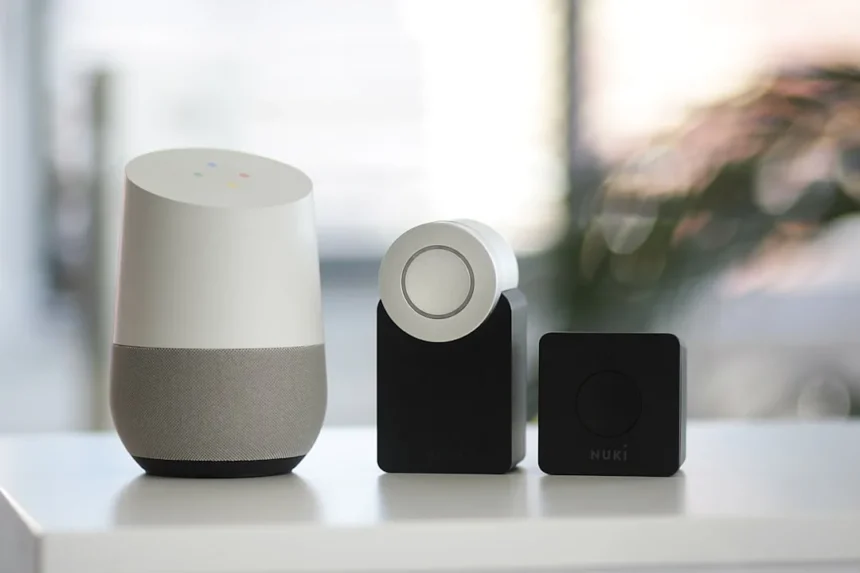
Google Home smart cameras have always been frustratingly slow. You tap the app, wait for the feed to load, squint at a static preview, and by the time anything appears on screen, the moment has passed. Google’s latest Spring update finally addresses this core pain point with a blazing-fast camera app and snappy animated previews that actually respond when you need them.
Key Takeaways
- New camera app loads faster with animated previews replacing static thumbnails
- Spring update includes expressive lighting effects and additional language support
- Member access feature now widely available for granular device sharing without full account access
- Gemini integration improvements reduce need to yell at speakers for responses
- Update addresses ecosystem frustrations amid Matter protocol delays holding back smart home adoption
Google Home Smart Cameras Get the Speed Boost They Needed
The core issue plaguing smart cameras in Google Home has never been about features—it’s been about responsiveness. Users open the app expecting to see what’s happening at their front door or in their living room, only to stare at a loading spinner or a stale static image. Google’s Spring update replaces this friction with a camera app designed for speed and animated previews that update in real time. This is not a minor tweak. For anyone who relies on their smart cameras for security or quick checks throughout the day, the difference between a three-second load and a half-second load is the difference between a tool that works and one you eventually ignore.
The animated previews are particularly significant because they eliminate the guessing game. Instead of tapping into a live feed to see if anything has changed since you last checked, you now see motion and activity directly in the app thumbnail. This reduces unnecessary app opens and makes the entire system feel more integrated into your daily routine.
Easier Sharing and Gemini Fixes Round Out the Update
Beyond camera performance, Google Home’s Spring update tackles two other ecosystem frustrations. The Member access feature, now widely available, lets you share specific smart home devices with family members without granting them full account access. Previously, sharing meant either giving someone complete control (risking accidental deletions or unwanted changes) or not sharing at all. Now you can assign granular permissions—who can adjust the thermostat, who can unlock the door, who can only view cameras. For households with multiple people managing smart home devices, this is overdue.


Google also fixed a Gemini integration issue that forced users to practically shout at their smart speakers to get responses. The improved Gemini integration means voice commands work more reliably without the frustration of repeating yourself. Adding kids under 13 to the Google Home app is now simpler too, addressing another friction point that had unnecessarily complicated family setup.
Google Home Faces Pressure From Matter Delays and Competitors
Google’s updates arrive at a moment when the smart home ecosystem is fragmented and frustrating. The Matter protocol was supposed to be the universal standard enabling cameras, video doorbells, lights, and coffee makers to work smoothly across Google Home, Amazon Alexa, and other platforms. Instead, Matter’s delays and incomplete rollout are confusing consumers and slowing adoption of smart home technology altogether. By fixing core usability issues in Google Home itself, Google is essentially saying: we cannot wait for industry standards to catch up, so we are making our own ecosystem better right now.


This puts pressure on competitors. Amazon is pushing new smart speakers, displays, security cameras, and video doorbells alongside AI integrations, while Ecobee and Honeywell Home are positioned as alternatives for users frustrated with Google’s ecosystem. Google’s Spring update is a credible response—it does not promise revolutionary features, but it fixes the everyday annoyances that drive people away.
Should You Update Google Home?
If you own Google Home devices with smart cameras, the answer is yes. The speed improvements alone justify updating. If you have been on the fence about adding smart cameras to your setup because previous Google Home camera integration felt sluggish, this update removes a legitimate barrier to entry. The sharing and Gemini fixes are bonuses that make the whole ecosystem more usable.
The update does not solve the broader smart home fragmentation problem—that requires Matter to actually deliver on its promises. But for today, Google Home is more responsive, more shareable, and more reliable than it was before.
How much faster is the new Google Home camera app?
Google describes the camera app as blazing-fast with snappy animated previews, but the Spring update does not include specific load-time metrics or benchmark comparisons to the previous version. The improvement is noticeable in real-world use, but exact speed numbers have not been published.



Can I share my Google Home cameras with family members?
Yes. The Member access feature, now widely available, lets you assign granular permissions to specific devices. You can decide which family members can view cameras, control lights, adjust the thermostat, or unlock doors—without giving them full account access.
Does the update work with Amazon Alexa or other smart home systems?
The update is specific to Google Home devices. Matter protocol is supposed to enable cross-platform compatibility, but ongoing delays mean that universal device control across Google Home and Amazon Alexa remains incomplete.
Google Home’s Spring update proves that sometimes the best response to industry-wide delays is to ship what you can control. By fixing camera performance, improving device sharing, and refining Gemini integration, Google has made its smart home ecosystem noticeably more usable. It is not a revolutionary overhaul, but it is exactly what frustrated users have been asking for.
Edited by the All Things Geek team.
Source: Android Central