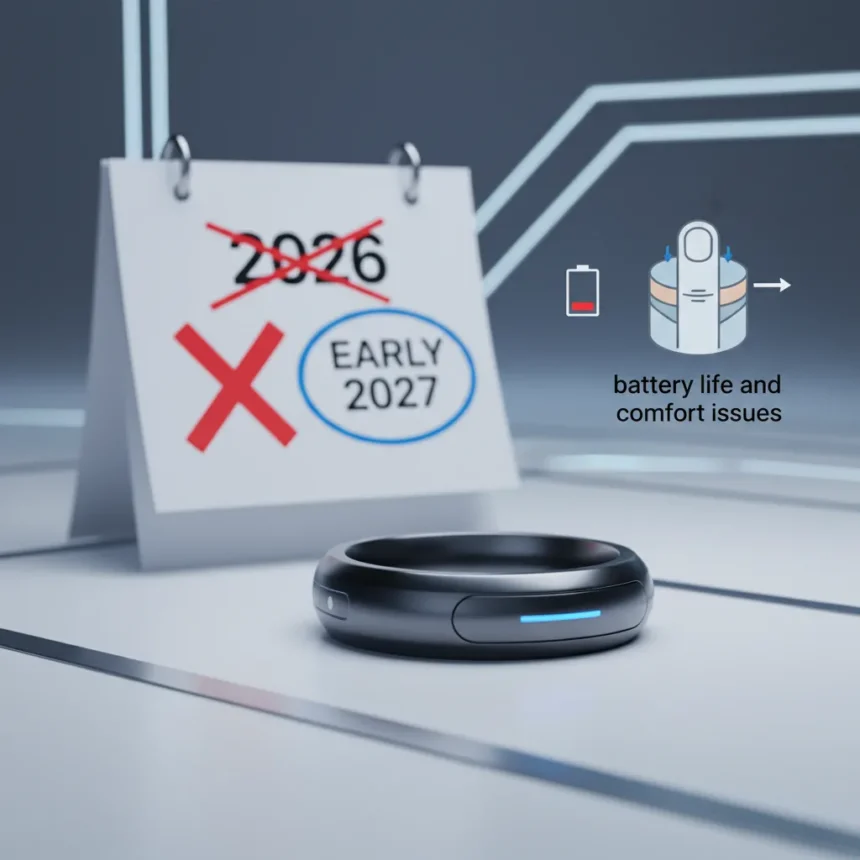
The Galaxy Ring 2 won’t launch in 2026. According to ET News, Samsung’s successor to its smart ring is targeting an early 2027 reveal instead, abandoning hopes for a 2026 release that would have aligned with the Galaxy Z Fold 8 or Galaxy S27 family. This delay gives Samsung critical time to address the original Galaxy Ring’s biggest frustrations: mediocre battery life, comfort compromises, and sensor accuracy gaps that have limited the wearable’s appeal since its July 2024 debut.
Key Takeaways
- Galaxy Ring 2 launch pushed to early 2027, with 2026 release now “virtually impossible.”
- Samsung targeting 9-10 day battery life, up from the original Ring’s 7-day maximum.
- Design improvements include thinner, lighter construction for improved all-day comfort.
- Oura patent dispute filed in November 2025 may complicate first-half 2026 timeline further.
- Slow smart ring market growth cited as reason for extended development window.
Why Samsung Is Pushing Galaxy Ring 2 to 2027
The Galaxy Ring 2 delay stems from three converging pressures: sluggish smart ring market adoption, Samsung’s packed flagship calendar, and the need to perfect core features that disappointed early adopters. A 2026 launch was never realistic, according to ET News sources. The original Galaxy Ring launched at $399 in July 2024 to respectable but not explosive demand—smart rings remain a niche category compared to smartwatches and fitness trackers. Samsung is taking the long view, using the extra development time to ensure the sequel actually justifies an upgrade.
The company is also navigating a patent dispute with Oura, filed in November 2025, that threatens to complicate the first-half 2026 window and potentially force Samsung to remove the original Ring from shelves if the company loses. This legal uncertainty alone makes a rushed 2026 launch reckless. By targeting early 2027, Samsung avoids launching into legal turbulence and gives itself breathing room to refine the product without distraction.
Galaxy Ring 2 Upgrades: Battery, Comfort, and Sensors
Samsung’s focus for the Galaxy Ring 2 centers on the original’s three weakest points. Battery life is the headline improvement: the sequel is rumored to stretch from a maximum of 7 days to 9-10 days per charge. That’s still not revolutionary—the Oura Ring 4 ($349) claims up to 7 days, and both devices trail traditional smartwatches—but for a ring that demands daily charging, an extra 2-3 days is meaningful for users who travel or forget to top up regularly.


Comfort is the second pillar. The original Galaxy Ring felt chunky on smaller fingers and uncomfortable during sleep for some users. The Galaxy Ring 2 will ship in a thinner, lighter design that addresses these pain points without sacrificing durability or sensor density. This is crucial: a smart ring that people actually want to wear all day is worth more than a technically superior one gathering dust in a drawer.
Sensor accuracy rounds out the upgrade trio. Samsung is improving the ring’s ability to track heart rate, sleep stages, and stress levels—areas where the original Ring felt imprecise compared to wrist-worn alternatives. Rumored additions include enhanced sleep analysis accuracy, expanded cardiovascular health tracking, and improved temperature sensors. Non-invasive blood glucose monitoring has also surfaced in reports, though regulatory approval remains uncertain and far from guaranteed.



When Will Galaxy Ring 2 Actually Launch?
Early 2027 is the official timeline, but Samsung hasn’t confirmed exact timing. Some reports speculate a launch alongside the Galaxy S27 family or shortly after Galaxy Unpacked 2026 (rumored for late February 2026). The Ring 2 was absent from Samsung’s Galaxy Unpacked winter event in 2025, reinforcing that the company isn’t rushing a debut. If Samsung sticks to early 2027, expect an announcement in January or February, with availability rolling out through Q1.
Pricing is expected to hold steady at $399, matching the original Galaxy Ring’s launch cost. No reports suggest a price hike, though Samsung could bundle the Ring 2 with a Galaxy Watch or other wearable to sweeten the deal at launch.
Galaxy Ring 2 vs. Oura Ring 4: The Competitive Landscape
The Oura Ring 4 remains the Galaxy Ring 2’s closest competitor. Oura’s ring starts at $349, undercuts Samsung on price, and boasts a loyal user base built on years of sleep and health tracking credibility. However, the Oura Ring 4 maxes out at 7 days of battery life—the same as the original Galaxy Ring—and lacks Samsung’s ecosystem integration with Galaxy Watch, Galaxy Health, and Galaxy AI features that could differentiate the Ring 2 at launch.
By 2027, Samsung could bundle Galaxy Ring 2 with AI fitness tools similar to those arriving on the Galaxy Watch 8, creating a wearables package that Oura cannot match. The patent dispute between the two companies adds intrigue: if Samsung loses, it could reshape the smart ring market entirely. If Samsung wins, it gains design freedom to innovate faster than Oura.



Should You Wait for Galaxy Ring 2, or Buy the Original Now?
If you’re eyeing the original Galaxy Ring today, the calculus depends on your patience threshold. The Ring 2 is still 12+ months away, and the original Ring remains a solid wearable for Galaxy ecosystem users who prioritize sleep and stress tracking over absolute precision. However, if you can wait until early 2027 and battery life frustrates you, hold off. The rumored 9-10 day battery life is a material improvement that justifies delaying an upgrade.
For Oura Ring 4 owners, there’s little reason to switch unless Samsung’s AI integration and design refinements prove transformative. Oura’s legal position is strengthening, not weakening, and the company is iterating steadily on its own roadmap.
Will Galaxy Ring 2 launch in 2026?
No. ET News sources confirm a 2026 launch is “virtually impossible,” with Samsung targeting early 2027 instead. The company is prioritizing battery, comfort, and sensor accuracy over rushing a sequel to market.
How much longer will Galaxy Ring 2 battery last?
Samsung is targeting 9-10 days of battery life, compared to the original Ring’s 7-day maximum. That’s an extra 2-3 days per charge, a meaningful upgrade for users who travel frequently or struggle to remember daily charging.
What happened to the Galaxy Ring 2 patent dispute?
Oura filed a patent dispute against Samsung in November 2025 over smart ring technology. This legal uncertainty may further complicate a first-half 2026 timeline and could force Samsung to remove the original Ring from shelves if the company loses the case.
The Galaxy Ring 2 delay is frustrating for early adopters, but it signals Samsung’s commitment to getting the sequel right. A thinner, lighter design with 9-10 day battery life and improved sensors could finally make smart rings a mainstream category rather than a niche experiment. The question is whether Samsung can deliver on those promises by early 2027—and whether the Oura patent dispute will still be hanging over the launch when the time comes.
Edited by the All Things Geek team.
Source: Android Central