




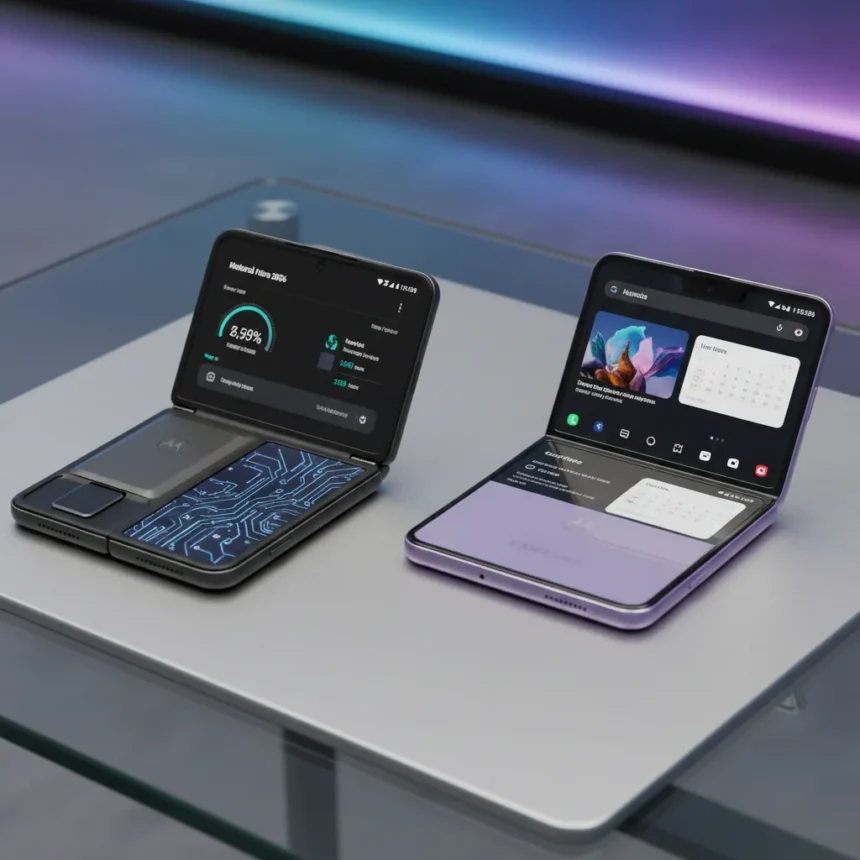
The flip phone comparison between Motorola Razr Ultra 2026 and Samsung Galaxy Z Flip 7 reveals two fundamentally different philosophies. Motorola swings for the fences with aggressive hardware upgrades; Samsung polishes an already-solid formula. For buyers torn between the two, the choice hinges on whether you value raw specs and ambition or refined software and ecosystem support.
Key Takeaways
- Motorola Razr Ultra 2026 packs a 5,000mAh battery and Snapdragon 8 Elite processor versus Samsung’s 4,300mAh and Exynos 2500.
- Samsung Galaxy Z Flip 7 closes thinner at 13.7mm and offers longer software support with One UI 8.
- Motorola’s 50MP LOFIC camera and 68W charging outspec Samsung’s more modest setup.
- Razr Ultra 2026 costs $200 more than its 2025 predecessor, pushing the price premium higher.
- Both phones target the same premium clamshell market but appeal to different buyer priorities.
Motorola Razr Ultra 2026: Specs That Push the Category
The Motorola Razr Ultra 2026 takes the clamshell formula and stuffs it with flagship hardware that Samsung has yet to match. A Snapdragon 8 Elite processor powers the device, paired with 16GB of RAM—overkill for a flip phone, perhaps, but a statement of intent. The 5,000mAh battery addresses the Achilles’ heel of prior foldables, while 68W wired charging means you can refill the tank in under an hour. The 50MP LOFIC main sensor marks a meaningful jump in camera ambition, and the IP48 rating provides dust and water resistance that matters for daily carry.
The design itself reflects Motorola’s confidence. An edge-to-edge cover display with camera cutouts maximizes screen real estate, while the titanium-reinforced hinge promises durability. The 7-inch internal display folds vertically, maintaining the clamshell form factor that made the original Razr iconic. Android 16 with Hello UX brings fresh software tuned for the hardware. Yet the Razr Ultra 2026 is heavier and thicker than its competition, a trade-off for that larger battery and processor grunt.
The $200 price increase over the Razr Ultra 2025 stings, especially when the 2025 model already commands respect in the U.S. foldable market. Motorola is betting that buyers will pay extra for the generational leap—and for some, that bet will pay off.

Samsung Galaxy Z Flip 7: Refinement Over Revolution
Samsung Galaxy Z Flip 7 represents evolutionary improvement rather than transformation. The Exynos 2500 chipset is competent but trails Snapdragon 8 Elite in raw performance. The 4,300mAh battery is noticeably smaller than Motorola’s 5,000mAh offering, a regression that Samsung has not adequately addressed. One UI 8 with Galaxy and Google AI integration is polished and mature, backed by Samsung’s longer software support commitment—a genuine advantage for users who keep phones for years.
What Samsung nails is thinness. At 13.7mm closed, the Galaxy Z Flip 7 feels like the slimmest flip phone available. The bigger edge-to-edge cover screen wrapping around the rear cameras is a smart design choice that Motorola has not copied. The device is also more widely available than Motorola’s U.S.-focused Razr line, a practical advantage for international buyers.



The Z Flip 7 feels like Samsung playing it safe. It copies Motorola’s cover screen ambition but arrives late to that party. The battery capacity, processor choice, and charging speed all lag behind what Motorola offers in 2026. Yet for buyers who prioritize software stability, ecosystem integration, and long-term support, Samsung’s polish remains compelling.
Which Flip Phone Should You Buy?
Choose the Motorola Razr Ultra 2026 if you want the most capable flip phone hardware and are willing to pay a premium for it. The larger battery means real all-day usage, the Snapdragon 8 Elite handles any task, and the 50MP camera captures noticeably better photos than Samsung’s setup. The titanium hinge and IP48 rating suggest durability. This is the phone for buyers who view flip phones as serious daily drivers, not novelties.
Choose the Samsung Galaxy Z Flip 7 if you prioritize thinness, software refinement, and ecosystem integration. One UI 8 is mature and stable, and Samsung’s longer support window means security updates and features for years. The Z Flip 7 is the safer choice for buyers who want a polished experience without the risk of adopting a newer, less-proven design philosophy. It is also easier to find in most markets.
The broader context matters too. Motorola has dominated the U.S. foldable market with aggressive pricing and specs, while Samsung has relied on brand trust and software maturity. The Razr Ultra 2026 doubles down on Motorola’s strategy—push the hardware envelope and let the specs speak. Samsung responds with incremental refinement, betting that polish and support outlast raw power in the long term.

How does the Motorola Razr Ultra 2026 camera compare to the Z Flip 7?
The Razr Ultra 2026 features a 50MP LOFIC main sensor, a significant jump in resolution and sensor technology compared to Samsung’s more modest camera setup. In real-world use, this translates to sharper detail, better low-light performance, and more flexibility for cropping and editing. Samsung’s approach prioritizes software processing and computational photography, but the Motorola sensor gives you more raw data to work with.
Is the Samsung Galaxy Z Flip 7 worth buying over the Razr Ultra 2026?
Yes, if you value software stability, long-term support, and thin profile over latest hardware. Samsung’s One UI 8 is battle-tested, and the company commits to longer update windows than Motorola. The Z Flip 7’s 13.7mm closed thickness is the slimmest in its class. However, if battery life and processing power matter more to you, Motorola’s larger 5,000mAh battery and Snapdragon 8 Elite make a stronger case.
What is the battery difference between these flip phones?
The Motorola Razr Ultra 2026 packs a 5,000mAh battery with 68W charging, while the Samsung Galaxy Z Flip 7 uses a 4,300mAh battery. That 700mAh difference translates to meaningfully longer daily usage on the Motorola. Samsung’s smaller battery is a notable weak point, especially when competing phones offer bigger capacity at similar price points.
The flip phone comparison ultimately reflects two competing visions of what a foldable should be. Motorola believes in pushing hardware limits and accepting the weight and thickness trade-offs. Samsung believes in refining what works and trusting that software and support create long-term value. Neither approach is wrong—they appeal to different priorities. If you want the most ambitious flip phone available right now, Motorola Razr Ultra 2026 is the answer. If you want the safest, most refined flip phone experience, Samsung Galaxy Z Flip 7 remains competitive despite its hardware shortcomings.
Where to Buy
Edited by the All Things Geek team.
Source: Android Central