





IKEA outdoor kitchen solutions have become the go-to shortcut for budget-conscious homeowners wanting to create a functional cooking space without breaking the bank. Yet after examining what these products actually deliver, the gap between marketing promise and real-world performance becomes impossible to ignore.
Key Takeaways
- IKEA outdoor kitchen solutions prioritize affordability over weatherproofing and material durability.
- Budget-friendly pricing makes outdoor cooking accessible but sacrifices longevity in harsh climates.
- Modular design offers flexibility but requires careful planning to avoid compatibility issues.
- Maintenance demands increase significantly compared to premium outdoor kitchen brands.
- Summer-only use extends product lifespan; year-round exposure reveals material limitations.
The affordability trap in IKEA outdoor kitchen solutions
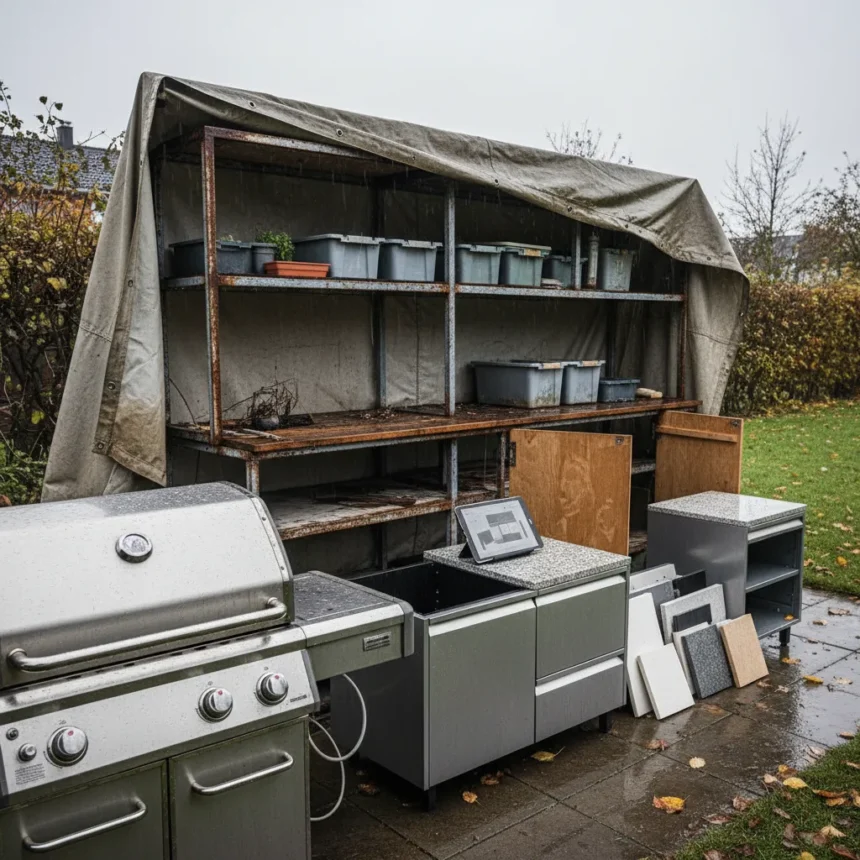
IKEA outdoor kitchen solutions deliver on one promise: low entry cost. The modular approach lets homeowners build a functional cooking setup for a fraction of what premium brands charge. But affordability comes with a hidden cost. Most IKEA outdoor pieces use particle board, MDF, or lightweight metal frames designed for seasonal use, not the punishment that genuine outdoor environments inflict. A summer kitchen that sits unused from October through April might last five years. The same setup exposed to rain, humidity, and temperature swings year-round often shows significant degradation within two to three seasons.
The real issue is material selection. IKEA outdoor kitchen solutions rely on cost-effective finishes that look appealing in a showroom but lack the protective qualities that keep wood sealed and metal corrosion-free. Compare this to established outdoor kitchen brands that use marine-grade stainless steel, teak, or composite materials engineered specifically for weather resistance. IKEA’s approach works if you accept that you are buying temporary rather than permanent infrastructure.
Design flexibility masks assembly complexity
One genuine strength of IKEA outdoor kitchen solutions is modularity. You can mix and match pieces, adapt layouts to awkward spaces, and expand incrementally as budget allows. This flexibility appeals to renters, homeowners with undefined outdoor spaces, and anyone hesitant to commit to a fixed installation. The problem emerges during assembly and integration. IKEA outdoor kitchen solutions use proprietary connection systems that work smoothly when all components come from the same product line but create headaches when you try to combine pieces from different collections or years. Hardware compatibility issues are common, and customer service rarely acknowledges that mixing product generations can cause structural problems.



Setup also demands more skill than IKEA marketing suggests. Leveling surfaces, ensuring drainage, and properly securing pieces to handle wind load require tools and knowledge that casual DIYers may lack. A poorly assembled outdoor kitchen becomes unsafe and deteriorates faster as stress concentrates on weak connection points.
The maintenance burden nobody mentions
IKEA outdoor kitchen solutions require relentless maintenance to approach the lifespan of premium alternatives. Wooden surfaces need annual sealing. Metal components need regular rust treatment. Fabric cushions and upholstery degrade rapidly without protective covers and seasonal storage. Over a five-year period, the cumulative cost of replacement cushions, sealant reapplication, rust treatment, and hardware fixes can equal or exceed the initial purchase price. Premium outdoor kitchen brands use materials that age more gracefully and demand far less intervention.


The instruction manuals for IKEA outdoor kitchen solutions often downplay maintenance requirements or bury them in fine print. Homeowners discover the true cost of ownership only after the first harsh winter or extended rainy season exposes gaps in the product design that preventive care cannot fully address.
Regional climate matters more than IKEA acknowledges
IKEA outdoor kitchen solutions perform differently depending on where you live. In dry climates with minimal temperature variation, these products hold up reasonably well. In humid subtropical regions, coastal areas with salt spray, or temperate zones with freeze-thaw cycles, material degradation accelerates dramatically. IKEA does not segment product recommendations by climate, and retailers do not warn buyers about regional suitability. A customer in Miami and a customer in Seattle receive identical product recommendations despite vastly different environmental stresses.
Should you buy IKEA outdoor kitchen solutions?
IKEA outdoor kitchen solutions make sense if you treat them as temporary infrastructure. Renting your home? Planning to move within three years? Using the space seasonally and storing pieces indoors during winter? These scenarios align with what IKEA products are engineered to deliver. If you are building a permanent outdoor kitchen you plan to use year-round for a decade or longer, IKEA represents a false economy. The initial savings vanish into replacement costs and maintenance labor. For that commitment level, premium outdoor kitchen brands deliver better value despite higher upfront cost. The real question is not whether IKEA is affordable—it is whether you can afford to replace it repeatedly.
How long do IKEA outdoor kitchen pieces typically last?
IKEA outdoor kitchen solutions generally last two to five years depending on climate and maintenance. Seasonal use (storing pieces indoors in winter) extends lifespan toward the upper range. Year-round exposure, especially in humid or freeze-thaw climates, accelerates degradation. Premium outdoor brands often deliver ten to fifteen years of service life, making the per-year cost comparable despite higher initial investment.


Can IKEA outdoor kitchen solutions withstand rain and humidity?
IKEA outdoor kitchen solutions have basic weather resistance but lack the robust protection that genuine outdoor-rated materials provide. Particle board and MDF swell and delaminate when exposed to prolonged moisture. Metal frames corrode without regular maintenance. Finishes fade and crack faster than marine-grade alternatives. These products survive occasional rain but struggle with sustained humidity or coastal salt spray.
Are IKEA outdoor kitchen pieces modular and compatible with other brands?
IKEA outdoor kitchen solutions use proprietary connection systems that work well within their own product range but rarely integrate smoothly with other brands. Mixing IKEA pieces with premium outdoor furniture creates aesthetic and functional inconsistencies. Combining different IKEA collections or product generations can cause hardware compatibility issues. Most outdoor furniture brands use incompatible fastening systems by design.
IKEA outdoor kitchen solutions deliver what they promise: affordable entry into outdoor cooking. But affordability masks a fundamental trade-off between upfront cost and long-term durability. For seasonal use, they represent genuine value. For permanent outdoor infrastructure, they represent a cycle of replacement and maintenance that ultimately costs more than investing in quality materials from the start. Know what you are buying, and plan accordingly.
Edited by the All Things Geek team.
Source: TechRadar