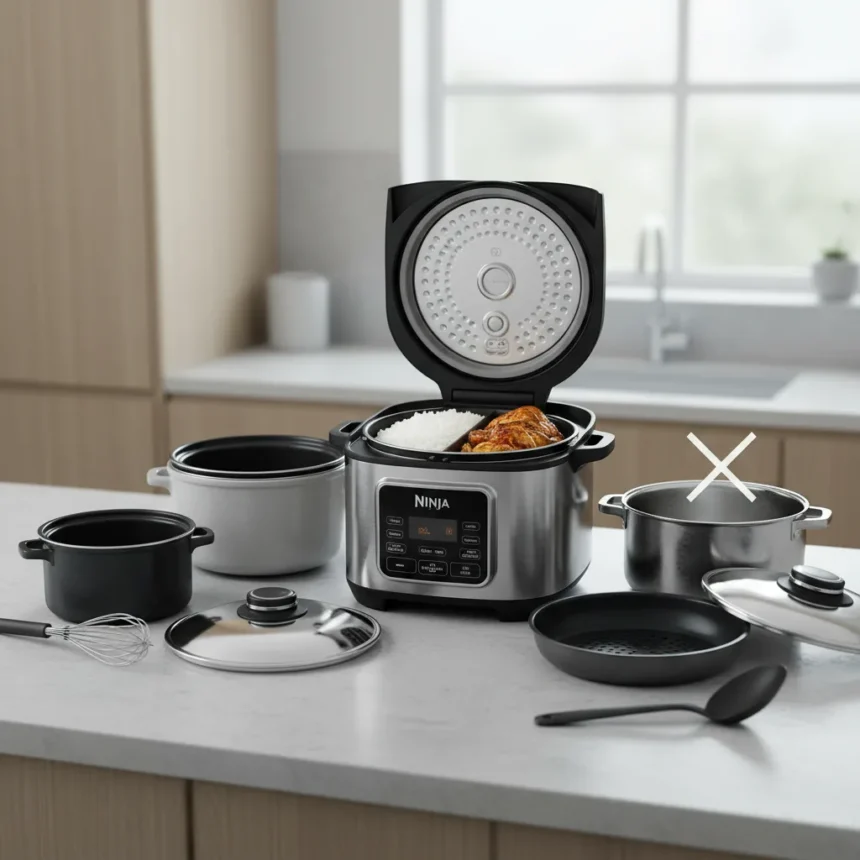
The Ninja Foodi PossibleCooker Pro is a 6.5-quart multi-cooker designed to replace 10 kitchen appliances, marketed as a family-sized alternative to traditional rice cookers, pressure cookers, and slow cookers. The compact countertop device—measuring 14.13 inches long, 15.16 inches wide, and 9.96 inches tall—promises to eliminate the need for multiple pots and pans. But here’s the catch: despite the “pressure cooker” positioning in headlines, the Ninja Foodi PossibleCooker Pro doesn’t actually feature a dedicated pressure cooking mode.
Key Takeaways
- Ninja Foodi PossibleCooker Pro cooks rice 50% faster than traditional rice cookers
- 8 cooking functions include slow cook, sear/sauté, braise, white rice, brown rice, oats, pasta, and keep warm
- 6.5-quart capacity fits up to 6 people, 4 cups rice, 16 oz pasta, or 7-lb roasts
- UK pricing at £249.99; no confirmed US price in available sources
- Cool-touch handles and stainless steel construction support easy transport and cleanup
What the Ninja Foodi PossibleCooker Pro Actually Does
The Ninja Foodi PossibleCooker Pro offers eight cooking modes that lean heavily toward rice and slow-cooking applications. The device excels at what it was designed for: cooking rice in roughly half the time of a traditional rice cooker, handling both white and brown varieties with preset timing. The sear/sauté function allows you to brown meat before slow cooking, reducing prep work. For families cooking for four to six people, the 6.5-quart capacity handles realistic meal portions—think four 6-ounce chicken breasts or a 7-pound roast.
The cooker runs on 1400 watts of power and includes a one-year warranty. According to TechRadar’s assessment, “If you’re finding your kitchen cupboards becoming overstuffed with appliances, the Ninja Foodi PossibleCooker is here to offer a solution”. The stainless steel pot and cool-touch handles make it portable enough to move between kitchen counter and dining table without burning yourself. Setup is straightforward—no complicated lid swaps required, unlike older Ninja Foodi models that demanded you physically change lids to switch between cooking modes.
The Marketing Mismatch: Where Pressure Cooker Claims Fall Apart
The headline “Forget air fryers—Ninja’s new pressure cooker” sets an expectation the product doesn’t deliver [Title]. The Ninja Foodi PossibleCooker Pro is not a pressure cooker in the traditional sense. It lacks the high-pressure steam environment that defines devices like the Instant Pot, which uses sealed pressure to cook food dramatically faster. Instead, this is a slow cooker with rice-cooking specialization. The confusion matters because readers shopping for a pressure cooker alternative—people looking to replace their Instant Pot or speed up tough cuts of meat—will be disappointed.


Ninja’s own product lineup includes genuinely pressurized alternatives. The Ninja Foodi Max 15-in-1 SmartLid, for example, offers 15 functions including actual pressure cooking and air frying across a 7.5-liter capacity. That model costs more but delivers what the PossibleCooker Pro’s marketing implies. The positioning as a rival to air fryers is equally misleading—this cooker cannot air fry anything. It’s a rice and slow cooker masquerading as a multi-function powerhouse.
Ninja Foodi PossibleCooker Pro vs. Instant Pot and Competitors
The Instant Pot remains the category leader for pressure cooking, offering sealed-chamber cooking that reduces cooking time for beans, stews, and tough proteins from hours to minutes. The Ninja Foodi PossibleCooker Pro cannot compete on speed for those use cases. However, if your priority is rice cooking and slow-cooking family meals, the Ninja’s 50% faster rice performance and larger family-sized capacity give it an edge for those specific tasks.



Ninja’s own Foodi HyperHeat 6L 9-in-1 Pressure & Rice Cooker (£229.99) actually includes pressure cooking alongside rice modes, making it a more honest competitor to the Instant Pot, though with smaller capacity. The PossibleCooker Pro sacrifices pressure functionality to focus on rice and slow-cooking convenience. That’s a valid design choice for households that rarely pressure cook, but it’s not a universal replacement.
Real-World Performance: Rice Cooking and Slow Cook
The standout feature is rice speed. The device cooks jasmine or white rice by combining water and rice in a 1:1 ratio, sealing the lid, and running the white rice preset, which finishes in roughly the time a traditional rice cooker takes for a full cycle. Brown rice takes longer—high pressure for 15 minutes plus a 10-minute natural release—but still completes without the stovetop babysitting traditional brown rice demands. For households eating rice three or more times weekly, that time savings compounds.
Slow cooking spans up to 12 hours on the keep-warm setting, suitable for overnight meal prep or all-day braises. The sear/sauté function heats fast enough to brown chicken or beef before the slow-cook phase, though it’s not as aggressive as a dedicated stovetop burner. Oats and pasta modes automate grain cooking for breakfast prep and weeknight dinners. None of these are revolutionary, but they consolidate repetitive tasks into one appliance.
Design and Usability Concerns
Early reviews flag two practical issues. The non-stick coating on the inner pot can wear off with regular use and aggressive scrubbing, a common problem across budget multi-cookers. The digital display, while functional, can confuse first-time users navigating between modes—the button layout isn’t intuitive for everyone. Cool-touch handles are genuinely useful for a family kitchen, reducing burn risk when moving a hot pot.



Should You Buy the Ninja Foodi PossibleCooker Pro?
Buy this if you cook rice regularly, want a reliable slow cooker, and value compact countertop space. The 50% faster rice cooking and family-sized capacity justify the purchase for rice-heavy households. Skip it if you’re replacing an Instant Pot or expecting pressure-cooking speed—you’ll be frustrated. The £249.99 UK price sits in the mid-range for multi-cookers, making it competitive for what it delivers, even if the marketing oversells the capabilities.
Is the Ninja Foodi PossibleCooker Pro actually a pressure cooker?
No. Despite headlines calling it a pressure cooker, the Ninja Foodi PossibleCooker Pro lacks a pressure-cooking mode. It’s a rice cooker and slow cooker with sear/sauté and grain-cooking functions. If pressure cooking is essential to your kitchen, look at Ninja’s Foodi Max 15-in-1 SmartLid or stick with an Instant Pot.
How much faster does the Ninja Foodi PossibleCooker Pro cook rice?
The device cooks rice approximately 50% faster than traditional rice cookers, though exact times depend on rice type and water ratio. White rice finishes in roughly half the time of conventional methods, while brown rice requires longer but still avoids stovetop monitoring.
What is the capacity of the Ninja Foodi PossibleCooker Pro?
The cooker holds 6.5 quarts (6 liters), fitting up to 6 people for a meal, 4 cups of uncooked rice, 16 ounces of pasta, or a 7-pound roast. That’s larger than most Instant Pot models, making it practical for family cooking.
The Ninja Foodi PossibleCooker Pro solves a real problem—kitchen clutter from single-purpose appliances—but only for households whose cooking revolves around rice and slow-cooked meals. Don’t buy it expecting pressure-cooking performance or air-frying capability. Buy it for what it actually does: fast rice, reliable slow cooking, and compact convenience. That’s plenty for many kitchens, even if it’s not the all-in-one miracle the marketing promises.
Where to Buy
Edited by the All Things Geek team.
Source: T3