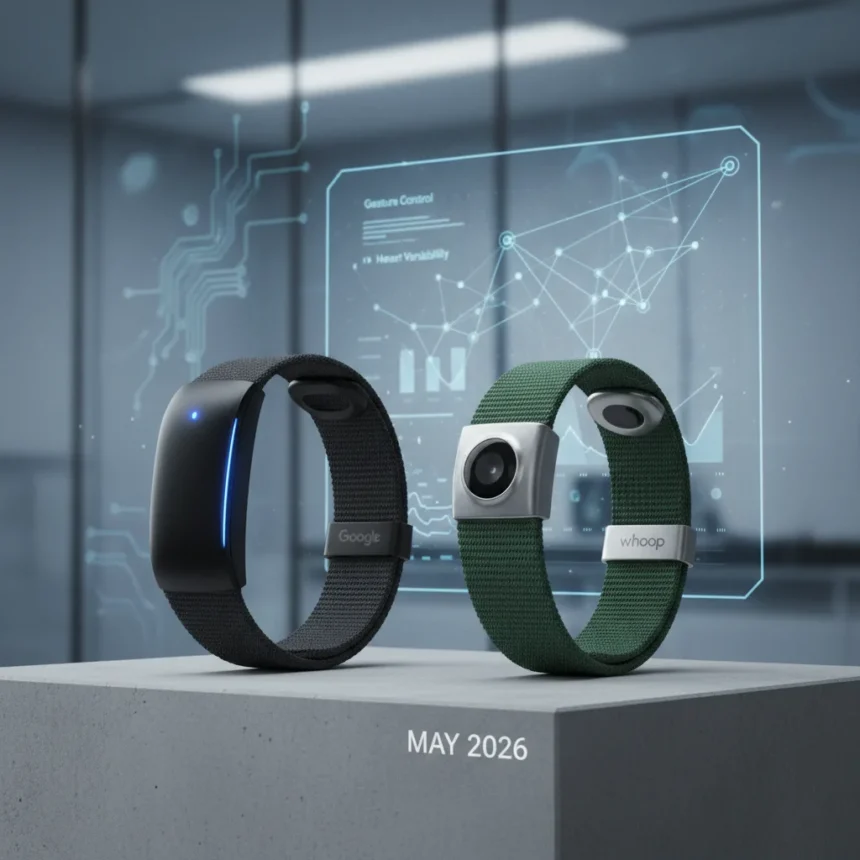
Fitbit Air is Google’s entry into the screenless fitness tracker market, launching in May 2026 as a compact alternative to traditional smartwatches and fitness bands. The device strips away the display entirely, relying instead on gesture control and a status light to deliver health tracking without the bulk that defines most wearable devices today.
Key Takeaways
- Fitbit Air is a screenless fitness band from Google with double-tap gesture control
- Device size is comparable to Whoop, positioning it as a direct competitor
- Status light provides visual feedback without a traditional touchscreen display
- Expected launch is May 2026 with multiple color options available
- Gesture-based UI represents Google’s approach to minimalist wearable design
What Makes Fitbit Air Different From Smartwatches
Fitbit Air abandons the smartwatch formula entirely. While competitors like Apple Watch, Samsung Galaxy Watch, and traditional Fitbit models rely on screens for interaction, Fitbit Air uses a double-tap gesture system paired with a status light. This design choice eliminates the need for a display, dramatically shrinking the device’s footprint. The result is a fitness tracker that prioritizes minimalism and battery efficiency over on-wrist app browsing and notifications.
The gesture-based interface is not new—smart rings like Oura and Ultrahuman use similar tap controls—but applying it to a fitness band format gives Google a middle ground between rings and watches. Users can trigger functions without lifting their wrist to view a screen, and the status light conveys information through color or pattern changes rather than text and icons. This approach appeals to anyone who finds smartwatch screens distracting or bulky.
Fitbit Air vs Whoop: Size and Positioning
Fitbit Air is comparable in size to Whoop, the minimalist fitness tracker that has built a loyal following among athletes and fitness enthusiasts. Whoop’s appeal lies in its streamlined design and focus on recovery metrics rather than daily notifications. Google is positioning Fitbit Air as a direct alternative, offering similar compactness with the backing of Google’s ecosystem integration.


The size parity matters. Whoop’s success proves there is demand for fitness tracking without a screen. Fitbit Air enters a market where users actively prefer a smaller form factor and longer battery life over the convenience of a wrist-mounted display. By matching Whoop’s dimensions, Google signals that it understands this user base and is building a product for them, not retrofitting a smartwatch into a smaller case.
Unlike Whoop, which requires a subscription model for full access to recovery and performance insights, Fitbit Air will integrate directly into Google’s existing Fitbit ecosystem. This gives Google an advantage in cross-device continuity and ecosystem lock-in, though the specific pricing and subscription requirements for Fitbit Air remain unconfirmed.



How Gesture Control and Status Light Work
The double-tap gesture is the primary input method for Fitbit Air. A quick double-tap on the device triggers actions—likely cycling through metrics, starting workouts, or dismissing alerts. This is simpler than swiping or pressing multiple buttons, reducing the learning curve and keeping the device interface intuitive.
The status light serves as the output. Instead of a screen displaying heart rate, step count, or workout progress, the light communicates information through visual cues. A color change might indicate a high heart rate zone, a blinking pattern could signal an incoming alert, or a steady glow might show battery status. This approach requires users to learn a visual language, but it eliminates the power drain of a constant display and keeps the device truly minimal.
This design philosophy aligns with Google’s broader wearable strategy. Rather than competing on screen size or processing power, Fitbit Air competes on simplicity and integration with Google services like Google Fit and Android ecosystem features.
Multiple Colors and Design Flexibility
Fitbit Air will be available in multiple color options, allowing users to personalize the device while keeping the form factor consistent. This mirrors the strategy of successful compact wearables like Whoop and Oura, which offer color variants to appeal to different aesthetic preferences without complicating the core design.



The availability of color choices suggests Google is treating Fitbit Air as a fashion-forward product, not just a functional tracker. This positioning is important for competing in the premium wearables space, where users expect both performance and style.
When Will Fitbit Air Launch and What to Expect
Fitbit Air is expected to arrive in May 2026. That timeline gives Google several months to refine the gesture control system, optimize battery life, and ensure the status light communication is clear and intuitive. The May launch also positions the device ahead of summer fitness season, when wearable sales typically spike.
Specific pricing and a complete feature list remain unconfirmed. However, given that Fitbit Air is positioned as Google’s answer to Whoop, expect pricing in the premium range for fitness trackers—likely between $200 and $300 based on competitive positioning, though this is not yet official.
Is Fitbit Air Right for You?
Fitbit Air suits anyone who views smartwatch screens as unnecessary clutter. If you already use your phone for notifications and want a fitness tracker that simply tracks metrics without distraction, this device is worth watching. Athletes focused on recovery and performance metrics—Whoop’s core audience—should pay close attention to Fitbit Air’s health insights and how they integrate with Google’s broader health platform.
The device is less suitable for users who rely on wrist-based navigation, app launching, or constant metric visibility. If you need to check your stats without pulling out your phone, a traditional smartwatch remains the better choice.
What health metrics does Fitbit Air track?
The specific health metrics tracked by Fitbit Air have not been confirmed in available sources. As a fitness band from Google, it will likely track heart rate, steps, and sleep, but the complete sensor suite and available metrics remain unknown until the official launch details are revealed.
How does Fitbit Air’s battery life compare to Whoop?
Battery life specifications for Fitbit Air have not been disclosed. However, the screenless design suggests significantly longer battery life than traditional smartwatches, likely matching or exceeding Whoop’s multi-day battery performance, but exact figures await official confirmation.
Can Fitbit Air work with iPhones or just Android?
Compatibility details for Fitbit Air across iOS and Android platforms have not been officially announced. Google’s existing Fitbit app supports both platforms, so cross-platform support is likely, but confirmation will come closer to the May 2026 launch.
Fitbit Air represents a shift in how Google thinks about wearables. Rather than chasing smartwatch dominance, the company is betting on minimalism and ecosystem integration. If the gesture control system works as intended and the status light communicates clearly, Fitbit Air could redefine what a fitness tracker should be—smaller, simpler, and focused entirely on health metrics that matter. May 2026 cannot arrive soon enough for users tired of screen-heavy wearables.
Edited by the All Things Geek team.
Source: Android Central