





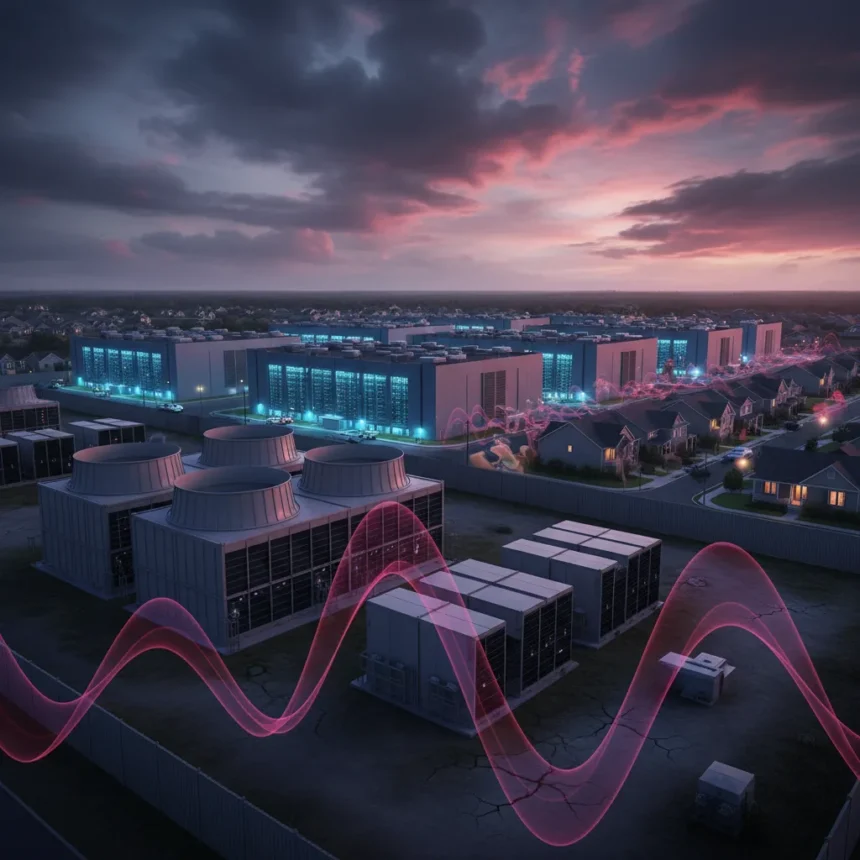
AI data center infrasound is making residents in multiple U.S. communities physically sick. The low-frequency hum from cooling systems, backup generators, and onsite turbines produces sound below the human hearing threshold—yet residents report dizziness, nausea, vertigo, sleep disruption, headaches, and permanent hearing loss. This is not a localized anomaly. Complaints span Granbury, Texas; Kentucky; New York; North Carolina; and Vineland, New Jersey, suggesting a systemic public health crisis tied directly to AI infrastructure expansion.
Key Takeaways
- AI data center infrasound causes documented health effects including dizziness, nausea, vertigo, and sleep disruption in neighboring residents.
- Internal data center noise reaches 96 A-weighted decibels; community-measured levels hit 90–100+ decibels, exceeding the 85 dBA safe hearing threshold.
- Backup generators must be tested up to 50 hours annually and activate during peak electricity demand, not just blackouts.
- Data centers consumed 1.5% of global electricity in 2024 and are projected to represent nearly 10% of electricity demand growth by 2030.
- A September 2025 study projects U.S. data centers could cause approximately 600,000 asthma symptom cases and 1,300 premature deaths annually by 2030.
What Is AI Data Center Infrasound?
AI data center infrasound refers to low-frequency sound waves below the human hearing threshold that are physically felt rather than heard by some people. Cooling systems, HVAC units, onsite gas turbines, and diesel backup generators emit these frequencies continuously. The distinction matters: infrasound is inaudible but measurable, and it penetrates walls, windows, and human tissue in ways conventional noise does not. Residents describe the sensation as a constant, dull, inescapable hum that rattles windows and disturbs sleep, with some reporting vibrations felt in their walls at night.
The health effects are not theoretical. Documented complaints include dizziness, nausea, vertigo, migraines, panic attacks, tinnitus, insomnia, and anxiety. A 2024 Granbury lawsuit alleges irreversible hearing damage and debilitating vertigo caused by nearby data center operations. Vineland, New Jersey health officials are actively investigating the noise source after multiple resident complaints, signaling that local governments are treating this as an urgent public health matter rather than a nuisance.
Why Data Center Noise Is Becoming a Crisis
Data centers are expanding faster than regulatory frameworks can accommodate them. Data centers consumed 1.5% of global electricity in 2024, and that share is accelerating—they are expected to represent nearly 10% of electricity demand growth from 2024 to 2030. Each hyperscale facility requires enormous cooling capacity and backup power to maintain uptime. A typical hyperscale data center uses 3–7 million gallons of water per day for cooling; some consume up to 57% of their cooling water from potable drinking sources.



Backup generators are not emergency-only assets. They must be tested for up to 50 hours annually, and they activate during peak electricity demand hours when utility companies reduce power delivery—not just during blackouts. This means neighborhoods endure regular, predictable noise surges from generator testing and peak-hour operation. Combined with continuous HVAC humming, the cumulative acoustic burden exceeds safe exposure levels. Internal data center noise reaches up to 96 A-weighted decibels; measured community noise ranges from 90–100+ decibels, well above the 85 dBA threshold at which hearing damage begins.
The Public Health Projection Nobody Is Talking About
A September 2025 study by the Environmental Health Project projects that U.S. data centers in 2030 could cause approximately 600,000 asthma symptom cases and 1,300 premature deaths annually, with a public health burden exceeding $20 billion. These deaths would exceed one-third of all asthma deaths in the U.S. each year. The projection reflects not just noise but also air pollution from fossil-fueled backup generators and the compounding health stress of sleep disruption, anxiety, and chronic exposure to infrasound.



This is not speculative. Granbury residents filed suit in 2024 over health impacts from an existing data center. Vineland officials launched a formal investigation in response to resident complaints about a newly built 300-megawatt AI facility. Multiple communities across multiple states are reporting similar symptoms simultaneously. The pattern suggests that as AI infrastructure scales, the health toll scales with it—unless regulatory and architectural changes intervene.
Why Regulators Are Hitting the Brakes
Local governments are placing moratoriums on new data center projects in response to noise, water consumption, and health concerns. These are not knee-jerk reactions. They reflect a growing recognition that data center expansion, as currently designed and operated, imposes uncompensated health costs on neighboring communities. Fossil-fueled data centers pose particular risks due to air pollution from natural gas and diesel generators, compounds the infrasound problem with respiratory hazards.
The gap between infrastructure demand and public health protection is widening. AI companies need computing capacity to meet global demand. Communities need protection from health-harming noise. Current data center design—with loud cooling and backup power systems—forces a false choice between the two. Until data centers adopt quieter cooling technologies, relocate backup generators away from residential areas, or accept stricter operational constraints, infrasound complaints will multiply and legal liability will mount.
Is AI data center infrasound a proven health hazard?
Infrasound effects require further scientific study, but the link between low-frequency noise exposure and health symptoms like dizziness, nausea, and sleep disruption is increasingly recognized as a public health concern. Residents in multiple communities report consistent symptoms, and ongoing litigation in Granbury and active health investigations in Vineland indicate that local authorities treat the risk seriously,.


Can you hear AI data center infrasound?
No. Infrasound by definition falls below the human hearing threshold. However, some people can physically feel the vibrations and low-frequency pressure waves, experiencing symptoms like dizziness and sleep disruption even though no audible sound is present. Individual sensitivity varies—not all residents may detect or respond to infrasound in the same way.
What can communities do about data center noise?
Local governments are implementing moratoriums on new data center projects pending further study and regulatory clarity. Existing remedies include lawsuits for health damages (as in Granbury), formal health investigations (as in Vineland), and advocacy for stricter noise ordinances and setback requirements that place data centers farther from residential areas. Federal standards for data center noise do not yet exist, leaving the issue to state and local regulation,.
AI data center infrasound is not a fringe complaint or a temporary growing pain. It is a documented public health issue affecting multiple communities, with projections suggesting the problem will worsen dramatically as AI infrastructure scales. Residents are getting sick. Regulators are taking action. The question facing data center operators and policymakers is whether they will redesign facilities to reduce harm or continue building at full speed while communities absorb the health costs.
Edited by the All Things Geek team.
Source: TechRadar




