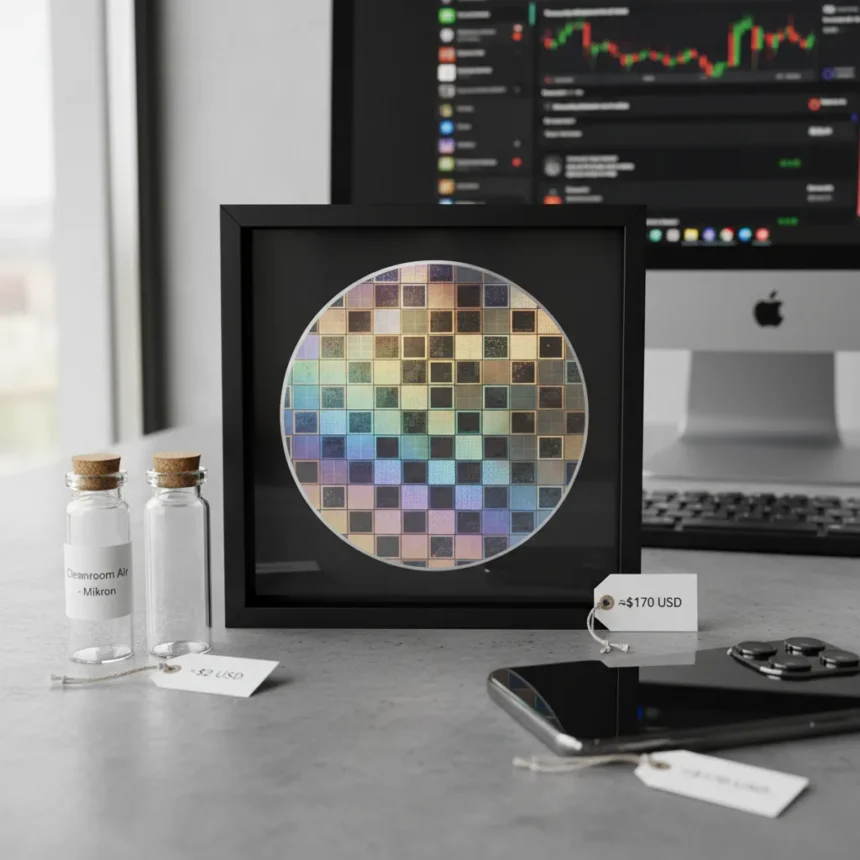
Semiconductor test wafer souvenirs are now a revenue stream for Russia’s Mikron, the country’s largest chipmaker, which is selling framed wafers containing up to 120,000 processors as desk decorations and collectibles. Priced around $170 each, the souvenirs come in 12 different designs and are accompanied by $2 vials of cleanroom air—a tongue-in-cheek nod to the sterile environments where chips are manufactured. This move reflects how semiconductor companies are monetizing their manufacturing heritage through novelty merchandise.
Key Takeaways
- Mikron offers 12 different framed test wafer designs priced around $170 each
- The wafers are test chips, not functional processors for consumer use
- Cleanroom air vials sell for $2 as companion novelty items
- The souvenirs contain up to 120,000 processors on a single wafer
- The product line reflects Mikron’s strategy to diversify revenue streams
What Makes Semiconductor Test Wafer Souvenirs Unique
The appeal of semiconductor test wafer souvenirs lies in their intersection of technical legitimacy and novelty. These are genuine test wafers pulled from Mikron’s manufacturing process—not decorative replicas. Each framed wafer is a real artifact of chip production, containing thousands of processors that never reached consumer devices. The frames transform industrial byproducts into collectible desk art, appealing to tech enthusiasts, engineers, and anyone fascinated by semiconductor manufacturing. Unlike generic tech merchandise, owning a framed wafer connects the buyer directly to the engineering and fabrication that powers modern electronics.
The 12 design variations suggest Mikron has curated different wafer layouts and processor configurations specifically for the souvenir line. This level of intentionality separates the souvenirs from simple waste-reduction initiatives. The company is actively selecting which test wafers deserve framing, treating them as limited-edition collectibles rather than leftover inventory. The $170 price point positions the items as premium desk accessories—affordable enough for individual collectors but expensive enough to signal genuine product development rather than impulse merchandise.
The Cleanroom Air Vials and Novelty Marketing
The $2 cleanroom air vials bundled with the wafer souvenirs are pure novelty marketing, yet they reinforce Mikron’s brand narrative. Cleanroom air is filtered and ionized to prevent contamination during chip manufacturing—it is essential to the process but invisible to end users. Selling it as a souvenir is a playful acknowledgment of the obsessive precision required in semiconductor fabrication. The vials cost almost nothing to produce but add perceived value and humor to the purchase experience. They also serve a practical purpose: buyers who spend $170 on a framed wafer are likely to add a $2 vial, increasing average transaction value with minimal cost.


This bundling strategy mirrors how other industries monetize their production heritage. Wine producers sell branded glasses, coffee roasters sell branded cups, and now semiconductor makers sell the air from their factories. The vials transform a technical specification into a tangible keepsake, allowing customers to own a literal piece of the manufacturing environment that created their devices.
Why Mikron Is Selling Semiconductor Test Wafer Souvenirs Now
Mikron’s decision to launch this souvenir line reflects broader economic pressures on Russian semiconductor manufacturing. International sanctions have constrained Mikron’s ability to export advanced chips and import critical equipment. By diversifying revenue streams, the company is finding alternative ways to generate cash from its existing operations. Test wafers are byproducts of normal production—they are not subject to the same export restrictions as finished consumer chips. Converting them into merchandise is a creative workaround that extracts value from material that would otherwise be discarded or recycled.



The souvenir strategy also serves a marketing function. It keeps Mikron’s brand visible internationally despite geopolitical restrictions on direct business. Collectors who buy framed wafers become informal ambassadors for the company, displaying Mikron’s logo and manufacturing prowess on their desks. This grassroots brand exposure is valuable for a company facing limited access to traditional export markets. The novelty factor ensures the souvenirs generate media coverage and social media attention—exactly the kind of earned publicity a restricted company needs.
Semiconductor Test Wafer Souvenirs vs. Other Tech Collectibles
Semiconductor test wafer souvenirs differ fundamentally from typical tech merchandise. Most tech company souvenirs—branded hoodies, mugs, or USB drives—are manufactured specifically for sale. Mikron’s wafers are authentic industrial artifacts, making them genuinely unique. No two wafers are identical because chip fabrication is inherently variable; each wafer reflects the actual conditions and variations of its production run. This authenticity appeals to collectors seeking genuine pieces of technology history rather than mass-produced branded goods.
The comparison to other industrial collectibles is instructive. Intel and TSMC have occasionally sold commemorative chips and wafer fragments, but these are rare and typically reserved for major milestones. Mikron’s approach is more systematic and accessible—12 designs at a fixed price point make the souvenirs attainable for ordinary enthusiasts rather than just wealthy collectors. The low cost of the cleanroom air vials ($2) also contrasts sharply with how other companies monetize brand nostalgia, which typically commands premium pricing. Mikron is prioritizing volume and accessibility over margin maximization.
Is Mikron’s Souvenir Line Sustainable?
The long-term viability of semiconductor test wafer souvenirs depends on two factors: continued production of test wafers and sustained collector interest. As long as Mikron manufactures chips, it will generate test wafers. The supply is essentially unlimited because every production run creates them. However, collector interest could wane if the novelty fades or if the 12 designs become stale. Successful collectible lines require periodic refreshes—new designs, limited-edition variants, or special releases. Without innovation, the souvenirs risk becoming forgotten desk clutter.



The pricing strategy also matters. At $170, the wafers are positioned as premium items but not luxury collectibles. If Mikron raises prices significantly, demand could drop. If the company floods the market with too many designs or variations, scarcity—a key driver of collectible value—disappears. The sweet spot is maintaining enough variety and exclusivity to sustain collector enthusiasm while generating meaningful revenue from a product with minimal production cost.
Can you buy Mikron semiconductor test wafer souvenirs outside Russia?
The research brief does not specify whether Mikron ships internationally or restricts sales to Russia. Shipping logistics and international payment processing present challenges, especially given current sanctions on Russian businesses. Potential international buyers should contact Mikron directly to confirm availability and shipping options.
Are the processors on the test wafers functional?
No. These are test wafers, not consumer-grade processors. The up to 120,000 processors on each wafer are part of Mikron’s manufacturing validation process and are not intended for use in computers or devices. They serve as proof-of-concept for chip designs and manufacturing techniques. The framed wafers are purely decorative.
What makes a test wafer different from a production wafer?
Test wafers are created during the chip development and validation phase to verify that designs work correctly and manufacturing processes are stable. Production wafers are manufactured after testing confirms the design is sound. Test wafers often contain experimental layouts, redundant circuits, or diagnostic structures that would never appear on chips sold to consumers. This is why they make interesting collectibles—they are genuinely unique artifacts of the engineering process.
Mikron’s decision to frame and sell test wafers as souvenirs is a clever response to economic constraints and a creative way to monetize manufacturing heritage. The framed designs appeal to tech enthusiasts and collectors seeking authentic industrial artifacts rather than generic branded merchandise. While the long-term sustainability of the souvenir line depends on maintaining collector interest and design variety, the strategy reflects a broader trend of semiconductor companies finding new ways to engage with their technical legacy. For anyone fascinated by chip manufacturing or looking for unconventional desk art, semiconductor test wafer souvenirs offer genuine appeal—a piece of real technology history at an accessible price point.
Edited by the All Things Geek team.
Source: Tom's Hardware