





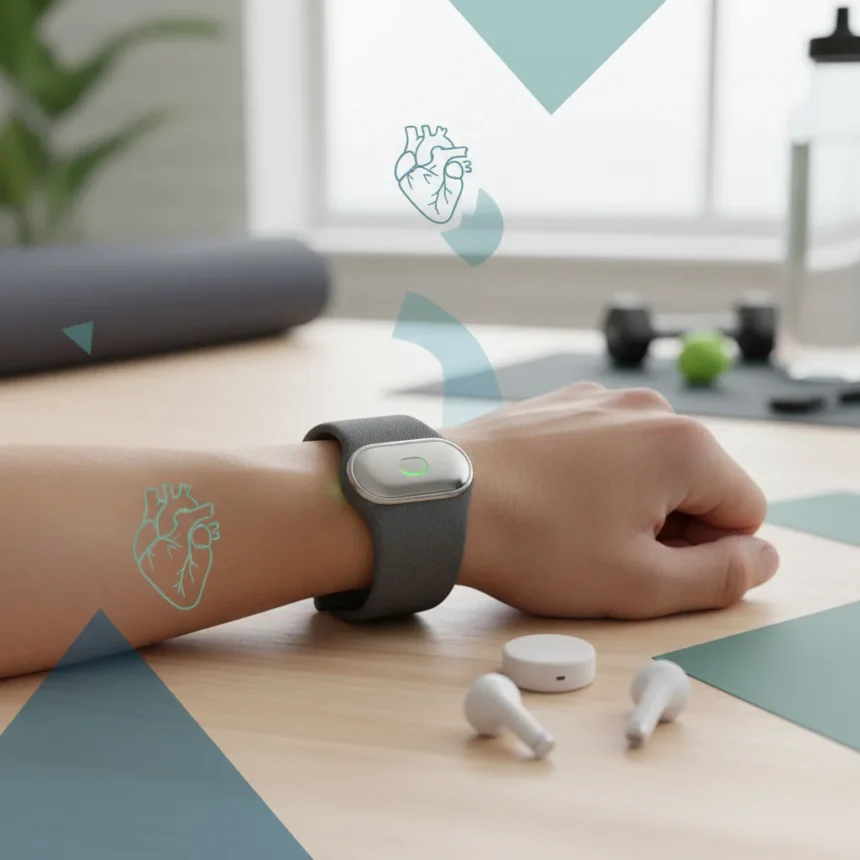
The Fitbit Air fitness tracker is a screenless wearable designed for everyday health monitoring, priced at $99, and built on the proven foundation of Fitbit’s Inspire 3 line. By stripping away the color display that defines most fitness trackers, Fitbit is betting that mainstream users care more about simplicity and battery life than notifications and apps. That bet looks smart.
Key Takeaways
- Fitbit Air costs $99 and requires no subscription for core health features
- The device removes the screen but keeps step counting, sleep tracking, and heart rate monitoring
- Design mimics the minimalist approach of premium screenless trackers like Whoop
- Fitbit Inspire 3 already proved there is mass-market demand for affordable, simple trackers
- Battery life and ease-of-use take priority over smart features
Why Fitbit Air’s Screen-Free Design Makes Sense
The Fitbit Air fitness tracker abandons the bright color screen that defined the Inspire 3, and that is precisely why it works. Removing the display cuts cost, extends battery life, and eliminates the distraction of notifications and app menus. For a $99 tracker aimed at people who want to count steps and monitor sleep without fuss, the screen was overhead, not a feature.
The Inspire 3 already established that Fitbit’s mainstream audience does not demand a touchscreen. That model includes step counting, sleep tracking, workout recording, and a heart rate monitor—the essentials. The Air keeps all of that. By removing the visual interface, Fitbit is saying something important: a fitness tracker’s job is to track fitness, not to compete with your phone. That clarity of purpose is rare in a category crowded with feature bloat.
Fitbit Air Fitness Tracker vs. Inspire 3: What Changes
The Fitbit Air fitness tracker and Inspire 3 share the same health-tracking DNA but diverge on design philosophy. The Inspire 3 offers a 1.3-inch color display, making it easy to glance at stats and notifications on your wrist. The Air removes that screen entirely, relying instead on the Fitbit app for all data review and interaction. The trade-off is straightforward: less convenience on the wrist, more battery endurance and a lower price.


Both trackers include the same core sensors and subscription-free access to basic features. Neither forces you into a paywall just to see your steps or heart rate. But the Inspire 3’s screen makes it a more connected device—you can see workout summaries, heart rate zones, and alerts without pulling out your phone. The Air assumes you will check the app instead. For users who already live on their phones, that assumption is realistic. For others, the Inspire 3’s screen justifies its higher cost.
Fitbit Air Fitness Tracker and the Screenless Wearable Trend
The Fitbit Air fitness tracker arrives in a market where screenless trackers have proven there is an audience willing to trade convenience for minimalism. Devices like Whoop have built a loyal following by offering serious health data without a display, though at a premium price and with a subscription model. Fitbit’s $99 screenless entry point is radically cheaper and requires no recurring fee for core features, making it a different product aimed at a different user.



The screenless approach also appeals to users fatigued by wearable notifications. A tracker that only buzzes for calls and texts, without a screen constantly tempting you to check messages, offers something increasingly valuable: digital calm. The Air’s design philosophy suggests Fitbit understands that not every wearable needs to be a miniature smartphone on your wrist.
Should You Buy the Fitbit Air Fitness Tracker?
The Fitbit Air fitness tracker is the right choice if you want basic health tracking without complexity or cost. At $99, it is accessible to anyone curious about fitness data but not ready to invest in a premium wearable. It suits people who already trust the Fitbit app, who do not need constant on-wrist notifications, and who value battery life over features. If you run, cycle, or do structured workouts, the Air records those activities. If you want to see your stats at a glance without reaching for your phone, the Inspire 3 remains the better option.
The real question is whether Fitbit’s timing is right. Fitness trackers have been treated as disposable gadgets for years, with manufacturers launching incremental upgrades annually. The Air suggests Fitbit is thinking differently—focusing on a single, simple product that solves a real problem rather than chasing every trend. That restraint is refreshing.
What makes the Fitbit Air different from the Inspire 3?
The Fitbit Air removes the color screen, lowering the price to $99 and extending battery life. The Inspire 3 keeps the display, making it easier to check stats on your wrist without opening the app. Both include the same health sensors and subscription-free core features.



Does the Fitbit Air require a subscription?
No. The Fitbit Air includes subscription-free access to core features like step counting, sleep tracking, and heart rate monitoring. Like the Inspire 3, it does not lock basic health data behind a paywall.
Is the Fitbit Air better than Whoop?
The Fitbit Air and Whoop target different users. Whoop emphasizes advanced metrics and recovery coaching, with a subscription model and a higher price. The Air prioritizes simplicity and affordability, making it a better fit for casual trackers who want the basics without complexity or recurring fees.
The Fitbit Air fitness tracker is not a revolutionary device. It is a practical one. By removing the screen and the price premium that comes with it, Fitbit has created something the fitness tracker market has lacked: a genuinely simple, genuinely affordable option for people who want to track their health without learning a new interface or paying a subscription. That simplicity is the entire product. And for most people, it is exactly what they need.
Where to Buy
Edited by the All Things Geek team.
Source: Tom's Guide




