





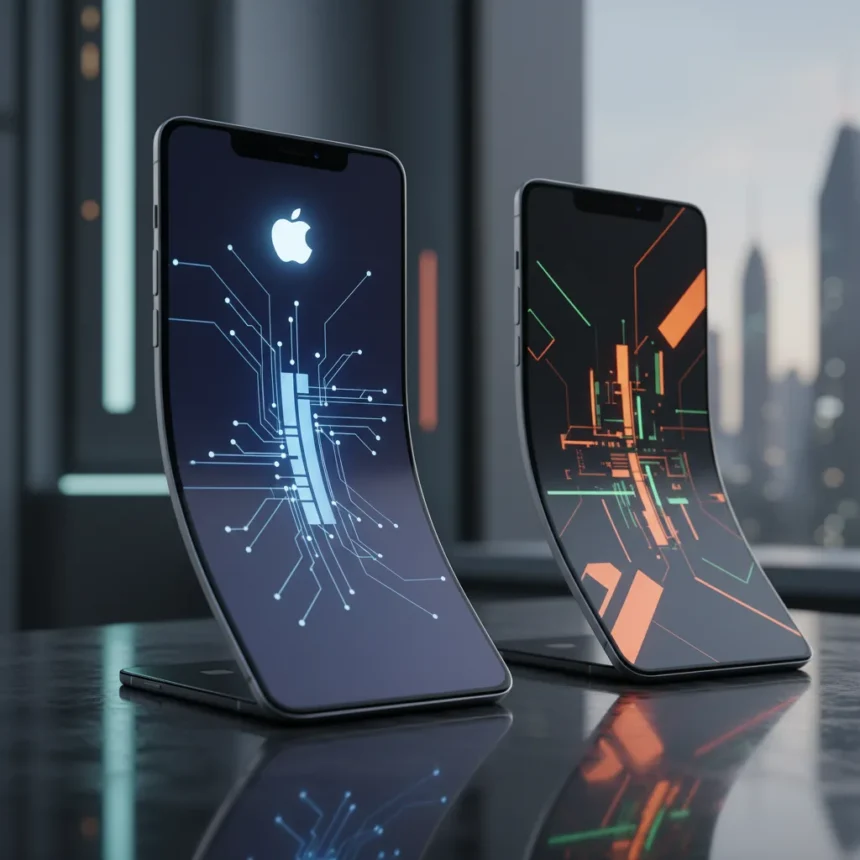
Quad-curved iPhone screens could reshape how Android manufacturers approach display design, according to recent reports suggesting Apple may introduce the technology on the iPhone 19 Pro series. The rumor highlights a persistent pattern: when Apple adopts a design trend, the broader smartphone market follows.
Key Takeaways
- Apple may introduce quad-curved displays on the iPhone 19 Pro series, though this remains unconfirmed.
- Quad-curved screens are not a new technology; the innovation lies in mainstream adoption.
- Apple’s design choices historically influence Android manufacturers’ product roadmaps.
- The move could signal a shift away from flat-screen designs that have dominated recent flagship phones.
- Android competitors already have curved-screen experience, but Apple’s adoption could accelerate industry-wide adoption.
Why Apple’s Design Choices Matter for the Entire Industry
When Apple introduces a design element, Android manufacturers typically follow within 18 to 24 months. This pattern has held for notched displays, flat edges, and titanium frames. A quad-curved screen on the iPhone 19 Pro would likely trigger a similar wave of adoption across Samsung, Google, OnePlus, and other major players. The reason is simple: consumers perceive Apple’s choices as validation, and competitors cannot afford to look outdated by comparison.
The smartphone market is mature. Incremental processor improvements and camera megapixel increases no longer drive upgrades. Design language has become the primary differentiator. If Apple signals that curved edges on all four sides represent the next evolution, manufacturers will scramble to deliver similar experiences. Android phones with curved displays already exist, but a quad-curved implementation across all edges would be a bolder statement than the partial curves currently common.
Quad-curved Screens Are Not Actually New
The critical detail buried in the rumor is that quad-curved technology is not a novel invention. Curved-screen phones have existed for years. What Apple would be doing is mainstream adoption and refinement. The company excels at taking existing technology, perfecting the implementation, and reframing it as essential. This is precisely what happened with wireless charging, larger screens, and always-on displays.


Android manufacturers have already experimented with curved edges. The difference is execution and marketing. Apple’s version would likely feature superior edge-to-edge integration, smoother curves, and tighter manufacturing tolerances. These refinements matter less to engineers than to consumers, who perceive Apple products as more polished. Once the iPhone 19 Pro arrives with quad-curved screens, competitors will need to match not just the concept but the quality of implementation.
What This Means for Android Phone Design in 2025 and Beyond
If Apple debuts quad-curved screens on the iPhone 19 Pro, expect Android flagships to pivot toward similar designs within the next product cycle. Samsung’s Galaxy S-series and Google’s Pixel line would face pressure to adopt curved edges on all four sides rather than the flat designs currently standard. This shift would create a visual arms race: each manufacturer competing to offer the most seamless curve, the thinnest bezel, and the most durable curved glass.



The practical implications are worth considering. Curved screens on all four sides increase manufacturing complexity and cost. They also raise durability concerns—curved edges are more prone to accidental damage and more expensive to repair. Yet if Apple makes the choice, consumers will tolerate these tradeoffs because they perceive curved designs as premium. Android makers will have little choice but to follow suit or risk being perceived as inferior.
Will Consumers Actually Want Curved Screens on All Sides?
This is the unasked question in the rumor. Many smartphone users have grown tired of curved edges. They complain about accidental touches, reduced screen real estate due to edge curves, and the difficulty of finding protective cases. Flat-screen phones, which returned with recent iPhone and Pixel models, were marketed as a return to practicality and durability.
Yet if Apple introduces quad-curved screens with the right marketing narrative—framing them as a design evolution that improves ergonomics, aesthetics, or durability—consumers will likely accept them. The company has a track record of shifting user preferences. What seemed impractical (notches, dynamic islands, always-on displays) became standard after Apple’s adoption. Quad-curved screens could follow the same trajectory, regardless of underlying practical concerns.
The Bigger Picture: Design Cycles and Market Consolidation
The quad-curved iPhone rumor reflects a broader industry pattern. Smartphone design has plateaued. Without revolutionary breakthroughs in battery technology, display quality, or processing power, manufacturers rely on aesthetic differentiation. Apple, with its massive marketing budget and brand loyalty, sets the visual direction. Android makers follow. This cycle repeats every few years.



If the iPhone 19 Pro indeed features quad-curved screens, it will not be because the technology is superior—it will be because Apple decided it is the next design language. Within two years, quad-curved screens will appear on mid-range Android phones. Within three years, they will be standard on flagships. By 2030, flat screens will seem dated, and the industry will have moved on to whatever comes next.
Are quad-curved screens actually an improvement over flat or partially curved designs?
Quad-curved screens offer aesthetic continuity and a more premium feel, but they introduce manufacturing complexity and durability concerns. Whether they represent a genuine improvement depends on execution. Apple’s implementation would likely be superior to competitors’ early attempts, but the practical benefits over well-executed flat or dual-curved designs are debatable.
When will the iPhone 19 Pro launch with quad-curved screens?
The iPhone 19 Pro has not been officially announced. The quad-curved screen is currently a rumor. Apple typically releases new iPhone models in September, so if the iPhone 19 Pro is real, a launch would likely occur in September of its designated year. Confirmation and specific timing remain unknown.
Will Android phones copy the quad-curved design immediately?
Android manufacturers will not adopt quad-curved screens overnight, but the design will likely influence flagship models within 18 to 24 months if Apple commits to it. Samsung, Google, and other major players will prioritize matching Apple’s design language to remain competitive in the premium segment.
The quad-curved iPhone screen rumor is ultimately about market psychology, not technological breakthrough. If Apple makes the choice, the industry will follow—not because the design is objectively superior, but because Apple’s validation carries weight. This cycle has repeated for over a decade and shows no signs of breaking. Smartphone design remains locked in Apple’s orbit, with Android makers executing variations on themes already established in Cupertino.
Where to Buy
Edited by the All Things Geek team.
Source: TechRadar




