






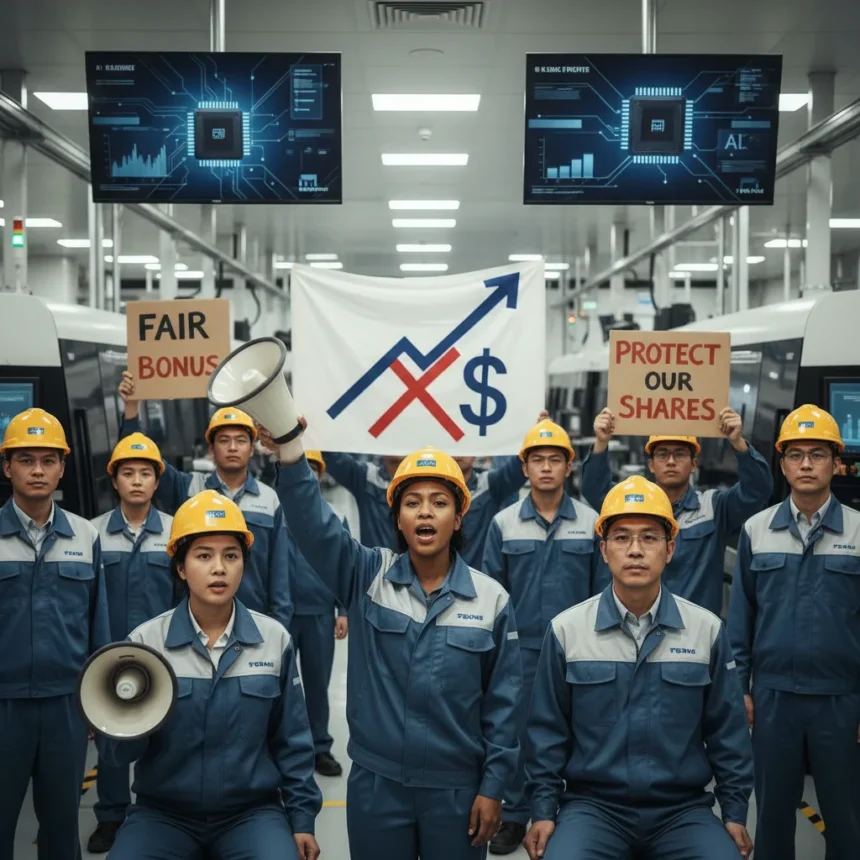
TSMC employee bonuses have become a flashpoint for labor unrest at the world’s largest contract chipmaker, with staff reportedly discussing strikes and unionization over rumored compensation cuts even as the company posts record profits fueled by AI demand.
Key Takeaways
- TSMC employees are reportedly upset over a rumored 15% cut to profit-sharing bonuses despite record revenues.
- The company issued a statement on May 25 denying bonus reductions and promising faster growth in 2026 than 2025.
- Q1 2026 saw a 58% profit jump driven by AI-driven semiconductor demand.
- Labor unrest risks disrupting production at a critical moment when competitors like Intel are revitalized.
- The dispute echoes Samsung-style strikes that have disrupted major tech manufacturers in the past.
Why TSMC Employees Are Angry About Bonuses
The core grievance centers on TSMC’s reported plan to cut employee profit-sharing bonuses by 15% to fund capital expenditures, according to multiple reports. This proposal hit a nerve because it comes at a moment when TSMC’s financial performance is exceptional. The company posted a 58% profit increase in Q1 2026, riding the wave of explosive demand for AI chips from data centers and cloud providers worldwide. For employees watching record earnings reports, a bonus cut feels like a betrayal of shared success.
The timing is particularly contentious because TSMC’s capital expenditure needs, while substantial, are being funded from what appears to workers as a direct reduction in their compensation. Employees are questioning why bonuses should shoulder the burden of expansion when profit margins are historically strong. Some staff have begun discussing unionization and potential strike action, framing the situation as comparable to labor disputes that have previously disrupted Samsung’s operations.
TSMC’s Response and Bonus Reassurance
TSMC moved quickly to contain the backlash. On May 25, the company issued a statement directly addressing employee concerns, asserting that there would be no reductions in employee profit-sharing bonuses in the current year. More significantly, TSMC promised that the growth rate of bonuses in 2026 would exceed the growth rate achieved in 2025, signaling a commitment to expanding rather than contracting compensation.



This reassurance appears designed to head off organized labor action before it gains momentum. A major strike at TSMC would be catastrophic for global chip supply chains. The company manufactures advanced processors for nearly every major semiconductor designer, including the chips powering AI infrastructure. Any production disruption would ripple through the entire tech industry at a moment when demand for advanced silicon is at peak levels.
The Broader Context: AI Demand and Competitive Pressure
TSMC’s aggressive capital spending plans reflect the company’s effort to maintain dominance in advanced chip manufacturing while a revitalized Intel competes for market share and capacity. The chipmaker is investing heavily in new fabs and latest equipment to meet surging demand for AI processors. These investments are essential to TSMC’s long-term competitive position, but they create tension with employee expectations for profit-sharing growth.



The company faces a delicate balancing act. Starve capex and risk losing market leadership to competitors. Cut bonuses to fund expansion and risk labor unrest that could damage operations and recruitment. TSMC’s statement attempting to promise both growth in capex and growth in bonuses suggests the company believes it can navigate this tension, at least for now. Whether employees find that reassurance credible will determine whether strike threats remain rhetoric or escalate into actual labor action.
Could TSMC Face a Samsung-Style Strike?
The comparison to Samsung-style strikes carries weight because Samsung has experienced significant labor disruptions in recent years over compensation and working conditions. TSMC has historically maintained stronger labor relations than some Asian tech manufacturers, but the current situation shows that even the most profitable chipmakers are not immune to employee grievances when compensation appears disconnected from company performance.
What distinguishes TSMC’s situation is the global stakes. Samsung’s strikes affect a single company’s production. TSMC’s strikes would affect every major technology company relying on advanced chips. This reality may actually work in TSMC’s favor, as both the company and employees understand that a prolonged labor conflict serves neither party well. However, it also means employees have significant leverage if they choose to organize effectively.
What happens if TSMC employees strike?
A major strike at TSMC would disrupt global semiconductor supply chains at a critical moment for AI infrastructure development. Data center operators, cloud providers, and AI companies would face chip shortages. Competitors would gain time to capture market share. However, such a strike is unlikely unless TSMC’s reassurances about bonus growth prove insufficient or credibility erodes.



Will TSMC bonuses actually grow faster in 2026?
TSMC’s statement promises faster bonus growth in 2026 than in 2025, but the specific formula and final payout amounts remain undisclosed. Employees will be watching closely to see whether this commitment translates into actual compensation increases that reflect the company’s record profitability. If bonus growth lags profit growth, frustration will likely resurface.
How does TSMC compare to competitors on employee compensation?
The research brief does not provide comparative compensation data for TSMC versus Intel or Samsung. However, the fact that TSMC employees are discussing unionization and strikes suggests they perceive their compensation as inadequate relative to company performance, regardless of how it compares to competitors.
TSMC’s May 25 statement buying time and promising future growth suggests the company believes it can satisfy employee demands without disrupting its strategic capital plans. Whether that confidence is justified will become clear in 2026, when employees will have concrete data on whether bonuses actually grew faster than in 2025. For now, the crisis appears contained, but the underlying tension between expansion investment and employee profit-sharing remains unresolved.
Edited by the All Things Geek team.
Source: Tom's Hardware