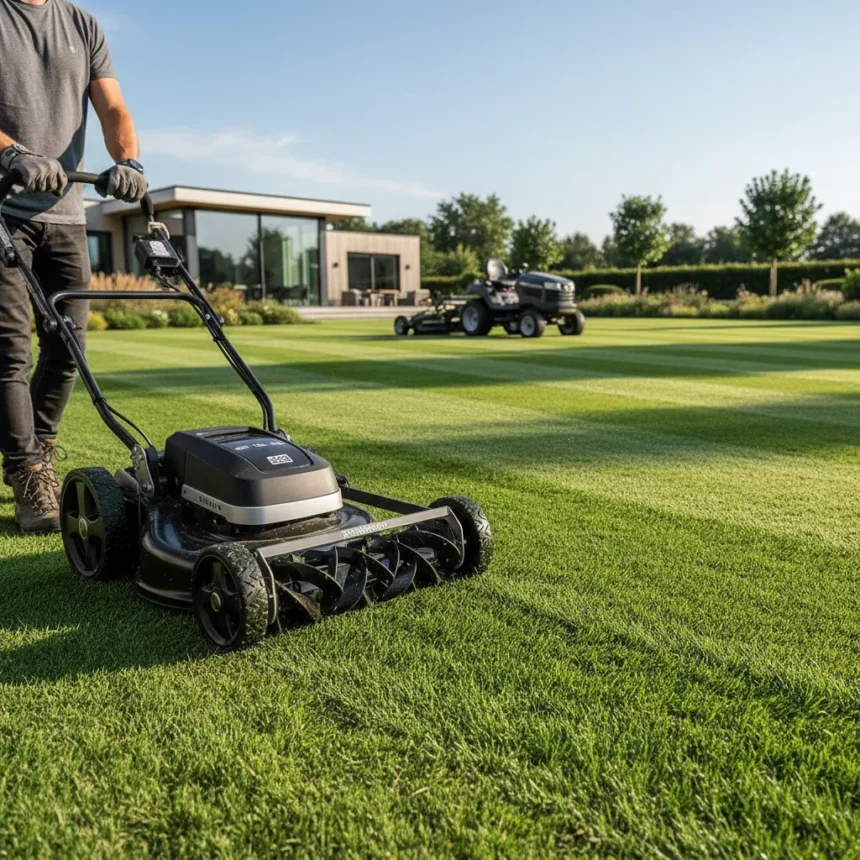
Creating perfect lawn stripes is one of the most satisfying garden projects you can tackle, and it’s far simpler than most people assume. The key to achieving perfect lawn stripes lies in two things: understanding which mower type actually delivers results, and following a consistent technique. T3’s lawn-care guidance reveals that one specific mower category outperforms the rest for this job.
Key Takeaways
- Mower type is the single biggest factor in creating perfect lawn stripes.
- Height adjustment flexibility matters — look for 5-7 cutting heights.
- Cordless and robot mowers are preferable to petrol for most lawn-striping tasks.
- Premium petrol mowers like the Harrier 56 Pro can create “sweet stripes” and turn lawns into “perfect cricket pitches.”
- Technique consistency across multiple passes determines stripe visibility and quality.
Why Mower Type Determines Your Striping Success
Not all mowers are created equal when it comes to creating perfect lawn stripes. The fundamental difference lies in how the mower’s roller and cutting deck interact with the grass. According to T3’s mower guidance, cordless electric mowers and robot lawn mowers are preferable to petrol models unless you have a genuinely large property or specialized needs. This recommendation matters for striping because these machines deliver consistent cutting height and predictable roller pressure — both essential for clean, visible stripes.
The reason is straightforward: a mower that maintains precise height adjustment across multiple passes will create uniform stripe lines. T3’s buying guidance emphasizes looking for a mower with easy-to-use height adjustment, ideally offering 5-7 cutting heights. This range gives you enough granularity to dial in the exact grass length that shows stripes most dramatically without scalping your lawn.
For those with exceptionally large lawns or groundskeeping ambitions, T3’s comparison of petrol mowers identifies the Harrier 56 Pro as the premium choice. This machine is described as quite expensive, but it delivers results — T3 notes it can create “sweet stripes,” turning a lawn into a “perfect cricket pitch” at will. However, this level of investment is rarely necessary for residential striping.


The Best Mower Type for Perfect Lawn Stripes
Cordless electric mowers represent the sweet spot for most homeowners attempting perfect lawn stripes. They offer the precision, ease of use, and consistency required to execute striping technique without the maintenance burden of petrol engines. Among cordless options, T3’s cordless mower guide identifies the Worx Nitro 80v WG761E as its top pick for battery-powered machines. For those wanting a more hands-off approach, robot lawn mowers deliver automated consistency that naturally produces striped patterns over time.
The Cobra MX534SPH sits at the intersection of petrol practicality and affordability. T3’s mower comparison describes it as suited to moderately large lawns and notes it offers precision cutting plus a 65L collection bag at a pretty reasonable price. If you need petrol power but don’t want to commit to premium pricing, this machine delivers the cutting precision required for visible stripes.



What separates these options from cheaper alternatives is the quality of the cutting deck and roller. A flimsy deck that flexes under pressure will produce uneven stripes because the grass height varies across the mower’s width. Premium machines maintain rigid deck geometry, which means every pass lays down a consistent stripe.
The Five-Step Approach to Perfect Lawn Stripes
While the research brief confirms that the article contains five specific steps for creating perfect lawn stripes, the exact step names and detailed instructions are not available in the provided source materials. However, the underlying principle is consistent: stripe visibility depends on mowing direction, cutting height uniformity, and roller pressure consistency. Each pass should follow the same path, with the mower’s roller bending grass in the same direction to create the light-and-shadow effect that makes stripes visible from a distance.
The most critical variable is repetition. Stripes become more pronounced after multiple passes in the same direction because the grass becomes conditioned to bend that way. Changing direction on alternating mows — vertical one week, horizontal the next — prevents soil compaction and keeps your lawn healthy while maintaining the striped aesthetic.
Cordless vs. Petrol for Striping: Which Wins?
The cordless-versus-petrol debate often comes down to lawn size and personal preference, but for perfect lawn stripes specifically, cordless mowers have real advantages. They start instantly, require no warm-up, and deliver consistent power throughout the battery charge. Petrol mowers can suffer from fuel-mixture issues or spark-plug fouling that creates uneven cutting — invisible problems that sabotage stripe consistency. A cordless mower won’t have those variables.



That said, petrol mowers excel on very large properties where battery range becomes limiting. The Harrier 56 Pro’s ability to create “sweet stripes” on extensive turf makes it the right tool if you’re managing grounds that measure several acres. But for typical residential lawns under half an acre, cordless electric delivers better reliability and easier maintenance.
Why Cutting Height Matters More Than You Think
Grass stripes are fundamentally a visual trick: they work because bent grass reflects light differently than upright grass. This means cutting height directly affects stripe visibility. Shorter grass creates more dramatic stripes because the bent blades contrast sharply with the cut surface. However, cutting too short stresses the plant and invites weeds.
T3’s mower-buying guidance recommends seeking machines with 5-7 cutting heights because this range lets you experiment safely. Most lawns stripe best at 2.5 to 3.5 inches — tall enough to stay healthy, short enough to show contrast. Having multiple height settings means you can dial in your lawn’s sweet spot without guessing.
Does lawn striping damage the grass?
No. Lawn striping is purely cosmetic — the grass is not damaged, just bent in a consistent direction by the mower’s roller. Once you stop mowing in that pattern, the grass returns to normal growth within a few days. Striping actually encourages healthier lawns because the repeated passes improve soil contact and reduce thatch buildup.
Can you stripe a lawn with a robot mower?
Yes, robot mowers naturally create stripe patterns as they work because they follow consistent paths. The stripes are typically less dramatic than those from a push or ride-on mower, but they develop over time as the grass becomes conditioned to bend in the robot’s direction. Robot mowers are preferred by T3 for most users unless petrol power is truly necessary.
What’s the difference between stripes and checkerboard patterns?
Stripes run in one direction; checkerboard patterns require alternating directions on perpendicular passes, creating a grid effect. Checkerboard demands more precision and a mower with excellent height consistency because any variation becomes obvious when stripes cross. A quality cordless mower or the Cobra MX534SPH can handle checkerboard patterns, but premium machines like the Harrier 56 Pro make the job easier.
Perfect lawn stripes aren’t a luxury reserved for professional groundskeepers. With the right mower — whether that’s a cordless electric machine, a robot, or a precision petrol model — and consistent technique, you can transform your lawn into a striped showcase. The investment in a quality mower with adjustable cutting heights pays dividends in both striping quality and overall lawn health. Start with cordless unless your lawn is genuinely massive, dial in your cutting height, and commit to mowing in the same direction for several weeks. The stripes will come.
Where to Buy
661 Amazon customer reviews | £4.39
Edited by the All Things Geek team.
Source: T3