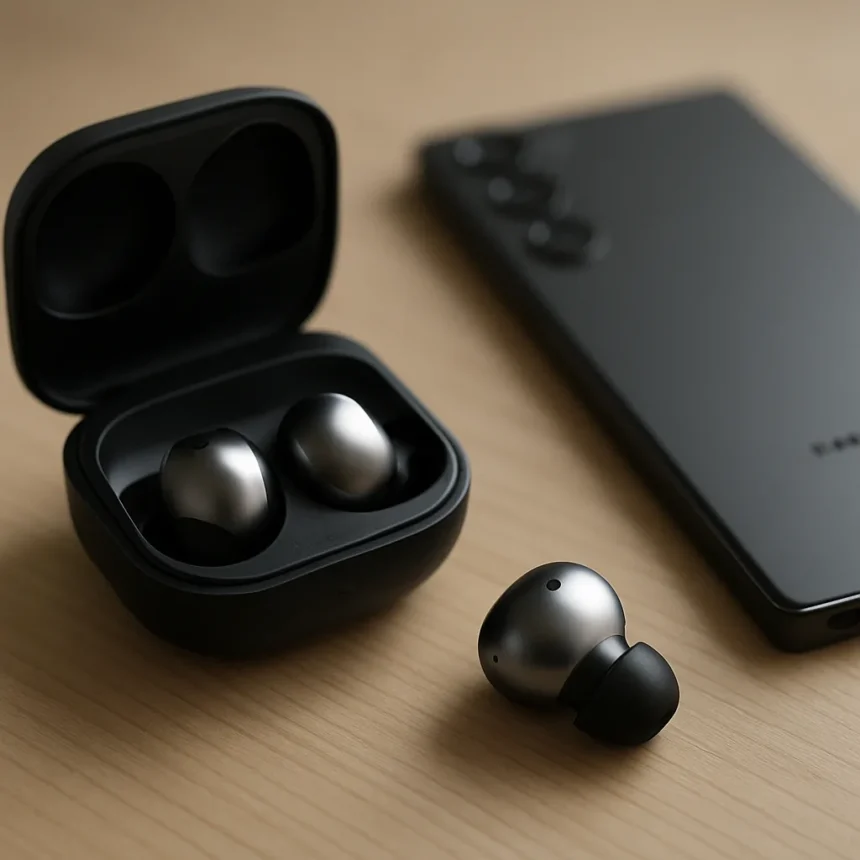
The Samsung Galaxy Buds 4 Pro are wireless earbuds made by Samsung, priced at $249, available now for Android and iPhone users — though the most compelling features are reserved exclusively for Galaxy phone owners. After a wave of hands-on reviews and testing from multiple publications, the consensus is clear: these are among the best earbuds you can buy in 2025, with a few important asterisks attached.
What Makes the Samsung Galaxy Buds 4 Pro Sound So Good
The headline hardware upgrade is a dual-driver configuration — a separate tweeter and woofer, each with its own dedicated amplifier. The woofer is larger than in the previous Galaxy Buds 3 Pro, which translates to better bass control rather than just louder low-end. Tom’s Guide described the result as “rich bass that doesn’t overpower high-frequency sounds” with “best-yet instrument separation” across genres including electronic and rock. The Android Central tester, listening to The Midnight’s “Fatal Obsession,” found the audio “clean and crisp”. One YouTube reviewer noted the overall clarity is impressive but flagged that guitar riffs can occasionally sound a little harsh at the high end — a minor but real limitation worth knowing about before you buy.
For Samsung Galaxy phone owners, the audio ceiling goes even higher. The earbuds support Samsung’s Seamless Codec (SSC), capable of streaming up to 24-bit/96kHz lossless audio. The catch: you need a Samsung Galaxy phone and you have to manually enable it in settings. It is not plug-and-play lossless — it is lossless for the committed Samsung faithful only.
Samsung Galaxy Buds 4 Pro vs the Competition
At $249, the Galaxy Buds 4 Pro undercut the Sony WF-1000XM6 on price. Sony’s flagship earbuds edge ahead in detail retrieval on heavy rock, but the Galaxy Buds 4 Pro hit harder in the bass department and cost less. For listeners who prioritize low-end punch over surgical midrange detail, Samsung’s offering makes a strong case. Against the Apple AirPods Pro 3, the picture is similar — Apple’s earbuds are slightly more detailed overall, but the Buds 4 Pro win for bass-loving Android users who have no reason to be in Apple’s ecosystem.


Compared to the Galaxy Buds 3 Pro, the upgrade is real but not urgent. Samsung has addressed prior complaints about fit and controls, redesigned the stems to move away from the AirPods-like aesthetic (flatter stems, new mesh grille, no triangular LED strips), and improved ANC strength. If you are on Buds 3 Pro and they still fit and function well, there is no fire-drill reason to upgrade. If you skipped a generation or two, the 4 Pro represents a meaningful leap.
Controls, AI Features, and the Case That Does More
The stem design brings side touch controls that let you slide up or down for volume and pinch to trigger actions — including summoning Gemini AI. Samsung has positioned the controls deliberately to reduce accidental triggers, a complaint that dogged earlier models. There is also automatic volume lowering when you start talking to someone nearby, so you do not have to yank an earbud out mid-conversation.



AI integration runs deeper than a simple voice assistant shortcut. The Buds 4 Pro include Interpreter mode for real-time translation, Head Gestures for hands-free control, and both Bixby and Gemini integration. Whether you use any of this depends entirely on how deep you are in the Samsung ecosystem. Non-Samsung Android users and iPhone owners can use the earbuds, but advanced features like ultra-wideband calling are locked out.
The charging case also ships with a “Find Your Phone” button — press it and your paired phone rings via Bluetooth. The reverse works too, with a speaker grille on the case so you can ping the case from your phone. It is a small quality-of-life touch, but the kind that makes you wonder why more earbud makers do not include it.
Who Should Actually Buy the Samsung Galaxy Buds 4 Pro
For equalizer enthusiasts, the Buds 4 Pro offer a 9-band custom EQ alongside six presets — more granular control than most competitors at this price point. That flexibility, combined with the dual-driver hardware, means the sound can be tuned to suit almost any listening preference. The occasional harshness in the highs is real, but it is addressable with EQ adjustments rather than a fundamental flaw in the hardware.
The $249 price sits in a competitive bracket. Against the Sony WF-1000XM6, Samsung wins on value. Against the AirPods Pro 3, Samsung wins for Android users. The only scenario where the Buds 4 Pro feel like a hard sell is if you are a non-Samsung Android user who wants every feature — you will get great sound and solid ANC, but you will leave meaningful functionality on the table.


Are the Galaxy Buds 4 Pro worth buying in 2025?
Yes, particularly if you own a Samsung Galaxy phone. The dual-driver audio, improved ANC, and practical case features make them one of the strongest options at $249. Non-Samsung users will still get excellent sound but should weigh the locked ecosystem features before committing.
Do the Galaxy Buds 4 Pro work with iPhone?
Yes, the Galaxy Buds 4 Pro are compatible with iPhone and non-Samsung Android devices. However, advanced features including ultra-wideband calling and the SSC lossless codec require a Samsung Galaxy phone. Core audio and ANC functions work across platforms.
How big an upgrade are the Buds 4 Pro over the Galaxy Buds 3 Pro?
The Galaxy Buds 4 Pro improve on the Buds 3 Pro in sound quality, ANC performance, control placement, and industrial design. The upgrade is meaningful but not urgent for existing Buds 3 Pro owners whose earbuds are still working well. Those coming from older models will notice a more significant jump.
The Samsung Galaxy Buds 4 Pro are the earbuds Samsung needed to make — not a cosmetic refresh but a genuine engineering step forward. The dual-driver setup, stronger ANC, and thoughtful case utility add up to a compelling package at $249. The ecosystem lock-in is real and worth acknowledging, but for Samsung Galaxy users, it is hard to argue against them as the default choice in this price range.
Where to Buy
Edited by the All Things Geek team.
Source: Android Central