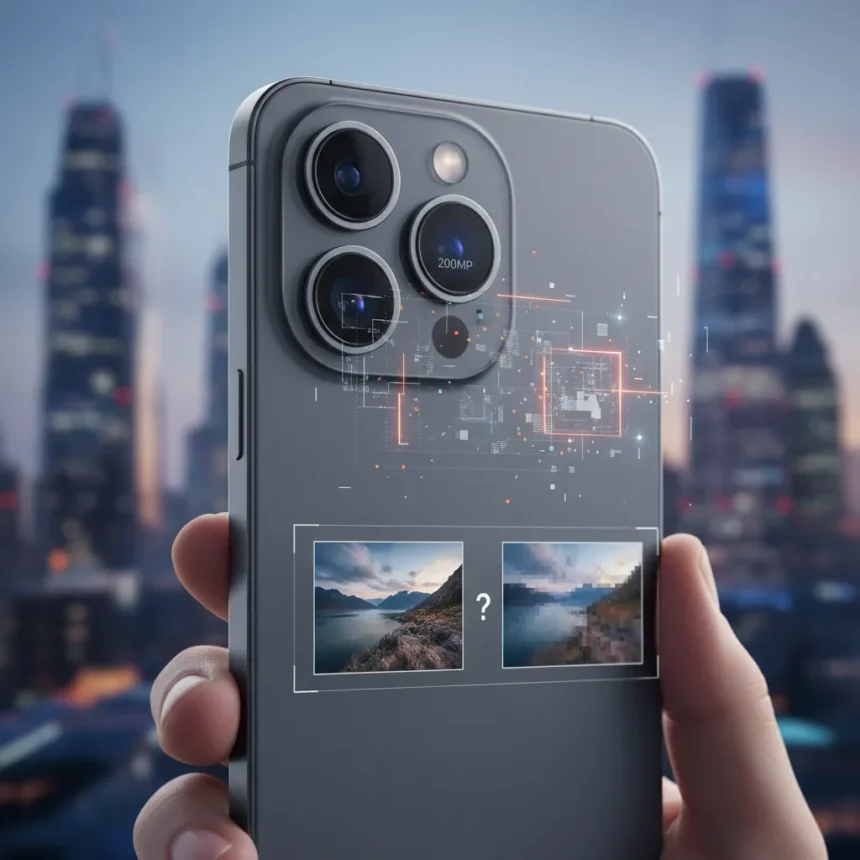
The 200MP iPhone camera is not arriving anytime soon—despite the hype, Apple won’t introduce it until 2028 with the iPhone 21. That timeline matters because it resets expectations and forces a harder question: does quadrupling megapixels actually deliver better photos?
Key Takeaways
- 200MP iPhone camera expected in iPhone 21 around 2028, not sooner
- Samsung will supply the sensor, marking a major shift in Apple’s camera supply chain
- Current iPhones use 48MP cameras, making a jump to 200MP a generational leap
- The sensor is still in material evaluation stage and has not entered prototype testing yet
- Megapixel count alone does not determine photo quality or real-world performance
When the 200MP iPhone Camera Actually Arrives
Apple will introduce the 200MP iPhone camera around 2028 as part of the iPhone 21 lineup. This is not a near-term upgrade. The company currently ships 48MP sensors in its flagship models, meaning the jump represents a quadrupling of pixel count over roughly four years of development. That extended timeline reflects the engineering challenge of integrating such a high-resolution sensor into a slim phone body without degrading image quality or battery life.
Supply chain analysis suggests Samsung will manufacture the sensor, a notable shift for Apple’s camera supply chain. The fact that the 200MP sensor remains in material evaluation and has not yet entered active prototype testing underscores how early the project still is. Apple is not rushing this upgrade, which tells you something important: megapixels alone are not the bottleneck in mobile photography.
Why Megapixel Count Matters Less Than You Think
Jumping from 48MP to 200MP sounds revolutionary until you consider how phones actually take photos. Modern computational photography—the algorithms that process raw sensor data—matters far more than raw pixel count. The iPhone 15 Pro’s 48MP camera already captures stunning detail in good light and acceptable results in low light, not because of megapixels but because of sensor size, lens quality, and processing power working in concert.


A 200MP sensor crammed into the same physical space would mean smaller individual pixels, which historically degrades low-light performance unless Apple also increases the sensor’s physical dimensions. The company will need to balance pixel density, sensor size, and optical design to avoid the trap of more pixels equaling worse photos. This is why the four-year development window exists—it is not hype, it is engineering necessity.
What 200MP iPhone Camera Upgrade Actually Changes
The real benefit of a 200MP sensor is cropping flexibility and zoom quality. More pixels mean you can crop aggressively in post-processing or use digital zoom without losing detail, a feature that appeals to enthusiasts and professionals. It also enables higher-quality 8K video capture without the quality loss that lower-resolution sensors suffer when recording at that resolution.


For the average user scrolling Instagram or sharing photos on messaging apps, the difference between 48MP and 200MP is invisible. The bottleneck is not sensor resolution—it is lighting, subject matter, and the photographer’s eye. Apple knows this, which is why it has spent the last five years optimizing computational photography rather than chasing megapixel numbers. The 200MP camera is a professional-grade feature arriving four years from now, not a consumer revolution happening this year.
Why Apple Is Taking Its Time
The extended timeline until 2028 reflects Apple’s philosophy: megapixels are a trailing indicator, not a leading one. The company could release a 200MP camera in the iPhone 17 or 18 if it simply threw a high-resolution sensor at the problem. Instead, it is waiting until the supporting technologies—thermal management, image processing, optical design—can mature enough to make the upgrade meaningful rather than marketing-driven.
This contrasts with Android flagships from Samsung and others that have shipped 200MP cameras for years. Those phones prove that megapixel count alone does not guarantee better photos. Apple’s deliberate approach suggests it will arrive at 200MP only when the company can deliver a tangible photographic advantage, not just a higher number on the spec sheet.
Is the 200MP iPhone Camera Worth the Wait?
For most users, no. The iPhone 16 or 17 will take excellent photos. The 200MP camera arriving in 2028 appeals to professionals, content creators, and enthusiasts who need cropping flexibility and 8K video quality. For everyone else, the current trajectory of computational photography improvements will deliver more noticeable image quality gains than a megapixel bump.



When will the 200MP iPhone camera launch?
Apple plans to introduce the 200MP iPhone camera with the iPhone 21 around 2028. The sensor is currently in material evaluation and has not entered prototype testing, suggesting the timeline could shift, but 2028 is the current expectation from supply chain analysts.
Does higher megapixels mean better iPhone photos?
Not necessarily. A 48MP sensor with excellent optics and processing beats a 200MP sensor with poor lens design or weak computational photography. Photo quality depends on sensor size, lens quality, processing power, and lighting—megapixels are just one factor. A 200MP camera will excel at cropping and zoom, not at making every photo automatically better.
The 200MP iPhone camera is coming, but not soon enough to matter for your next upgrade decision. Apple is betting that by 2028, the supporting technologies will have matured enough to make the jump meaningful rather than just a marketing talking point. Until then, the real battle in mobile photography is being fought in software, not sensor megapixels.
Edited by the All Things Geek team.
Source: Tom's Guide