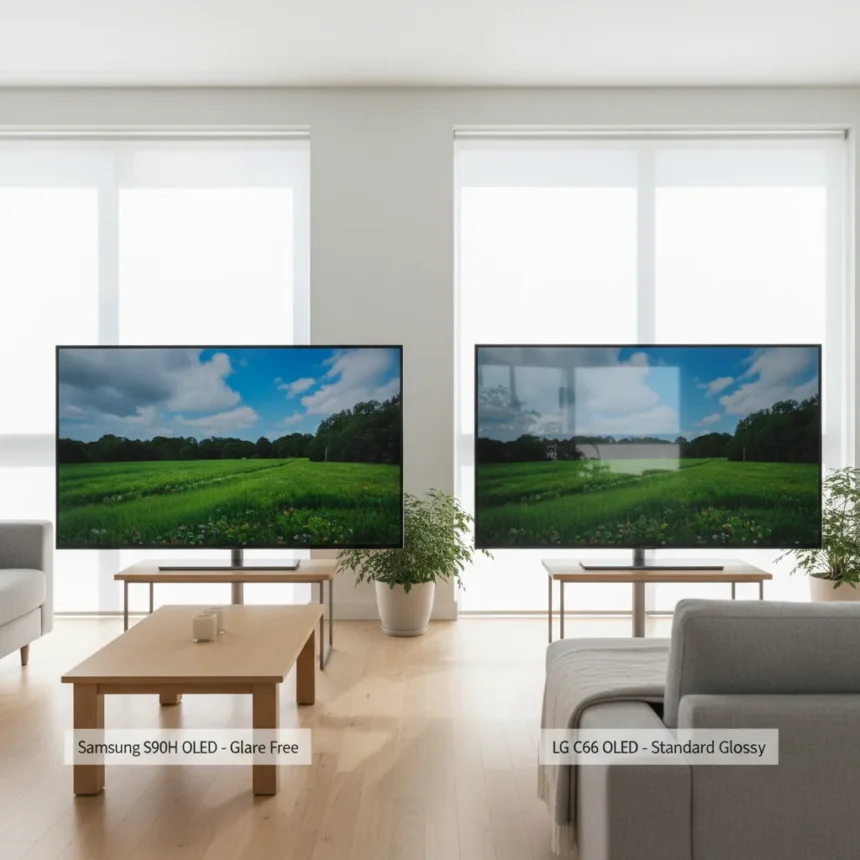
Samsung S90H OLED TV is the company’s 2026 mid-range OLED model, introducing Glare Free technology to a more affordable segment and directly challenging LG’s C6 in the competitive mid-range OLED market. Samsung’s decision to bring its reflection-reducing screen coating down from flagship models represents a significant shift in strategy—and a real threat to LG’s market position in bright-room viewing scenarios.
Key Takeaways
- Samsung S90H brings Glare Free screen technology to mid-range OLED TVs for the first time in 2026
- Both S90H and C6 feature powerful AI-enhanced processors for picture and sound optimization
- LG C6 improves brightness and skin tone accuracy over the previous C5 model
- Samsung S90H uses LG-made WOLED panels across all sizes, a controversial departure from mixing QD-OLED and WOLED
- Gaming features are strong on both models, making them attractive to console and PC gamers
What Makes the Samsung S90H OLED TV Stand Out
The Samsung S90H OLED TV’s Glare Free screen is the headline feature here. Unlike traditional OLED panels that can struggle with reflections in bright rooms, this matte-like coating reduces glare while maintaining the deep blacks that OLED is famous for—a balance that Samsung’s flagship S95F achieves but at a much higher price point. For consumers who want daytime and bright-room viewing without sacrificing picture quality, the S90H becomes a more accessible option than flagship alternatives.
Samsung’s choice to use LG-made WOLED panels across all sizes of the S90H has stirred controversy among TV enthusiasts. Previously, Samsung mixed QD-OLED and WOLED technology depending on the model, giving some consumers a choice in panel type. The shift to a single panel source is pragmatic—it simplifies manufacturing and, according to early measurements, delivers strong results—but it does eliminate that flexibility for buyers who prefer QD-OLED’s brightness characteristics.
How Samsung S90H OLED TV Stacks Up Against LG C6
The LG C6 arrives with meaningful improvements over its predecessor. LG C6 shows noticeably better brightness compared to the C5, more accurate skin tones, and refined contrast that gives the picture more depth. These refinements matter in real-world viewing, where brightness translates to better visibility in daylight and skin tone accuracy affects everything from sports to streaming content.



Both TVs pack serious processing power. The Samsung S90H OLED TV and LG C6 both feature advanced AI-driven processors that enhance picture and sound in real time, scaling up lower-quality content and optimizing audio without requiring manual adjustment. For gaming, both deliver low-latency performance and variable refresh rate support, though specific gaming feature sets require hands-on testing to fully compare.
The critical difference lies in viewing conditions. If you watch primarily in bright rooms or near windows, the Samsung S90H OLED TV’s Glare Free screen gives it a clear advantage. In darker rooms or evening viewing, the LG C6’s superior brightness and color refinement may prove more compelling. Neither TV has been extensively measured side-by-side yet, so early impressions should be treated as starting points rather than definitive verdicts.



Why the Mid-Range OLED Battle Matters
The 2026 mid-range OLED market is where most buyers actually shop. Flagship models command attention and premium pricing, but it’s the S90H and C6 that will define how many households experience OLED technology this year. Samsung’s decision to bring Glare Free technology down from the flagship S95F democratizes a feature that previously required spending significantly more. LG’s response—incremental but meaningful improvements in brightness and color handling—shows the company is not ceding ground without a fight.
Both manufacturers understand that gaming and AI-enhanced processing are table stakes in 2026. The real competitive advantage comes down to specific use cases: bright-room viewing favors the Samsung S90H OLED TV, while picture refinement and brightness edge toward the LG C6. Without full testing data, the choice depends on your room, your content preferences, and whether reflection control matters more than peak brightness.
Should You Wait for Full Reviews?
Early impressions suggest both the Samsung S90H OLED TV and LG C6 are worth serious consideration, but this is a first-look assessment, not a complete review. Comprehensive brightness measurements, side-by-side picture comparisons, and long-term reliability data will emerge as reviewers get extended time with both models. If you’re shopping in the mid-range OLED segment, these two are your primary contenders—just know that the final verdict will depend on seeing them in your own viewing environment.
Is the Samsung S90H OLED TV worth buying over the LG C6?
That depends on your viewing environment. If you have large windows, bright ambient light, or watch a lot of daytime content, the Glare Free screen makes the Samsung S90H OLED TV the stronger choice. If you prioritize picture refinement and brightness in evening viewing, the LG C6’s improvements may resonate more. Both are credible options—your room conditions should drive the decision.



What makes the Glare Free screen controversial?
Some TV enthusiasts dislike matte screen coatings because they can soften the image slightly or raise black levels compared to glossy panels. Samsung’s flagship S95F uses matte technology but accepts this trade-off to reduce reflections. The controversy around the Samsung S90H OLED TV stems from the broader debate about whether reflection reduction is worth any compromise to black depth, though early impressions suggest Samsung has minimized this trade-off in the mid-range model.
The Samsung S90H OLED TV represents Samsung’s most aggressive push into the mid-range OLED market, and it arrives at exactly the right moment—when consumers want OLED quality without flagship pricing, and when bright-room viewing is becoming a standard expectation. The LG C6 is no pushover, but the S90H’s Glare Free technology gives Samsung a genuine competitive edge for a specific and significant audience. Neither TV is the universal winner; the victor depends entirely on where and how you watch.
Edited by the All Things Geek team.
Source: TechRadar