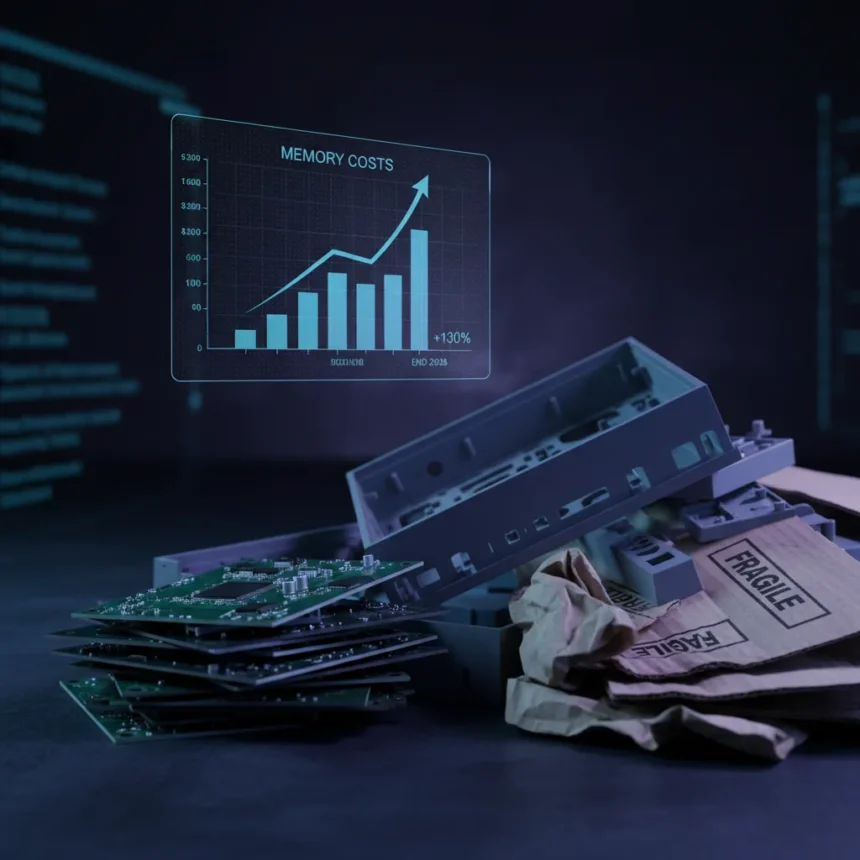
PC component prices are accelerating beyond memory chips and processors, now hitting PCBs, plastic materials, and packaging as suppliers pass costs downstream. The price surge threatens to collapse the entry-level PC market entirely, with combined DRAM and SSD costs forecast to jump 130% by the end of 2026, pushing overall system prices up 17% compared to 2025.
Key Takeaways
- PC component prices surge across memory, storage, PCBs, plastics, and packaging due to supply chain pressures and AI server demand.
- Memory and storage costs have risen $90-$165 since early 2025 for mainstream configurations, with Q1 2026 increases of at least 60%.
- Global PC shipments projected to fall 12% to 245 million units in 2026, with sub-$500 systems down 28% to 62.1 million.
- Sub-$500 PC market expected to vanish entirely by 2028 as vendors cannot absorb rising costs without eliminating profitability.
- AI demand for high-bandwidth memory in servers is diverting supply away from consumer PCs, exacerbating shortages.
Why PC Component Prices Are Spiraling Beyond Chips
The cost explosion extends far beyond the familiar culprits of CPUs and RAM. Shortages in memory, storage, and now structural components like printed circuit boards and plastic casings are compressing margins across the entire supply chain. Tariffs on overseas-sourced components add another layer—manufacturers cannot absorb these costs without passing them to retailers and consumers. According to Jack Gold, principal analyst at J. Gold Associates, many PC components come from overseas suppliers, and vendors cannot simply absorb tariff impacts.
The root cause is architectural: AI demand for servers and large language models is consuming high-bandwidth memory production capacity, starving the consumer PC market of affordable memory options. This is not a temporary blip. Gartner projects the steepest PC shipment decline in over a decade—down 10.4% in 2026 versus 2025—with the AI PC penetration milestone delayed to 2028. The 2026 market, according to IDC research vice president Jean Philippe Bouchard, is shaping up to be extremely volatile.
The Budget PC Market Faces Extinction
The real casualty is the sub-$500 PC segment. Shipments are projected to fall 28% to 62.1 million units in 2026, and Gartner senior director analyst Ranjit Atwal forecasts the entire segment will disappear by 2028. Why? Vendors cannot absorb rising memory and storage costs in low-margin devices without rendering them economically unviable.


Entry-level laptops under $600 face the same squeeze. Windows 11 and Copilot+ require substantially more RAM than previous generations, inflating the cost floor for viable systems. As Rishi Padhi, principal analyst at Gartner, noted, the price increase and scarcity in supply makes it difficult to deliver sub-$600 laptops without compromising user experience. Lower-priced products have less margin room to absorb rising costs, and consumers in this segment are typically more sensitive to price fluctuations, according to Omdia Principal Analyst Ben Yeh.
Desktop systems face similar headwinds. Worldwide desktop shipments are projected to decline 10% to 53.2 million units, while laptops drop 12% to 192.2 million. Manufacturers are already signaling price increases across the board and likely memory spec downgrades, especially in entry-level devices, Padhi said.



Enterprise PCs and the Tariff Squeeze
Corporate buyers are not immune. Enterprise PCs face higher prices and worse configurations in 2026 due to chip and memory shortages combined with tariffs on overseas components. Customers are starting to see the price increases reflected in the market and recognize that they are real and very tangible, according to Aaron Hollobaugh, Sr. Director of U.S. SMB Sales at HP.
For lower-priced products, the math no longer works. Vendors and channels face a critical window in the first half of 2026 to optimize pricing and protect margins before component inflation compresses profitability from the second quarter onwards, Atwal warned. Miss that window, and the low-end market collapses.
What This Means for PC Buyers
If you are shopping for a budget laptop or desktop in 2026, expect fewer options, higher prices, and compromised specifications. The sub-$500 market is already shrinking—it will be gone within two years. Mid-range systems ($600-$900) will absorb some cost pressure but likely with reduced RAM or storage compared to 2025 configurations. Premium systems will continue to exist but will command even steeper premiums as margins compress across the board.
The PC component price surge is not just about memory and processors anymore. It is about the entire supply chain—from the circuit boards that hold components to the plastic housings that protect them. Buyers who delay purchases hoping for price relief are betting against the consensus of major analysts. The smart move is to buy what you need now, before the budget market disappears entirely.



Will PC prices drop in 2026?
No. DRAM and SSD prices are forecasted to surge 130% by the end of 2026, pushing overall PC prices up 17% versus 2025. Component inflation will compress vendor profitability from the second quarter of 2026 onwards, with no relief expected in the near term.
Why are sub-$500 PCs disappearing?
Vendors cannot absorb rising memory and storage costs without eliminating profitability in low-margin entry-level devices. Windows 11 and Copilot+ require more RAM than previous generations, raising the cost floor for viable systems. Omdia projects sub-$500 shipments will decline 28% to 62.1 million units in 2026, with the entire segment vanishing by 2028.
How much have PC component costs risen?
Memory and storage costs have increased $90-$165 since early 2025 for mainstream configurations, with Q1 2026 increases of at least 60%. Combined DRAM and SSD prices are forecast to surge 130% by the end of 2026.
The PC market is entering a period of genuine scarcity and rising costs. Budget shoppers have a narrow window to act before the entry-level segment vanishes. Those who wait will face a market with fewer affordable options and steeper prices across the board.
Edited by the All Things Geek team.
Source: Tom's Hardware