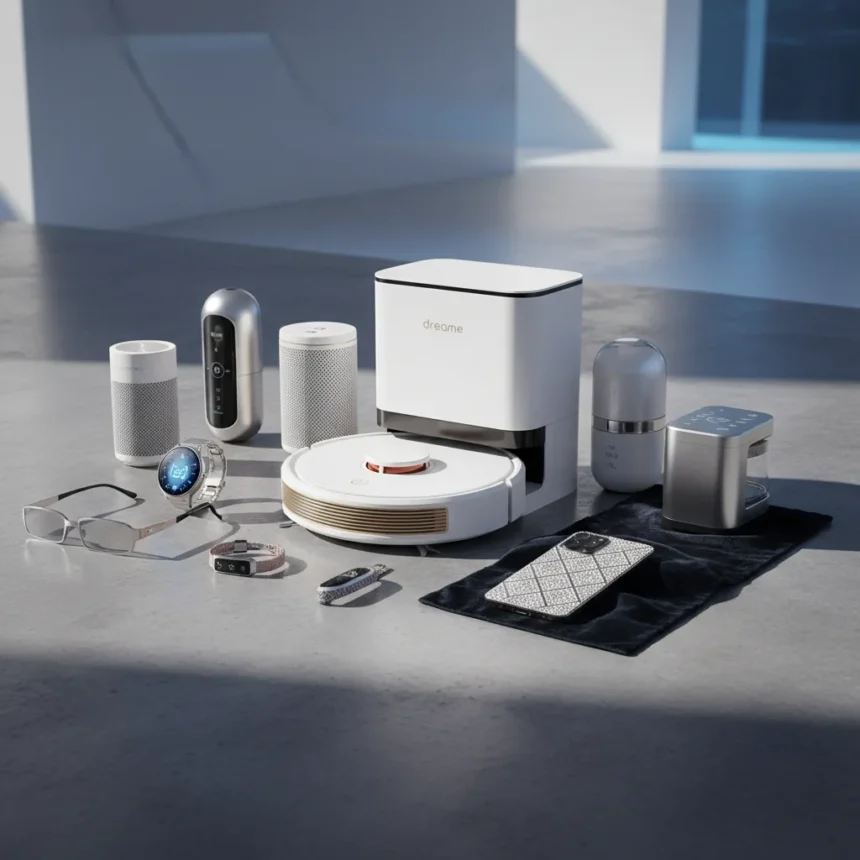
Dreame expansion smart home ambitions signal a radical departure from the company’s identity as a robot vacuum specialist. The Chinese manufacturer, long positioned as a Dyson competitor in the cleaning appliance space, is now targeting a much broader ecosystem of connected devices, luxury consumer tech, and household appliances. At a recent launch event, Dreame introduced over 80 upcoming projects into its product roadmap, signaling intent to compete across multiple categories rather than dominating a single niche.
Key Takeaways
- Dreame is pivoting from robot vacuums to a diversified smart home and consumer tech portfolio with 80+ projects in development.
- The company plans to launch smart wearables, white goods, and phones, including diamond- and gold-encrusted luxury models.
- Australia is a key market for this expansion, suggesting Dreame sees regional opportunity beyond its existing appliance base.
- This move positions Dreame against broader consumer tech ecosystems rather than just vacuum manufacturers like Dyson.
- The scale of the roadmap indicates long-term commitment to ecosystem building rather than one-off product launches.
Why Dreame Is Abandoning the Vacuum-Only Strategy
For years, Dreame built its reputation on affordable, feature-rich robot vacuums that undercut premium Western brands. That strategy worked—the company became synonymous with value in the robotic cleaning category. But a single-product focus limits growth. By expanding into wearables, white goods, and phones, Dreame is following the playbook of companies like Xiaomi, which built a connected ecosystem spanning dozens of device categories. The vacuum becomes one node in a larger network rather than the entire business.
This shift reflects a broader trend in consumer electronics: brands that own multiple touchpoints in a household can lock in customer loyalty through integration and convenience. A smartwatch from Dreame that syncs with its vacuum and air purifier creates switching costs that a standalone product cannot. The company is no longer competing against Dyson on cleaning power alone—it is competing against Apple, Samsung, and Xiaomi on ecosystem depth.
The Luxury Phone Play and What It Signals
The introduction of diamond- and gold-encrusted phones is the most eyebrow-raising element of Dreame’s roadmap. These are not mainstream products. They represent a bet on the ultra-premium segment, where aesthetics and exclusivity matter more than raw specs. This move suggests Dreame sees an opportunity in luxury consumer tech that established phone makers have largely ignored or deprioritized. It is also a signal that the company is willing to take risks and pursue niche opportunities—a willingness that extends across its entire expansion strategy.


Luxury phones are not new, but they have historically been the domain of boutique customizers or limited editions from mainstream brands. Dreame’s approach suggests confidence in its ability to design and market aspirational products. Whether these devices succeed depends on execution, pricing, and distribution—none of which are confirmed in the current roadmap.
Dreame Expansion Smart Home in Australia
The Australian market focus is significant. Rather than announcing a global rollout, Dreame is targeting a specific region with its expansion. Australia has a tech-savvy consumer base, a strong smart home adoption rate, and less entrenched competition from Chinese brands than some Western markets. This suggests Dreame is using Australia as a testing ground for its broader ecosystem strategy. If the expansion succeeds there, it becomes a template for other regions.



The geographic specificity also indicates Dreame is not simply announcing vaporware. A focused market launch is more credible than a worldwide promise. It allows the company to manage supply chains, build local partnerships, and gather customer feedback before scaling globally.
What This Means for the Appliance and Wearable Markets
Dreame’s expansion creates competitive pressure across multiple categories simultaneously. In wearables, the company enters a crowded field dominated by Apple, Fitbit, and Garmin. In white goods, it faces established players like Haier, LG, and Samsung. In phones, the barriers to entry are even steeper. The sheer number of categories Dreame is targeting suggests a long-term commitment to ecosystem building, not a series of quick cash grabs.
The 80+ projects in the roadmap also raise questions about execution. Can a company known for robot vacuums deliver competitive products across wearables, appliances, and phones? History suggests that brand extensions work best when they leverage existing strengths. Dreame’s expertise in connected devices and sensor integration could translate well to wearables and smart appliances. The phone category is a bigger leap.
Frequently Asked Questions
Is Dreame expanding beyond robot vacuums?
Yes. Dreame recently announced over 80 upcoming projects spanning smart wearables, white goods, phones, and luxury consumer tech. The company is pivoting from a single-category focus to a diversified smart home and consumer electronics ecosystem, with Australia as an initial market focus.



What makes Dreame’s expansion different from competitors?
Dreame expansion smart home strategy differs from Dyson’s vacuum-focused approach by targeting multiple device categories simultaneously. Rather than competing on a single product, Dreame is building an interconnected ecosystem similar to Xiaomi’s, where devices sync and integrate to create network effects and customer lock-in.
Are Dreame’s diamond and gold phones real products?
Dreame introduced diamond- and gold-encrusted phones in its recent launch event, positioning them as part of its luxury consumer tech strategy. These represent the company’s willingness to pursue ultra-premium niches alongside mainstream products. Specific pricing, availability, and specs have not been confirmed.
Dreame’s expansion signals that the robot vacuum market alone cannot sustain the company’s growth ambitions. By diversifying into wearables, appliances, and phones, Dreame is betting that ecosystem integration and brand loyalty matter more than dominating a single category. Whether the company can execute across so many product lines remains the critical question. The next 18 months will reveal whether this is visionary strategy or overreach.
Where to Buy
Edited by the All Things Geek team.
Source: Tom's Guide